


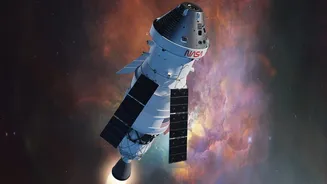
The Artemis Program: To the Moon and Beyond
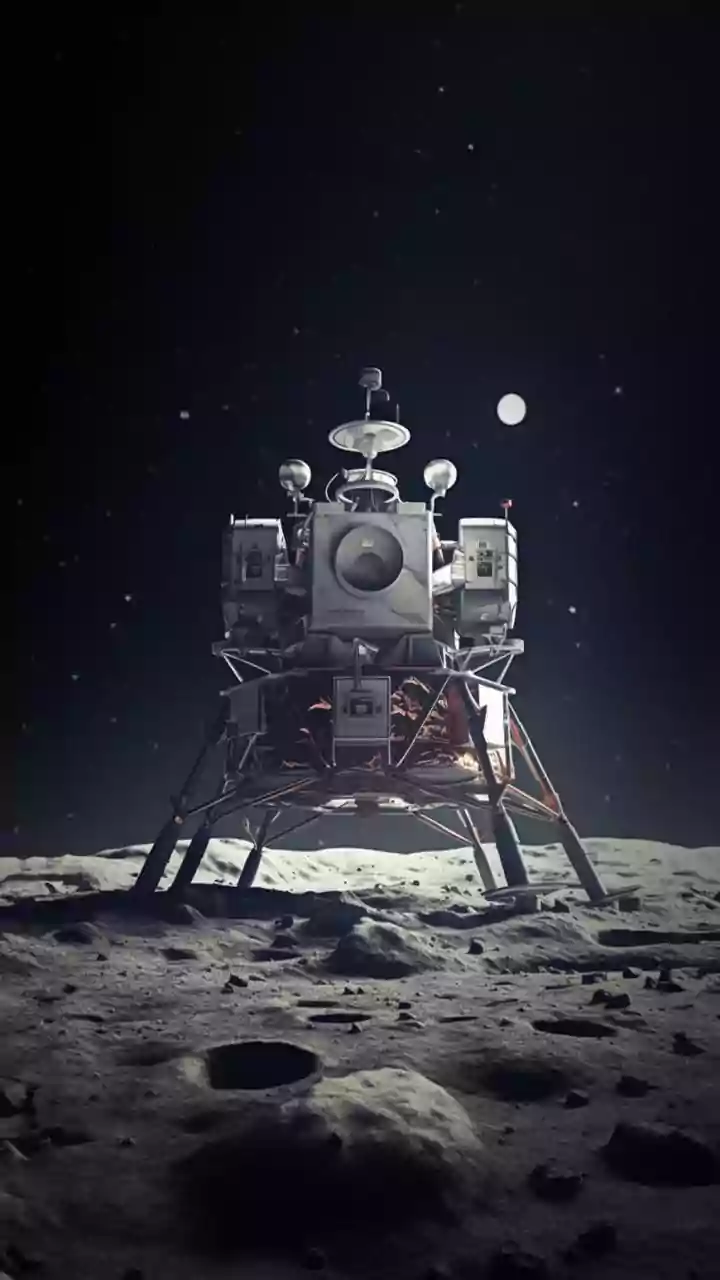
More than half a century after the Apollo era, NASA's Artemis program is about returning humans to the Moon, but this time it's different. The goal is not just to plant a flag, but to build a sustainable human presence on and around the Moon. Artemis missions
will establish a base camp on the surface and a Gateway outpost in lunar orbit. So, why is this relevant for the future? The Moon will become a crucial proving ground for the technologies and long-duration spaceflight experience needed for the next giant leap: sending astronauts to Mars. Scientifically, Artemis aims to investigate the history of the Moon, with a special focus on the water ice believed to be trapped in permanently shadowed craters at the lunar south pole. This ice could be a game-changing resource, providing drinking water, breathable air, and even rocket propellant for future deep-space missions.
Mars Sample Return: Bringing a Piece of the Red Planet to Earth
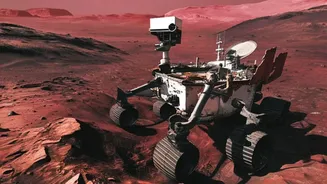
For decades, rovers have acted as our robotic geologists on Mars, but they have limitations. To truly search for definitive signs of past life, we need to analyze Martian rocks and soil with the full power of Earth's most advanced laboratories. That's the primary goal of the Mars Sample Return (MSR) campaign, a multi-mission effort by NASA and the European Space Agency (ESA). The Perseverance rover is already on Mars, collecting and caching compelling rock and soil samples in Jezero Crater, the site of an ancient lakebed. The next steps involve a lander that will retrieve these samples and a small rocket to launch them into Martian orbit, where another spacecraft will capture them for the journey home. MSR is considered a top priority by the scientific community because it could revolutionize our understanding of Mars's geology, climate history, and potential habitability. These pristine samples will be a scientific gift that keeps on giving, analyzed by generations of scientists with ever-improving technology.
Europa Clipper: Investigating an Ocean World
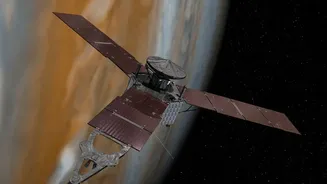
Beneath the icy shell of Jupiter's moon Europa lies a vast, saltwater ocean that may contain more than twice the amount of water in all of Earth's oceans. Crucially, scientists believe this ocean could have the three key ingredients for life: liquid water, essential chemical elements, and a source of energy. NASA's Europa Clipper mission is designed to investigate this tantalizing possibility. Arriving at Jupiter in 2030, the spacecraft won't orbit Europa directly due to the intense radiation but will instead make dozens of close flybys from a long, looping orbit around Jupiter. During each pass, a suite of powerful instruments will map the ice shell's thickness, scan for plumes of water vapor erupting into space, and use radar to peer beneath the surface, seeking direct evidence of the ocean below. While Europa Clipper isn't a life-detection mission, it will determine if Europa has the potential for life, making it one of the most compelling astrobiology missions ever conceived.
Dragonfly: A Drone on a Distant Moon
Imagine a car-sized drone flying through the hazy, orange skies of a world hundreds of millions of miles away. That's the essence of the Dragonfly mission to Saturn's largest moon, Titan. Titan is a unique and fascinating world; it has a thick atmosphere, weather systems, and rivers, lakes, and seas of liquid methane and ethane. It's also rich in complex organic molecules, the building blocks of life. Because of its thick atmosphere and low gravity, Titan is the perfect place to explore with a rotorcraft. Scheduled to launch in 2028, Dragonfly will arrive at Titan in the mid-2030s and perform a series of flights, hopping from one location to another. At each site, it will sample materials and study the prebiotic chemistry that could mirror the conditions on early Earth before life began. This mission will give us an unprecedented look at a world that could hold clues to the origins of life itself.
Nancy Grace Roman Space Telescope: A Panoramic View of the Cosmos
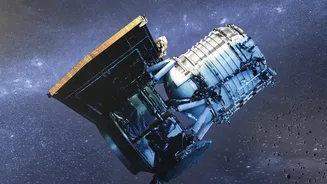
The Hubble and James Webb space telescopes give us incredibly detailed, deep views of small patches of the sky. The upcoming Nancy Grace Roman Space Telescope will do something different: it will provide the panoramic, wide-angle view. While having a primary mirror the same size as Hubble's, Roman's Wide Field Instrument will have a field of view more than 100 times greater. This means it can map huge swathes of the universe with incredible speed and efficiency. Its primary goals are to tackle two of the biggest mysteries in cosmology: dark energy and dark matter. By surveying billions of galaxies, Roman will help us understand the mysterious force that is causing the expansion of the universe to accelerate. In addition, its massive survey will discover thousands of new exoplanets, including rogue planets that wander through space untethered to a star. Set to launch by May 2027, Roman will be a powerful discovery machine, complementing other observatories to paint a more complete picture of our cosmos.