







An Era of Untapped Potential
In the early decades after Independence, Indian cricket was a story of isolated brilliance. The team possessed gifted players but often lacked the collective steel to win consistently, especially overseas. It was an era of respectable losses and occasional
home triumphs. While individual talent was never in doubt, the team was seen as talented but brittle, often unable to land the killer blow or withstand sustained pressure from the world's top teams. This narrative of being good, but not quite good enough, was a psychological barrier that needed to be shattered before India could truly compete on the world stage.
Pataudi: The Architect of Belief
The change began with one of cricket's most charismatic leaders: Mansur Ali Khan Pataudi. Taking over the captaincy at a young age and despite a career-threatening eye injury, 'Tiger' Pataudi revolutionised Indian cricket. He was an aggressive and forward-thinking captain who dismissed the defensive, draw-first mentality. He instilled a new sense of self-belief and national pride, famously demanding that the team play for India, not their regional zones. Pataudi championed the use of India's spin quartet and was among the first Indian captains to emphasise fielding as a non-negotiable aspect of winning. He didn't just lead a cricket team; he forged a new, confident identity for it.
The Unforgettable Summer of '71
The seeds of belief Pataudi planted bore spectacular fruit in 1971. Under the calm leadership of Ajit Wadekar, India achieved the unthinkable. First, they defeated the mighty West Indies in the Caribbean, a series that also saw the phenomenal debut of Sunil Gavaskar, who scored a staggering 774 runs. Just months later, the team travelled to England and won the Test series there for the first time in history. Bhagwath Chandrasekhar’s magical spell of 6 for 38 at The Oval sealed a victory that echoed across the nation. These twin overseas triumphs were not just wins; they were a declaration. India had arrived as a world power in cricket.
Gavaskar: The Master of Technique and Temperament
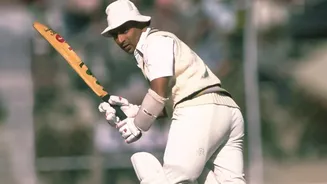
If Pataudi gave India its courage, Sunil Gavaskar gave it a rock-solid foundation of technical excellence. In an era dominated by fearsome fast bowling, the ‘Little Master’ was a titan of defiance. He taught Indian batsmen, and the country itself, not to flinch. Facing the likes of the West Indies' fearsome pace quartet without a helmet, he demonstrated a mastery of technique and an unbreakable temperament. Gavaskar was the first batsman to score 10,000 Test runs, a monumental achievement that placed an Indian player at the pinnacle of the game. His consistency and courage showed that India could not only compete but could produce the best in the world.
Laying the Groundwork for Glory
The journey from Pataudi’s aggressive vision to Gavaskar’s technical perfection laid the path for everything that followed. These pioneers created a legacy of self-respect and ambition. They transformed the team's psyche from one of hoping not to lose to one of knowing they could win, anywhere in the world. This foundation of belief and professionalism was the platform upon which Kapil Dev’s generation stood when they lifted the Prudential World Cup in 1983, a victory that would change the sport forever. Without the spirit instilled by Pataudi and the resilience embodied by Gavaskar, that moment of glory would not have been possible.