



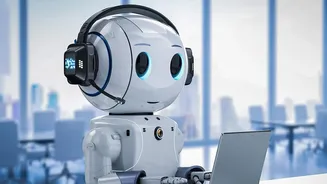
Your AI Interviewing Partner
Your first step is to choose an AI tool. Widely available generative AI chatbots are incredibly capable and can serve as excellent practice partners. You don't need a highly specialized platform to get started; the key is learning how to ask the right
questions, or 'prompts'. The goal is to give the AI a clear role to play. Think of it as briefing a colleague who has agreed to help you run through some questions. The more context you provide about the job title, company, and your experience level, the more realistic and helpful the simulation will be.
Running a Realistic Mock Interview
The most powerful use of a chatbot is to simulate a live interview. By giving the AI a specific persona, you can create a dynamic practice session. Start with a clear, detailed prompt. For example: "Act as a hiring manager for a [Job Title] role at [Company Name]. Ask me realistic interview questions one by one. After each answer, provide feedback on its clarity and impact." You can also guide the flow of the conversation, asking it to start with introductory questions before moving into more technical or behavioral scenarios. This turns a static list of questions into an interactive dialogue, helping you practice thinking on your feet.
Perfecting Your Core Answers
Every job seeker needs a polished library of stories to answer behavioral questions. This is where the STAR method (Situation, Task, Action, Result) is invaluable, and a chatbot can be your dedicated coach. You can feed the AI your resume and ask it to help you build a set of STAR stories based on your experiences. For instance, prompt it with: "Here are my key professional achievements. Help me frame them using the STAR method for questions about leadership and problem-solving." This process helps you prepare concrete, quantified examples that demonstrate your skills effectively.
Anticipating the Tough Questions
Interviews often include challenging or unexpected questions designed to see how you perform under pressure. You can use AI to prepare for these curveballs. Try a prompt like: "Act as an elite interview coach and ask me the toughest, trickiest questions for a [Job Title] role." This helps you move beyond standard preparation and build the mental agility to handle anything an interviewer throws at you. You can also use the AI to identify potential weaknesses in your resume, such as employment gaps, and practice addressing them proactively and confidently.
Going Deeper with Research
A chatbot can also serve as a powerful research assistant. Before an interview, use it to gain deeper insights into the company and role. For example, you can ask: "Based on the job description for [Job Title] and the values of [Company Name], what are the top three priorities for the person in this role?" Or, "Analyze recent trends in the [Industry Name] industry. What challenges might this company be facing?" This level of informed preparation allows you to ask intelligent questions and align your answers with the company's strategic goals.
Remember the Human Element
While AI is a phenomenal tool, it has clear limitations. Chatbots cannot replicate the human connection, empathy, or intuition that are central to coaching. They can't read body language or the subtle cues in a room that often determine how a conversation flows. An AI-generated answer can sound robotic if not adapted to your own voice. It's crucial to view the chatbot as a supplement to, not a replacement for, human interaction. Its feedback is based on data and algorithms, not genuine emotional intelligence or real-world hiring experience.