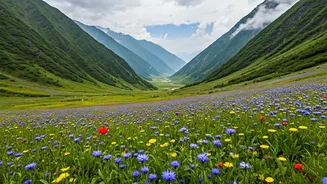









A Paradise of Petals
Tucked away in the Garhwal Himalayas, the Valley of Flowers National Park is a place of almost mythical beauty. For a few short months, beginning in June, this UNESCO World Heritage Site explodes with hundreds of species of alpine flowers, many found
nowhere else on earth. From the iconic Himalayan Blue Poppy to countless orchids and primulas, the valley becomes a vibrant spectacle that attracts trekkers, botanists, and nature lovers from around the globe. Its importance isn't just aesthetic; it's a critical zone for biodiversity, home to rare animals like the musk deer and Asiatic black bear. This fragile ecosystem is protected, with authorities capping daily visitor numbers to prevent it from being loved to death.
The Monsoon's Double-Edged Sword
The very phenomenon that triggers this spectacular bloom—the monsoon—also poses the most significant danger. The peak flowering season, from mid-July to mid-August, coincides with the peak of the rains. This brings with it a host of challenges. Heavy rainfall saturates the steep slopes, leading to frequent landslides that can block access roads for hours or even days. Trekking paths become slippery and treacherous, while swollen streams can become difficult or impossible to cross. Though authorities monitor conditions daily and halt treks when necessary, the inherent risk in the terrain is a constant concern for both visitors and the local communities whose livelihoods depend on tourism.
Beyond Traditional Measures
For years, monsoon preparedness in the Himalayas has been a reactive exercise. The Border Roads Organisation (BRO) does commendable work keeping major highways open, with bulldozers on standby at known landslide zones to clear debris. But 'smart preparation' demands a shift from reaction to foresight. The increasing intensity of weather events, potentially linked to climate change, means that old methods may no longer be sufficient to safeguard such a delicate and popular destination. Simply clearing rubble after a landslide is a temporary fix. The conversation is now shifting towards a more holistic approach that anticipates risks before they become disasters.
What 'Smart Prep' Looks Like
Smart preparation involves integrating technology, sustainable practices, and community knowledge. This includes implementing advanced early warning systems for landslides and flash floods, not just relying on general weather reports. It means managing tourism flow dynamically based on real-time risk assessment, potentially reducing daily caps during periods of intense rainfall. Infrastructure development must also evolve, favouring bio-engineering techniques to stabilise slopes over concrete walls that can sometimes exacerbate problems. Furthermore, empowering and training local communities in disaster response is crucial. They are the first on the scene, and their deep knowledge of the terrain is an invaluable asset. These measures are part of a broader vision for sustainable tourism that balances economic benefits with environmental conservation.
A Blueprint for the Himalayas
The challenges faced by the Valley of Flowers are a microcosm of the wider issues across the Indian Himalayan Region. From Himachal Pradesh to Sikkim, fragile ecosystems are grappling with the twin pressures of tourism and a changing climate. The solutions pioneered here—be it in waste management, trail maintenance, or disaster mitigation—can serve as a blueprint for other vulnerable mountain destinations. Protecting these natural treasures is not just about preserving beauty; it's about safeguarding livelihoods, ensuring visitor safety, and building resilience in one of the world's most sensitive and vital landscapes.