



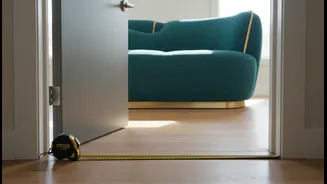


Start with a Tape Measure
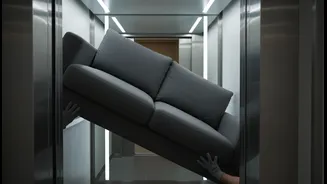
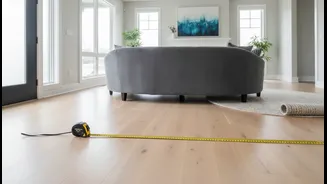
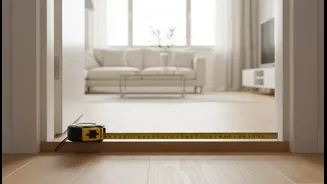
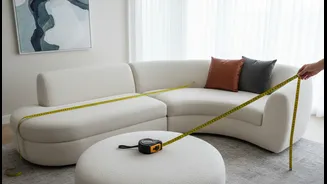
Before you fall in love with a specific sofa, get acquainted with your home’s dimensions. The number one reason for delivery failures is overlooking the entire path the furniture must take. Start by measuring the height and width of all entry points,
including exterior doors, apartment building entrances, service elevators, and interior doorways. Don't forget to measure the clearance of any hallways, stairwells, and tight corners. For stairways, measure the width between handrails and the vertical distance from the steps to the ceiling, especially at any landings or turns. Note any fixed obstacles like radiators, light fixtures, or architectural details that could impede the path. Having these numbers written down before you shop is the most critical first step.
Understanding Sofa Construction
Not all rounded sofas are created equal. Their construction directly impacts whether they can be disassembled. Generally, they fall into three categories. Fixed-frame sofas are built as a single, solid piece and cannot be taken apart, aside from possibly removing the legs. Modular or sectional curved sofas are the most flexible, as they are designed to be delivered in multiple individual pieces that are connected in your home. This makes them ideal for homes with tight access. Some sofas may also be 'semi-modular', where larger sections might have removable backs or arms held by bolts. When browsing, look for terms like "modular," "sectional," or "sofa-in-parts" to identify pieces that offer more delivery flexibility.
Questions to Ask Your Salesperson
Once you have your eye on a sofa, it's time to get specific with the retailer. Don't be shy; clear communication now prevents major headaches later. Ask directly: "Can this sofa be dismantled for delivery?" If so, clarify what that entails—are the legs removable, does the back come off, or is it a true modular piece? Request the sofa's exact dimensions, including its width, depth, height, and, crucially, its diagonal depth. The diagonal depth (measuring from the bottom rear corner to the top front of the arm) often determines if a sofa can be angled through a tight doorway. Also, inquire about the store's delivery policy for 'no-fit' situations. Many retailers charge a significant restocking fee and additional shipping charges if the item has to be returned because it doesn't fit.
Delivery Day Preparation
A smooth delivery day involves more than just waiting for the truck. Prepare the path for the delivery team. Clear away any fragile items like lamps, pictures, and vases from the hallways and the destination room. Ensure the path is completely unobstructed. If you have pets, it's best to keep them in a separate, secure room to prevent them from getting underfoot. Be present for the delivery. Most white-glove services include assembly and placement, but they may need your guidance on the final positioning. Some delivery teams may be willing to remove a door from its hinges for extra clearance, but this isn't always a guaranteed solution, so it's best not to rely on it.
When It Simply Won't Fit
Despite careful planning, sometimes a sofa just won't make it. If you find yourself in this situation, you have a few options. The first is to see if the retailer will allow a return or re-selection, though this will likely involve fees. Another option is to hire a specialist furniture disassembly company. These services have experienced technicians who can professionally deconstruct a sofa (sometimes even cutting the frame in a hidden spot) and then reassemble it perfectly inside your room. This service comes at an additional cost but can be a lifesaver for a custom or non-returnable piece. In a worst-case scenario where neither of those options works, you may have to decide if the sofa can be placed in another room it did fit into.