




From Government Monopoly to Private Ecosystem
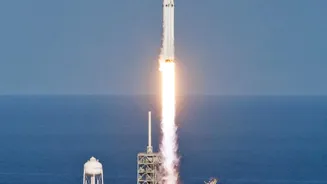
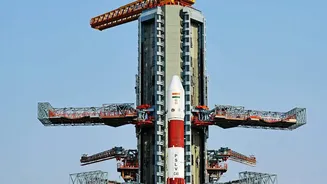
The story of India's space journey is no longer written solely by the Indian Space Research Organisation (ISRO). While ISRO continues to achieve monumental feats, a fundamental shift has unlocked the sector for private enterprise. Policies like the Indian Space Policy
2023 and the creation of the regulatory body IN-SPACe (Indian National Space Promotion and Authorisation Centre) have dismantled old barriers. These reforms allow private companies to engage in everything from building and launching rockets to owning satellites and selling the data they collect. The result has been an explosion of startups—from just one in 2014 to over 400 by 2026. This private surge is transforming the job market, creating a demand for skills that extend far beyond traditional aerospace engineering. The Indian space economy, valued at around $8.4 billion, is now projected to hit $44 billion by 2033, creating hundreds of thousands of new jobs in the process.
The New Gold Rush: Downstream Data
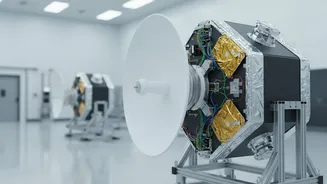
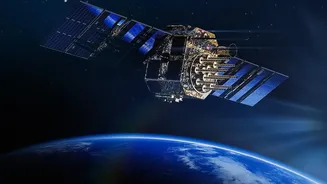
Perhaps the most significant area of job growth isn't in launching rockets, but in interpreting the information they send back to Earth. Every satellite is a floating sensor, generating petabytes of data on weather, agriculture, urban development, and climate change. This has created a gold rush for professionals who can turn raw satellite imagery into actionable business intelligence. Companies are hiring geospatial data analysts who can use satellite feeds to predict crop yields for insurance companies, monitor illegal construction for urban planners, or track deforestation for environmental agencies. These roles require a blend of skills in Geographic Information Systems (GIS), remote sensing, and increasingly, domain-specific knowledge in fields like agriculture or finance. It's a field where a data scientist or a software engineer can build a career in the space industry without ever touching rocket hardware.
Artificial Intelligence as the Co-Pilot
The sheer volume of space data makes manual analysis impossible. This is where Artificial Intelligence (AI) and Machine Learning (ML) come in. AI algorithms are being deployed to automate the analysis of satellite imagery, detecting patterns and anomalies far faster than any human team could. For example, AI can automatically identify flooded areas after a cyclone, assess infrastructure damage, or even predict where agricultural pests might spread next based on climate data. This has opened up a demand for AI and ML engineers who can design, train, and deploy these complex models. Beyond data analysis, AI is also crucial for space operations themselves, including managing large satellite constellations, predicting potential hardware failures, and enabling autonomous navigation for spacecraft—a skill set that will be vital as missions become more complex.
Manufacturing for the Cosmos
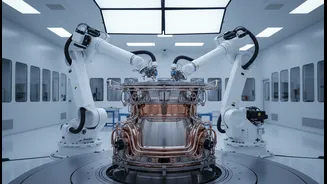
While data roles are soaring, the physical manufacturing of space hardware is also undergoing a major expansion. The privatisation push means it's not just ISRO building rockets and satellites anymore. Private companies like Skyroot Aerospace, which successfully launched its Vikram-1 rocket, are now building entire launch vehicles from the ground up. This has ignited a demand for a new generation of manufacturing and engineering talent. These are not old-school factory jobs. The modern space industry relies on advanced manufacturing techniques like 3D printing for rocket engines, carbon-composite materials for lighter and stronger structures, and sophisticated robotics for precision assembly. This creates jobs for aerospace engineers, but also for materials scientists, robotics professionals, avionics engineers, and telecommunications specialists who can build the complex systems needed to survive the harsh environment of space.