






The Rise of the Protein Obsession
From fitness influencers to diet apps, the message has been clear: protein is the king of macronutrients. It's celebrated for its ability to build muscle, aid in weight loss by keeping you full, and repair tissues. This has led to a widespread habit of counting
every gram, with many people striving to hit specific numerical targets each day. While ensuring adequate protein intake is undoubtedly important for bodily functions, this hyper-focus on a single number can be misleading. It creates a nutritional tunnel vision, ignoring other critical factors that determine how your body actually uses the protein you consume.
Quality Over Quantity: Not All Protein Is Equal
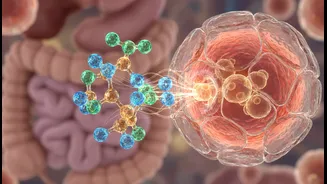
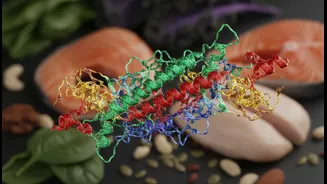
The crucial detail often lost in simple gram-counting is protein quality. The quality of a protein source is determined by its amino acid profile and its digestibility. Amino acids are the fundamental building blocks of protein. There are 20 different types, nine of which are considered "essential" because our bodies cannot produce them; we must get them from food. A protein source that contains all nine of these essential amino acids in sufficient amounts is called a "complete protein." Sources that are missing or low in one or more of these essential amino acids are known as "incomplete proteins." This distinction is the first clue as to why 20 grams of protein from one food isn't necessarily the same as 20 grams from another.
The Essential Amino Acid Puzzle
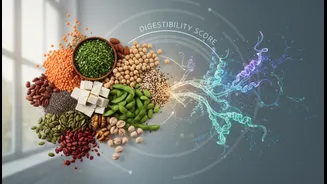
Think of essential amino acids as a team of nine key players needed to build and repair things in your body, from muscle tissue to hormones and enzymes. If one player is missing, the whole process can be compromised. Complete proteins, found predominantly in animal-based products like meat, fish, eggs, and dairy, provide the entire team in one go. Many plant-based proteins, such as beans, lentils, nuts, and grains, are incomplete, meaning they might be low in one or two essential amino acids. However, this doesn't make them inferior. By combining different plant-based foods throughout the day—a strategy known as protein complementation, like eating rice with beans or hummus with whole-wheat pita—you can easily provide your body with all the essential amino acids it needs.
The Bigger Picture: A Balanced Plate
Focusing solely on a protein target can lead to neglecting other vital nutrients. A diet high in protein from processed meats, for instance, might also be high in saturated fat and sodium, which can negatively impact heart health. Conversely, a diet rich in varied plant-based proteins also delivers fibre, vitamins, minerals, and healthy fats. Experts now recommend shifting the focus from a single nutrient to the overall dietary pattern. Instead of just asking, "How many grams of protein does this have?" a better question is, "What else does this food provide?" Spreading your protein intake across meals, aiming for 15-30 grams each time, can also be more effective for muscle synthesis and appetite control than consuming the bulk of it in one sitting.