


The Invisible Danger in Space
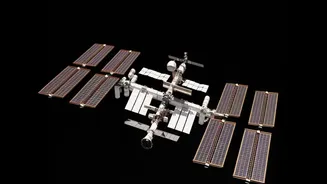
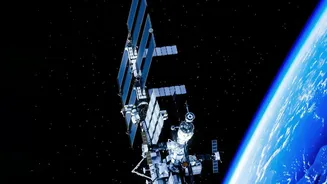
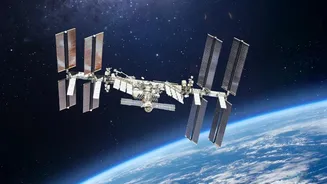
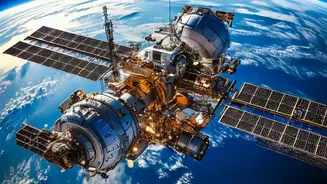
In the vacuum of space, the most immediate threat to an astronaut isn't what's outside the spacecraft, but what's inside. Every breath a crew member takes consumes oxygen and releases carbon dioxide (CO2). In a sealed environment like the International
Space Station (ISS), this CO2 would quickly build up to toxic levels. Beyond exhaled breath, materials on the station can also release trace amounts of other harmful gases. Without a constant, reliable method for managing the air, a spacecraft would become uninhabitable in hours. This fundamental challenge of survival is what drives the need for sophisticated life support technology.
What is a Closed-Loop System?
Early space missions used open-loop systems. They carried a finite supply of oxygen in tanks and used disposable filters, like lithium hydroxide canisters, to absorb CO2. This is like holding your breath and then coming up for air—it works, but only for a short time. For long-duration missions on the ISS, this is not sustainable due to the immense cost and logistical difficulty of constantly resupplying tanks and filters from Earth. A closed-loop system, by contrast, is regenerative. It recycles waste products to create usable resources. For air revitalization, this means capturing the CO2 astronauts exhale and using it to generate fresh, breathable oxygen. This significantly reduces the need for resupply missions, making extended stays in space feasible.
Turning Bad Air into Good
At the heart of the ISS's air system is the Environmental Control and Life Support System (ECLSS). A key process it uses for generating oxygen is electrolysis, which involves running an electrical current through water to split it into hydrogen and oxygen atoms. The oxygen is then released into the cabin air. But where does that water come from? The ECLSS is designed to reclaim water from every possible source, including astronaut breath, sweat, and even purified urine. This recycled water is fed into the Oxygen Generation System.
The Clever Chemistry of Recycling CO2
Simply making oxygen isn't enough; the system must also actively remove the dangerous CO2. The ECLSS uses specialized hardware to pull CO2 out of the air. But instead of just venting this valuable carbon and oxygen into space, modern systems use a clever chemical process called the Sabatier reaction. In a Sabatier reactor, the captured CO2 is combined with the waste hydrogen from the water electrolysis process. This reaction produces two things: water and methane. The water is then cycled back to the Oxygen Generation System to be split into more breathable oxygen, further 'closing the loop'. The methane byproduct is typically vented into space.
A Constant, Automated Battle
The word "daily" in the headline is key because these systems are not a one-time fix; they are in a constant, dynamic battle to maintain a safe atmosphere. The ECLSS continuously monitors the levels of oxygen, nitrogen, CO2, humidity, and temperature, making adjustments automatically. It also filters out microorganisms and trace contaminants to ensure the air remains healthy. Multiple redundant systems, including Russian-built Elektron and Vika generators, provide crucial backup in case of failure, highlighting the absolute necessity of this function. These complex, interconnected machines work together silently in the background, performing a task essential for the crew's survival every minute of every day.