


The Golden Dilemma
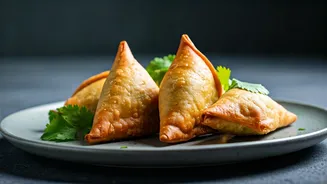
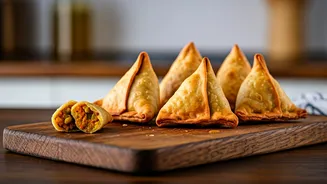
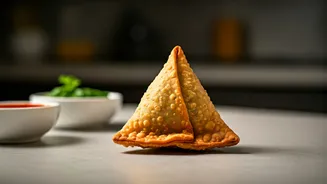
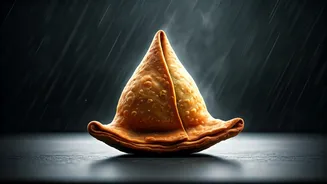
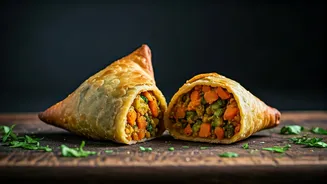
The samosa needs no introduction. It is an institution, a pyramid of spiced potatoes and peas encased in a crispy, flaky crust. It’s the go-to snack for rainy days, the essential guest at high tea, and the reliable companion on long train journeys. Yet,
for all its deliciousness, it comes with a side of guilt. Deep-fried, indulgent, and often heavy, the traditional samosa has long been at odds with the modern pursuit of wellness. This created a dilemma for millions: how do you indulge in a beloved comfort food without the caloric regret? For years, the answer was simply to eat fewer samosas. Now, a different solution is taking hold.
An Old Idea, A New Wave
The concept of a baked samosa isn't entirely new. The first wave appeared a couple of decades ago with the popularisation of OTGs (Oven-Toaster-Grills) in urban Indian homes. Health-conscious home cooks experimented with brushing their pastry with oil and baking it to a golden brown. The results were promising but often inconsistent. The crust could be too dry, the texture not quite right. It was a good idea that was perhaps ahead of its time and technology. It remained a niche practice, a quiet rebellion against the deep-fryer, but never truly went mainstream.
The Air Fryer Revolution
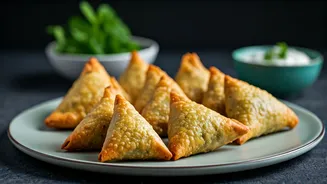
So, why the comeback? The answer lies in a countertop appliance that has become ubiquitous in the last five years: the air fryer. This device, which uses circulating hot air to achieve a crisp texture with minimal oil, has been a game-changer. It has perfected what the OTG started. The modern baked samosa—or more accurately, the 'air-fried' samosa—delivers a remarkably satisfying crunch that was previously hard to achieve without a vat of hot oil. It’s faster, less messy, and gives a result that is tantalisingly close to the original. This technological leap has empowered a new generation of home cooks to bring the samosa back into regular rotation, free from guilt.
More Than Just Health
While health is the primary driver, the baked samosa revival is also about control and creativity. Making samosas at home allows for endless customisation. Fillings now go far beyond the classic aloo-matar; think paneer tikka, mixed vegetables, minced chicken, and even sweet-spicy corn. People are experimenting with different flours for the dough, incorporating whole wheat or multigrain blends to boost the nutritional profile. Social media platforms like Instagram and YouTube are flooded with recipes and tutorials, turning the humble baked samosa into a canvas for culinary expression. It has transformed from a street food indulgence into a versatile, family-friendly home project.
The Unavoidable Question: Is It The Same?
Let’s be honest: a baked samosa is not a fried samosa. Purists will argue, perhaps correctly, that the magic lies in the deep-frying process—the way the pastry puffs up and develops its signature blisters, the specific richness that only oil can impart. The baked version offers a different kind of pleasure. It’s lighter, the crust more biscuit-like, and the flavour of the filling often comes through more clearly without the dominance of the oil. It doesn’t try to perfectly mimic the original. Instead, it offers a compelling alternative for a Tuesday evening, saving the deep-fried classic for a special weekend treat.