


Cosmic Visitors vs. Human-Made Relics
At its simplest, the difference is one of origin. Meteors are natural. They are the visible phenomenon that occurs when a meteoroid—a small piece of an asteroid or comet—enters Earth's atmosphere at incredible speed and burns up. These objects are remnants
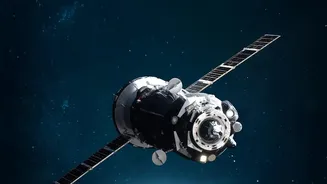
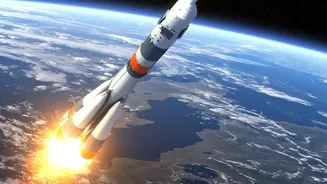
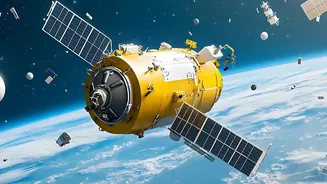
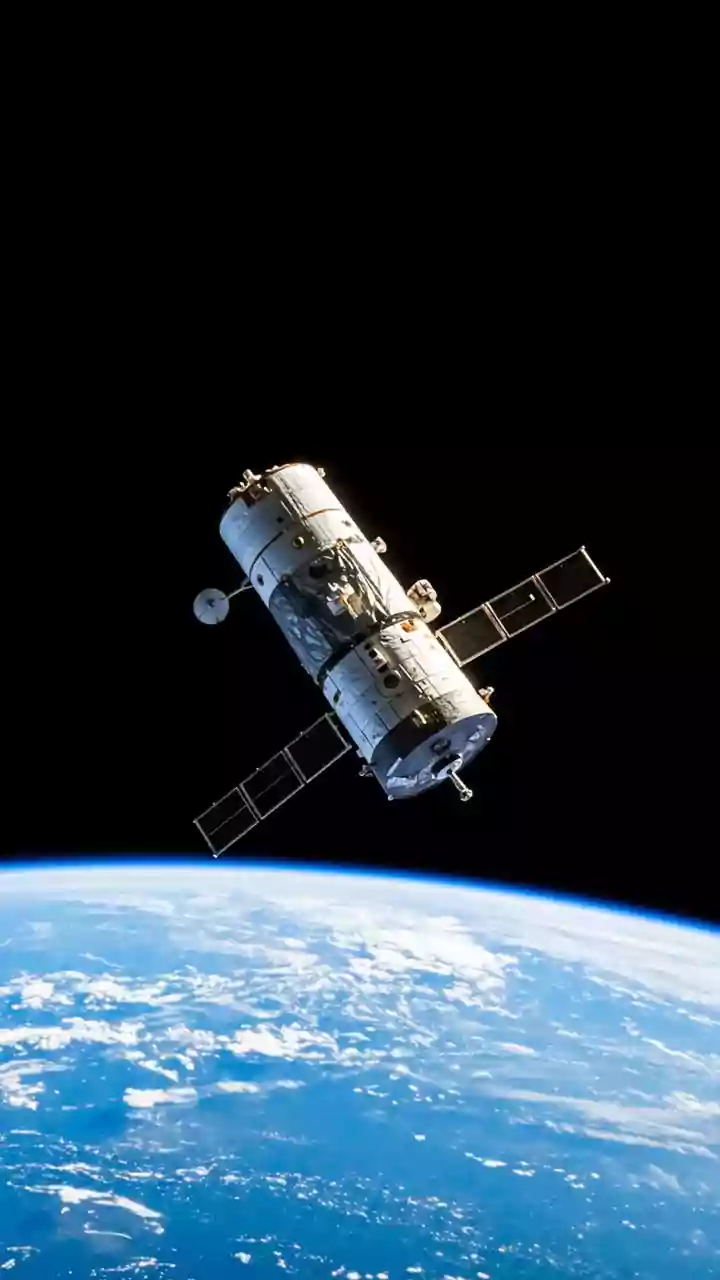
from the formation of our solar system. In contrast, human-made debris, often called space junk, is anything artificial that re-enters the atmosphere. This includes defunct satellites, spent rocket stages, or fragments from previous orbital missions. These objects are not from deep space but are falling out of Earth's orbit, where they were placed by us.
The Need for Speed and Angle
One of the most significant clues for identification is speed. Meteoroids enter our atmosphere at hypersonic speeds, ranging anywhere from 11 to 72 kilometres per second. Because they are moving so fast, the resulting meteor or 'shooting star' is often a fleeting event, lasting just a second or two. Human-made debris, already in orbit around Earth, re-enters much more slowly. Its speed is typically around 8 kilometres per second. This slower speed means the fiery display can last much longer, from 20 seconds to over a minute, and often appears to travel almost parallel to the ground. If you have time to grab your phone and record it, it's very likely to be space debris.
A Rainbow of Clues and Fragmentation Patterns
The way an object burns can reveal its composition. Meteors often display vibrant colours based on their chemical makeup; for instance, green can indicate the presence of magnesium or nickel, while other colours might point to different minerals. They may appear as a single, intensely bright fireball, sometimes called a bolide, which can even explode or create a sonic boom if it's large enough. Space debris, on the other hand, tends to break up into a cluster of bright points moving together. Its colours are often related to the burning of industrial metals like aluminium and steel. The visual is less like a single shooting star and more like a slow-moving, fragmenting light show.
The Scientist’s Toolkit for Confirmation
Beyond what our eyes can see, scientists use sophisticated tools for definitive identification. Trajectory analysis is key. Networks of all-sky cameras, like the Global Meteor Network, track the path of a fireball. A meteoroid will have a cosmic trajectory, originating from a point in space, sometimes as part of a known meteor shower like the Perseids or Geminids. Space debris will follow a decaying orbital path that can be traced back to a specific man-made object. Furthermore, spectral analysis of the light emitted during the burn-up can precisely determine the object's chemical composition. The distinct signatures of natural rock and iron are vastly different from the alloys used in spacecraft manufacturing.
Why Telling Them Apart Matters
Distinguishing between these two types of events is more than just a matter of curiosity. Studying meteorites—the fragments of meteors that survive to reach the ground—gives scientists invaluable clues about the composition of asteroids, comets, and the early solar system. Some meteorites have even been identified as originating from the Moon and Mars. On the other hand, tracking the re-entry of space debris is a crucial matter of public safety. With an increasing number of satellites in orbit, accurately predicting where larger pieces might land is essential to mitigate risks on the ground. Both phenomena tell a story: one about our cosmic origins, and the other about our technological footprint in the sky.