






The Unsung Hero of a Historic Mission
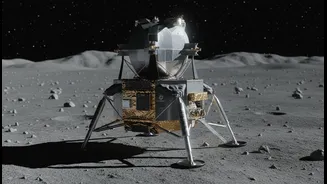
The Chandrayaan-2 mission is often remembered for the dramatic loss of communication with its Vikram lander just moments before its scheduled touchdown. But the true, long-term success story of the mission orbits 100 kilometres above the lunar surface.
The Chandrayaan-2 orbiter, initially planned for a one-year mission, is still healthy and operational, designed to function for about seven years. It is equipped with a powerful suite of eight scientific instruments, each meticulously designed to map the Moon in unprecedented detail. This longevity and capability were no accident; they were a core part of ISRO's strategy, ensuring that even with a landing failure, the mission would yield immense scientific value. The orbiter was always the mission's enduring component, tasked with creating a high-resolution 3D map of the Moon and inventorying its surface and subsurface resources.
A Treasure Map of Lunar Resources
The instruments aboard the orbiter are the stars of this ongoing story. The Orbiter High-Resolution Camera (OHRC) captures images with a resolution as fine as 0.25 meters, twice as detailed as NASA's equivalent, allowing for the identification of small boulders and potential hazards. Meanwhile, the Dual-Frequency Synthetic Aperture Radar (DFSAR) is a game-changer. It is the first of its kind to study the Moon, capable of peering beneath the surface to find what lies hidden. Its primary goal is to unambiguously detect water ice. Other instruments like the CLASS and XSM work together to map the elemental composition of the surface, identifying key minerals like magnesium, aluminum, and iron, which are crucial for any future construction or manufacturing on the Moon.
The Crucial Discovery: Buried Water Ice
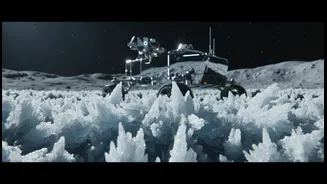
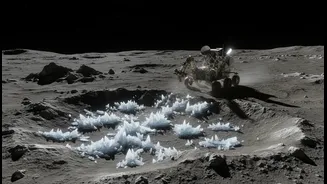
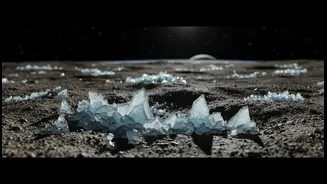
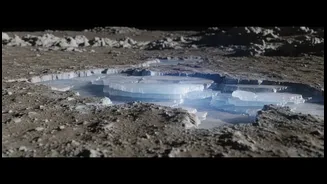
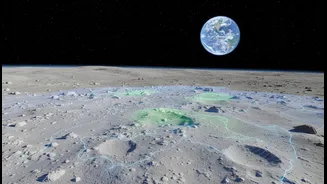
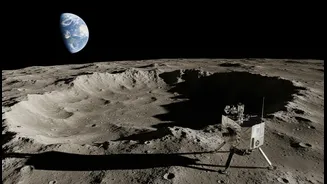
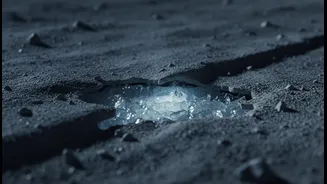
The most significant findings from Chandrayaan-2 relate to the one resource essential for a permanent lunar presence: water. Recent data, particularly from the DFSAR instrument, has provided strong evidence of subsurface water ice in permanently shadowed regions (PSRs) near the lunar south pole. These are craters where sunlight never reaches, creating temperatures as low as minus 248 degrees Celsius, cold enough to preserve ice for billions of years. Scientists from ISRO and the Physical Research Laboratory have identified several craters, including a notable one within the larger Faustini crater, that show compelling radar signatures consistent with buried ice. Unlike surface frost, this subsurface ice is a much more stable and abundant potential resource. This water could be converted into drinking water, breathable oxygen, and even rocket fuel, drastically reducing the cost and complexity of future long-term missions.
Securing a Seat at the Global Table
This high-quality data does more than just advance science; it provides India with significant strategic leverage. As nations like the United States forge ahead with the Artemis Program to establish a sustainable human presence on the Moon, the data from Chandrayaan-2 becomes invaluable. India, as a signatory of the Artemis Accords, is positioned as a key partner. Any agency planning to land in the lunar south pole needs the best possible maps of resources and terrain, and ISRO has them. This data sharing strengthens India's role in international space governance and ensures it is a critical collaborator, not a spectator, in the next chapter of lunar exploration. This collaboration avoids technological isolation and integrates India's capabilities with global standards, boosting missions like Gaganyaan and the planned joint ISRO-NASA mission to the International Space Station.
Paving the Way for Future Indian Missions
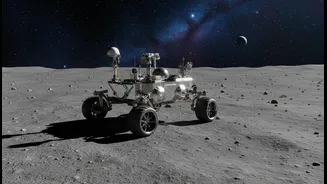
The insights from Chandrayaan-2 were not just for the world; they were instrumental in the triumphant success of Chandrayaan-3. The high-resolution imagery and terrain data from the orbiter helped ISRO select a safe and optimal landing site for the Vikram lander's successful touchdown in 2023. The data continues to be a foundational resource for India's ambitious future plans, which include the Chandrayaan-4 sample return mission, the joint LUPEX mission with Japan to analyze polar ice, a proposed 'Bharatiya Antariksha Station' (Indian Space Station) by 2035, and a crewed lunar landing by 2040. The orbiter's findings on plasma densities and the lunar exosphere also inform the design of future habitats and communication systems.