

The Cold Gold of the Cosmos
For decades, the Moon was thought to be completely dry. However, a series of missions, including crucial data from India's Chandrayaan probes, have confirmed the presence of water ice, especially concentrated in permanently shadowed craters at the lunar
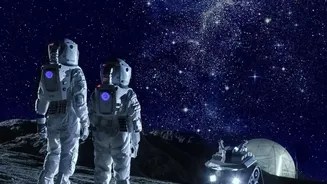
south pole. These craters, never touched by sunlight, are some of the coldest places in the solar system, acting as deep-freeze traps that have preserved this ice for potentially billions of years. This discovery has transformed our approach to lunar exploration. Instead of being a barren rock, the Moon is now seen as a repository of a critical resource, making its south pole the primary target for agencies like NASA and a hub of international interest.
More Than Just a Drink
While providing drinking water for astronauts is an obvious benefit, the true value of lunar ice lies in its versatility. This is where the concept of In-Situ Resource Utilization (ISRU) comes in—the idea of living off the land. Every kilogram of material launched from Earth costs thousands of dollars, making self-sufficiency the only viable path for a long-term presence. Water (H2O) is the ultimate multi-purpose resource. Beyond hydration, it can be used for growing plants for food and serves as an excellent shield against cosmic radiation. But its most game-changing application is what it can be broken down into: breathable oxygen and powerful rocket fuel.
The Fuel Station of the Solar System
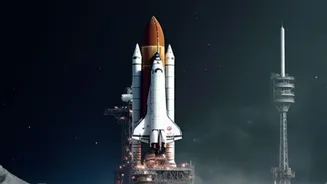
The process is straightforward chemistry. Using electricity generated by solar panels, a process called electrolysis can split water molecules into their constituent parts: hydrogen and oxygen. The oxygen can be used to create a breathable atmosphere inside a lunar habitat. The liquid hydrogen and liquid oxygen are the very same components that power many of today's most powerful rockets. By manufacturing propellant on the Moon, a lunar base transforms into a cosmic refuelling station. This drastically reduces the cost and complexity of missions. A rocket launching from the Moon to Mars would not need to fight Earth's strong gravity, making interplanetary travel more feasible and affordable. The Moon becomes less of a destination and more of a launchpad to the rest of the solar system.
The Challenge of Mining in Shadow
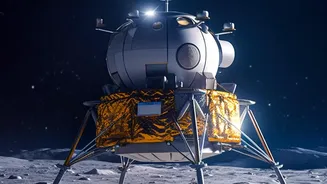
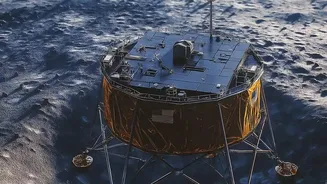
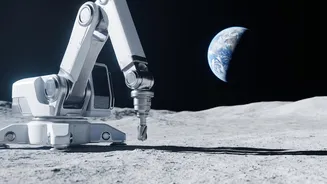
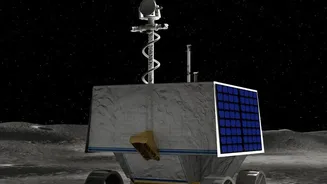
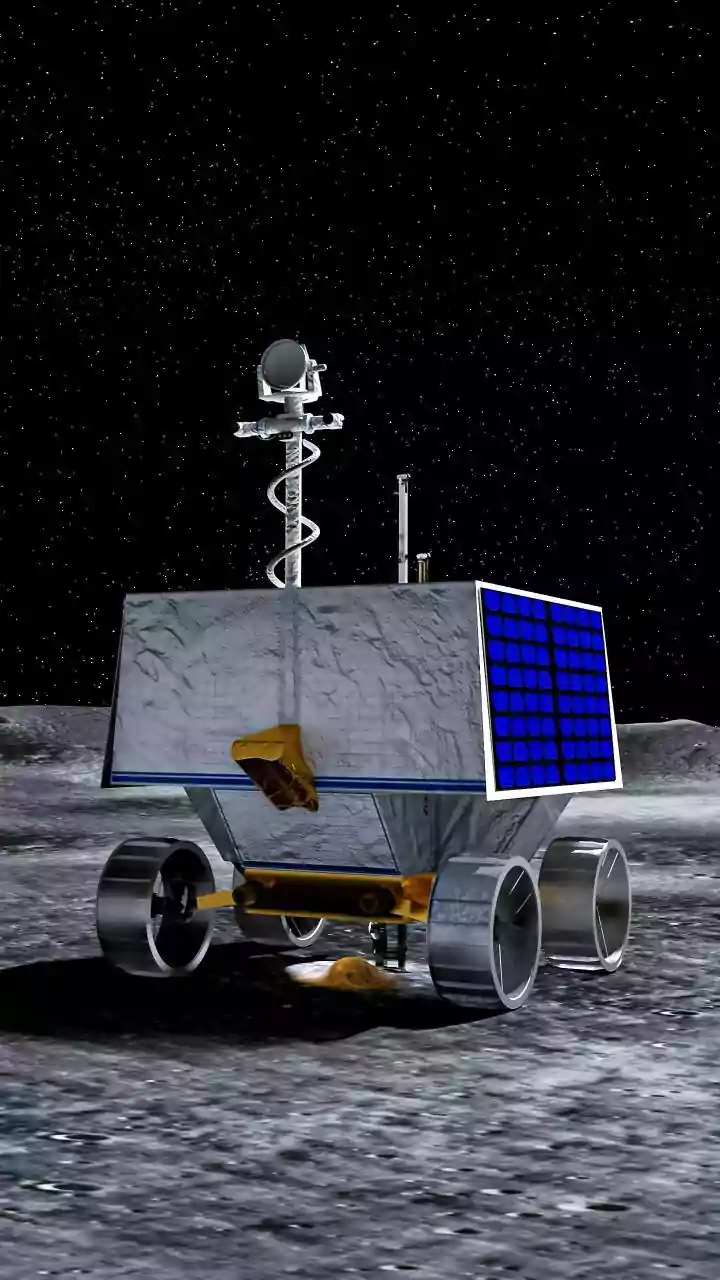
Extracting this resource is a monumental engineering challenge. The ice isn't a clean, skateable rink; it's likely mixed with lunar soil (regolith) at incredibly low temperatures, in craters that are in perpetual darkness. NASA is actively developing the technologies needed to tackle this. Experiments like the Polar Resources Ice Mining Experiment-1 (PRIME-1) are designed to test robotic drilling and analysis in simulated lunar conditions. The PRIME-1 mission combines a drill called TRIDENT with a mass spectrometer called MSolo to dig into the surface, retrieve samples, and analyze them for water and other volatile compounds on the spot. These early robotic missions will be crucial for mapping the deposits and perfecting the extraction techniques before astronauts arrive to set up larger-scale operations.