




The Scourge of Nashik’s Vineyards
Grape farming is a cornerstone of the agricultural economy in regions like Nashik, Maharashtra, known as the wine capital of India. But this prosperity is constantly threatened by diseases, with downy mildew being one of the most destructive. Caused by the fungus-like
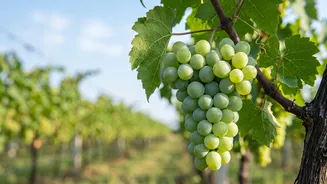
pathogen Plasmopara viticola, it thrives in the cool, humid conditions that can accompany India's monsoon season. The disease attacks all green parts of the vine—leaves, shoots, and the grapes themselves. Early signs appear as yellow, oily spots on leaves, followed by a white, cottony growth on the underside. If left unchecked, it can lead to premature leaf fall, which cripples the plant's ability to photosynthesize, and causes berries to shrivel and rot, sometimes resulting in yield losses of over 50%.
The Limits of Human Scouting
Traditionally, farmers have relied on manual scouting—walking through vast vineyards to visually inspect plants for signs of disease. This method is not only labour-intensive and time-consuming but also prone to human error. Early symptoms of downy mildew can be subtle and easily missed by the naked eye. By the time the infection is obvious, it has often already spread, forcing farmers to resort to broad-spectrum fungicide applications. This reactive approach is inefficient, costly, and raises environmental concerns due to chemical runoff. The sheer scale of commercial vineyards makes comprehensive manual monitoring nearly impossible, creating a critical window for diseases like downy mildew to establish a foothold before they are discovered.
A View from Above: Enter the Drones
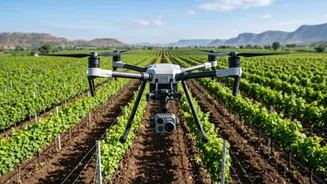
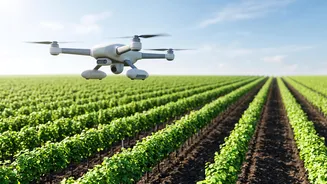
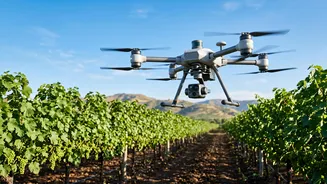
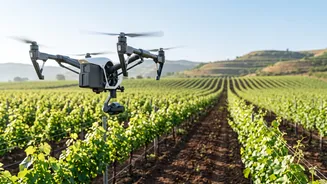
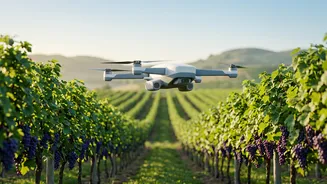
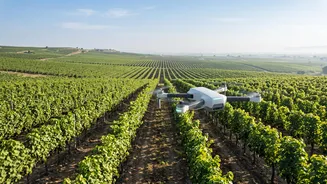
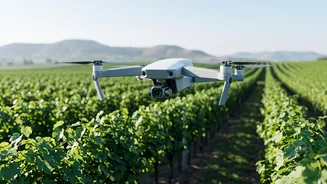
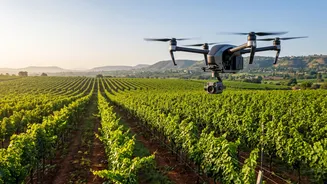
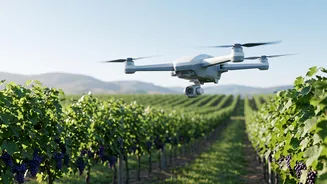
Precision agriculture offers a powerful alternative, and at its forefront are unmanned aerial vehicles (UAVs), or drones. These drones are equipped with advanced sensors that go far beyond standard cameras. They often carry multispectral or hyperspectral imagers, which capture light from frequencies outside the visible spectrum, such as near-infrared (NIR) and red-edge bands. Healthy plants reflect light differently than stressed or diseased plants. A plant infected with downy mildew, even before showing visible oily spots, will experience physiological changes that alter its spectral signature. By flying systematic patterns over the vineyards, these drones can gather high-resolution data from every single vine, creating a complete and detailed map of the entire field far faster than any human could.
The AI's Analytical Eye
Collecting the data is only half the battle. The real magic happens when Artificial Intelligence (AI) gets to work. The massive datasets captured by the drones are fed into sophisticated AI algorithms. These machine learning models have been trained on thousands of images of grape leaves—both healthy and afflicted with various stages of downy mildew and other diseases. The AI learns to identify the specific spectral patterns and textural changes that signal the very beginning of an infection. It can detect subtle shifts in chlorophyll levels or water content in the leaves that are invisible to the human eye. The system then generates a detailed health map of the vineyard, pinpointing individual plants or small clusters that show signs of stress, and flagging them for the farmer.
From Data to Decisive Action
The output isn't just a diagnosis; it's a strategic tool. Instead of blanket-spraying an entire vineyard with fungicides, farmers can now practice precision treatment. Armed with the AI-generated maps, they can target only the affected areas, sometimes even individual vines. This targeted approach dramatically reduces the amount of chemicals used, saving money, protecting the environment, and minimizing chemical residues on the grapes. The early detection—identifying the disease days or even weeks before visible symptoms appear—is the crucial advantage. It allows for intervention when the disease is most vulnerable and hasn't had a chance to spread, safeguarding the quality and quantity of the harvest. This shift from reaction to prevention represents a fundamental change in crop management, offering a more sustainable and profitable future.