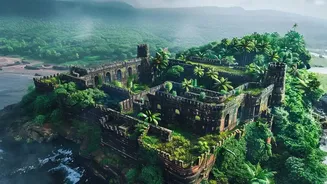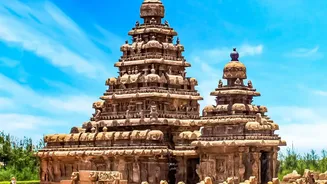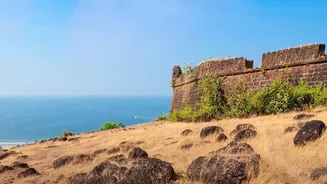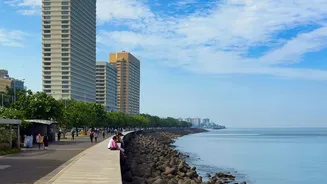





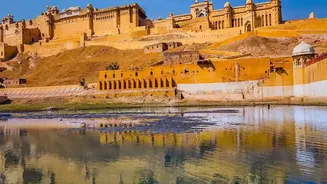
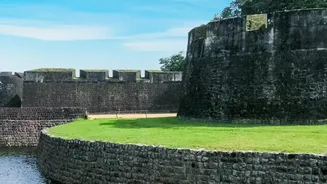
Dotting the Konkan coastline, Maharashtra’s sea forts rise from the Arabian Sea like stone sentinels. These marvels of engineering are more than just relics; they are storybooks of naval warfare, strategic genius, and a past worth protecting.
Sentinels of the Sea
For centuries,
the 720-kilometre coastline of Maharashtra was a theatre of maritime power. To control the lucrative sea trade routes and defend against rivals, rulers built one of the world's most sophisticated networks of marine fortifications. Unlike their land-based counterparts, these 'Jal Durgs' or water forts were built on rocky islands or jutting into the sea, using the water itself as a primary line of defence. They were hubs of naval activity, designed to repel attacks from European powers like the Portuguese and British, as well as regional adversaries. Forts like Sindhudurg, commissioned by Chhatrapati Shivaji Maharaj, and the unconquered Murud-Janjira, ruled for centuries by the Siddis, stand as testaments to this incredible legacy. Their construction was an art form, with hidden entrances, massive bastions, and walls engineered to withstand the relentless force of the sea.
The Unconquerable Murud-Janjira
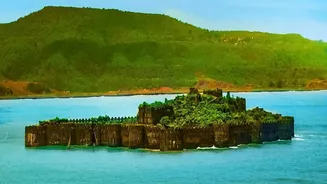
Perhaps no sea fort captures the imagination quite like Murud-Janjira. Rising from an oval-shaped rock, its 40-foot-high walls have remained unbreached for centuries. Originally a wooden structure built by Koli fishermen in the 15th century for protection from pirates, it was transformed into a formidable stone fortress by Malik Ambar of the Ahmadnagar Sultanate around 1567. The fort became the stronghold of the Siddis, rulers of Abyssinian origin, who commanded the seas from this island citadel. Despite repeated attempts by the Marathas under both Chhatrapati Shivaji Maharaj and Sambhaji Maharaj, the Portuguese, and the British, Janjira was never conquered by force. Its ingenious design includes 26 intact artillery towers, three massive cannons, and a main gate that is invisible until one is almost upon it. Astonishingly, despite being surrounded by saltwater, the fort contained its own sources of fresh water, allowing its inhabitants to withstand long sieges.
A Battle Against Time and Tide
Today, these magnificent structures face a different kind of enemy: neglect and nature. The same sea that once served as their greatest defence now poses the most significant threat. Relentless wave action, saline winds, and the increasing frequency of extreme weather events due to climate change are causing severe erosion and structural damage. These coastal heritage sites are exceptionally vulnerable to sea-level rise, which threatens to inundate them or cause them to crumble into the sea. Beyond natural decay, human factors like pollution and unregulated tourism add to the strain. While bodies like the Archaeological Survey of India (ASI) are tasked with their maintenance, the scale of the challenge is immense. The conservation of a sea fort is far more complex than that of a land fort, requiring specialised techniques and significant investment to combat the constant environmental assault.
More Than Just Stone and Mortar
Preserving these forts is about more than just protecting old buildings; it is about safeguarding a crucial part of India's cultural identity. They are invaluable repositories of history, offering profound insights into military strategy, architecture, and the societies that built them. For local communities, these forts are a source of pride and a key driver of the tourism economy. The recent inclusion of 12 Maratha military landscapes, including sea forts like Sindhudurg, in UNESCO's World Heritage list highlights their global significance. This recognition has spurred a new 10nd conservation plan aimed at preserving their historical integrity and managing visitor impact. Such efforts recognise that these sites are living heritage, with some, like Sindhudurg, still housing small residential communities within their walls. They are not just monuments to be viewed from afar, but educational resources and cultural hubs that connect us to our past.