








A Symphony for the Senses
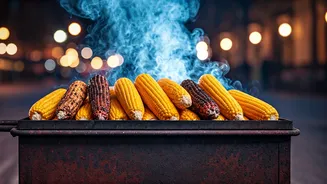
You see it before you smell it: the gentle glow of hot coals in a small metal brazier, fanned by hand into a fiery heart. A man, the bhutta-wallah, sits beside it, turning cobs of pale yellow corn over the heat. The kernels hiss and pop, charring in patches
to a beautiful, complex black. The sight is a beacon on a rainy evening, a promise of warmth and flavour. Then the smell hits you—a mix of woodsmoke, caramelising sugars from the corn, and the sharp, inviting tang of the masala mix waiting in its tin. This isn't just food; it's a multi-sensory performance that plays out on the streets of India every year, signalling the official start of the monsoon season.
The Perfect Alchemy of Flavour
The magic of bhutta lies in its profound simplicity. It is a masterclass in balancing the four fundamental tastes. First, you have the natural sweetness of the corn, heightened by the roasting process which concentrates its sugars. This sweetness is cut through by the smoky bitterness of the char, which adds a layer of complexity that grilling at home can rarely replicate. Then comes the masterful final touch. Once the cob is cooked to perfection, the vendor takes half a lime, dips it into a signature blend of spices—typically chaat masala, red chilli powder, and pungent kala namak (black salt)—and rubs it vigorously over the hot kernels. The sourness of the lime juice, the heat of the chilli, and the salty, funky depth of the masala create a flavour explosion that is at once chaotic and perfectly harmonious. Each bite is a journey: sweet, smoky, sour, spicy, and salty, all at once.
More Than a Snack, A Monsoon Ritual
Why does this simple street food hold such a powerful grip on the Indian imagination? Because bhutta is more than just corn. It's a shared cultural experience, a marker of time. It represents a pause in a busy day, a reason to stop the car or huddle under an awning with friends and family. Eating bhutta is an act of participation in the season. It’s the flavour of a long drive through the countryside during a downpour, the taste of an impromptu office break, the comfort food after a day spent navigating waterlogged streets. It's a memory trigger. For many, the smell of roasting corn is inextricably linked to childhood, to simpler times, to the joy of watching the rain fall without a care in the world.
The Keepers of the Flame
At the centre of this ritual is the bhutta-wallah. These vendors are the unsung heroes of the monsoon. They appear almost overnight as the season turns, setting up their humble stalls on pavements and at busy intersections. Theirs is a tough job—enduring the heat of the coals, the smoke, and often the rain itself, for hours on end. Each has their own technique, their own secret masala blend passed down or perfected over years. They are part of a vast, informal economy that thrives on seasonality. They are not just selling corn; they are selling nostalgia, comfort, and a small, affordable piece of happiness. Their presence on the street is as much a sign of the season as the clouds themselves.