





The Small Satellite Advantage
For decades, the word “satellite” conjured images of bus-sized spacecraft, costing billions and taking years to build and launch. Small satellites, or smallsats, have flipped that script. Ranging from the size of a large book (nanosatellites) to a mini-fridge,
these devices are cheaper to manufacture and launch. Their proliferation is driven by the miniaturisation of electronics and a growing demand for data. Instead of a single, expensive satellite, companies and countries can now deploy entire constellations of smaller units, providing more frequent and comprehensive coverage for everything from communications to Earth observation. This shift has lowered the barrier to entry, creating a massive global market opportunity that India is keen to capture.
A Startup Ecosystem Takes Flight
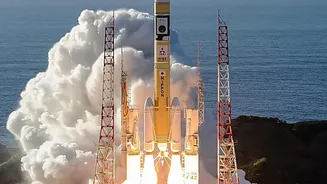
Until recently, India's space endeavours were synonymous with the Indian Space Research Organisation (ISRO). Now, a new generation of private companies is emerging from the shadows. Startups like Pixxel, Dhruva Space, and Skyroot Aerospace are becoming key players. Pixxel, for instance, is deploying a constellation of hyperspectral imaging satellites to provide detailed environmental data. Skyroot Aerospace recently marked a major milestone with the launch of its Vikram-1 rocket, designed specifically for the small satellite market. These companies, often founded by former ISRO engineers, are attracting significant investment and developing everything from launch vehicles to satellite components, creating a dynamic domestic industry.
Government Policy as a Launchpad
This private-sector boom didn't happen in a vacuum. It is the direct result of a major policy overhaul by the Indian government. The landmark Indian Space Policy 2023 was designed to institutionalise private participation across the entire space value chain. A key element was the creation of the Indian National Space Promotion and Authorisation Centre (IN-SPACe) in 2020. IN-SPACe acts as a single-window agency to promote, authorise, and supervise the activities of non-governmental entities (NGEs), effectively streamlining the process for startups to launch their services. This predictable regulatory framework gives private players the clarity and support needed to innovate and grow.
ISRO's New Role: From Player to Coach
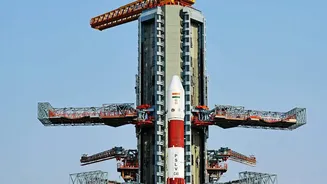
The rise of the private sector doesn't mean ISRO is becoming obsolete. Instead, its role is evolving. As outlined in the 2023 policy, ISRO is transitioning away from routine manufacturing and operations to focus on advanced research and development, deep space exploration, and national security missions. The organisation now acts as a mentor and enabler, sharing its world-class facilities and decades of expertise with private firms. A prime example of this is the Small Satellite Launch Vehicle (SSLV), a rocket designed by ISRO specifically for the smallsat market. ISRO has actively worked to transfer the SSLV technology to the private sector to scale up production and launch frequency, turning a government innovation into a commercial asset.
The Earthly Impact of Orbiting Tech
The applications for these small satellite constellations are vast and have a direct impact on India's economy and society. The high-frequency data they provide is invaluable for modern agriculture, enabling precision farming and crop yield forecasts. It enhances disaster management by offering real-time views of floods and cyclones, improves urban planning, and helps monitor climate change. For a country with vast remote and rural areas, satellite communication networks can bridge the digital divide. This growing demand from various sectors is a key driver fuelling the small satellite market's expansion.