


First Steps: Gear and Setup
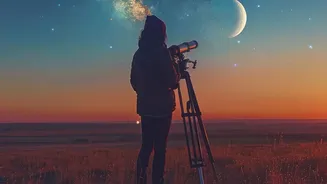
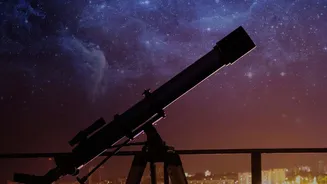
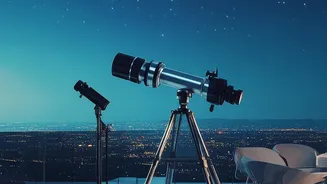
You don't need a professional telescope to begin your cosmic journey. The most important tool is patience, followed by a comfortable chair. Give your eyes at least 20 minutes to adjust to the darkness, away from streetlights or indoor lighting. While
the naked eye is powerful enough for many sights, a simple pair of binoculars can dramatically enhance your view, revealing details you would otherwise miss. Several smartphone apps can also help you identify stars and planets in real-time; simply point your phone at the sky to get a live map of the cosmos.
A Parade of Planets Before Dawn
The second half of August offers a fantastic pre-dawn spectacle. A rare alignment of six planets will stretch across the sky, though not all are easily visible. For those willing to wake up about an hour before sunrise, Mars and Saturn will be the easiest to spot with the naked eye. Mars will appear as a distinct reddish point of light high in the eastern sky, while Saturn will shine with a steady, yellowish glow further south. Jupiter and Mercury will be much lower on the eastern horizon, making them a challenge to see against the coming dawn, but worth the effort if you have a clear view. Uranus and Neptune are also part of this parade but will require binoculars or a small telescope to be seen.
Saturn Shines Bright
August is a great month to observe Saturn, even though its opposition—the point where it's brightest and closest to Earth—is on October 4. Throughout late August, the ringed planet will be well-placed for viewing for much of the night. It rises in the east around sunset and remains visible throughout the night, appearing as a bright, non-twinkling, yellowish-white 'star'. While you need a telescope to see its famous rings, its steady light makes it a beautiful and easily identifiable object for any balcony stargazer.
The Summer Triangle and the Milky Way
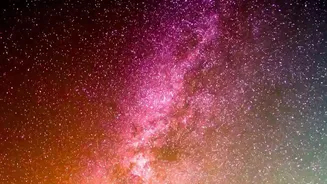
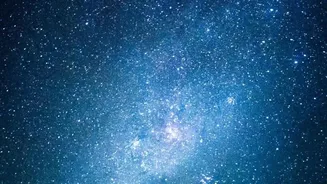
High in the sky, you can find one of the most famous asterisms (patterns of stars) of the season: the Summer Triangle. It's formed by three brilliant stars from three different constellations: Vega in Lyra (the Lyre), Deneb in Cygnus (the Swan), and Altair in Aquila (the Eagle). Vega is typically the brightest of the three and will be almost directly overhead on August evenings. On a clear, dark night, you might see a faint, cloudy band of light passing through the Summer Triangle. This is the Milky Way, our home galaxy, a breathtaking sight that becomes more visible as monsoon clouds part.
Look for the Teapot and the Scorpion
Lower in the southern sky, you can hunt for the constellation Sagittarius, which is known for an asterism that looks like a teapot. The spout of the teapot points directly towards the dense, bright centre of the Milky Way. Nearby lies Scorpius, the Scorpion, another prominent constellation easily identifiable by its hook shape and the bright, reddish star Antares, which marks the scorpion's heart. These constellations are best viewed from southern and central India but are visible from lower northern latitudes as well.
Catch a Few Final Shooting Stars
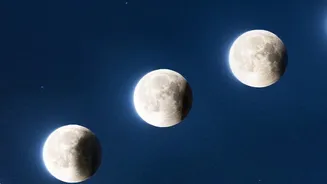
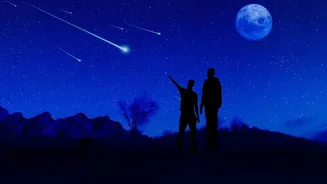
While the famous Perseid meteor shower peaks earlier in the month, another, quieter shower is active: the Kappa Cygnids. This shower peaks around August 17-18 and produces only a few meteors per hour. However, it is known for producing occasional bright, slow-moving fireballs. With the moon being a thin crescent that sets early, the sky will be dark, improving your chances of spotting one of these lingering shooting stars. Look toward the constellation Cygnus, part of the Summer Triangle, which will be high overhead.