








A Vision of Unprecedented Scale
Dubai's leadership has approved a monumental AED 128 billion (approximately $35 billion) plan to transform Al Maktoum International Airport (DWC) into the world's largest aviation hub. The project is staggering in its ambition, designed to eventually
handle up to 260 million passengers and 12 million tonnes of cargo annually. Plans include five parallel runways and 400 aircraft gates, creating a facility roughly five times the size of the bustling Dubai International Airport (DXB) it is destined to replace. Construction is already underway, with the first phase targeted for completion and operations by 2032, aiming for an initial capacity of 150 million passengers. This isn't just an expansion; it's the creation of an 'aerotropolis'—an entire city built around the airport in the Dubai South logistics zone.
The Challenge of Replicating Success
The monumental task ahead is not just building DWC, but migrating the intricate, world-class ecosystem of Dubai International (DXB). For years, DXB has been the world's busiest airport for international travellers, a model of efficiency that airlines and passengers have come to rely on. Its success is built on seamless connectivity, where millions of transit passengers, including a huge number from India, move smoothly between flights. Replicating this delicate operational ballet 37 kilometres away in the desert is a logistical challenge of historic proportions. The move involves not just airlines but a web of interconnected services: catering facilities that produce hundreds of thousands of meals daily, massive engineering complexes, and the entire support staff ecosystem.
The Confidence Deficit for Airlines
The headline's mention of "eligibility confidence" points to the core issue: convincing airlines to make the leap. For a hub carrier like Emirates, a split operation between two airports is a logistical nightmare that fragments its fleet, complicates passenger transfers, and drives up costs. The airline has made it clear it will not divide its hub. The transition must be a complete, one-shot move, which means DWC must be fully capable of handling the airline's entire massive operation from day one. This requires unwavering confidence that the new airport will function flawlessly, without the teething problems that often plague new mega-projects. Any disruption could damage the carefully cultivated reputation for reliability that has made Dubai a global crossroads. The process will be a gradual, phased transition over the next decade, not a single 'flip the switch' moment.
Why the Move is Non-Negotiable
Despite the risks, staying put is not an option. DXB is a victim of its own success, geographically hemmed in by urban development with no room for further physical expansion. With Emirates and flydubai having placed massive orders for new widebody aircraft, DXB simply won't have the gates or runway slots to accommodate future growth. The decision to move is therefore a strategic necessity to secure Dubai's aviation dominance for the next 40 years and fend off growing competition from other regional hubs. By the time the full transition occurs, much of DXB's infrastructure will be nearing the end of its operational life, making a complete move more economically sensible than a costly overhaul of the old site.
What It Means for Travellers
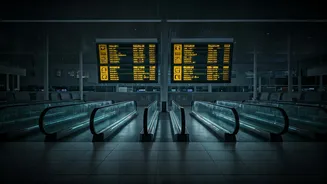
For the millions of passengers who transit through or visit Dubai, the change will be significant. The convenience of DXB's relatively central location will be replaced by a journey to Dubai South. The success of the project will be judged by the passenger experience. Planners are promising a futuristic, seamless process, using AI and biometrics to eliminate queues and delays. The new airport will also be integrated with high-speed rail, potentially linking to other emirates. However, in the short to medium term, travellers will need to pay close attention to which airport their airline operates from. Any operational hiccups during the transition could lead to delays and disruptions, as have been seen recently due to regional issues.