





The 'Shoulder Season' Advantage
In the travel industry, the period between the peak and off-peak seasons is known as the 'shoulder season'. For many Southeast Asian countries, this falls precisely in October and November. This window offers the best of both worlds: the weather is far
better than the preceding rainy season, but the large crowds and high prices of the peak tourist rush (December to February) have not yet arrived. Airlines and hotels, eager to attract visitors after a lull, often lower their rates, creating significant savings for savvy travellers. It’s a time for more authentic experiences, allowing for genuine interactions with locals and a deeper cultural immersion without the usual tourist rush.
Perfect Post-Monsoon Weather
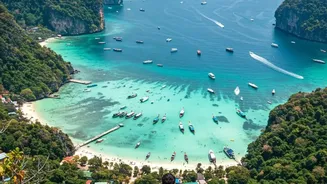
One of the biggest draws of this period is the fantastic weather. Across much of mainland Southeast Asia, including popular destinations like Thailand, Vietnam, and Cambodia, the monsoon rains typically conclude by late October. What follows are months of drier, sunnier, and less humid conditions, with comfortable temperatures perfect for exploring ancient temples, lounging on beaches, or trekking through lush landscapes. For instance, Northern Vietnam, including Hanoi, sees cooler, pleasant weather, while beach destinations in Thailand like Phuket and Krabi reopen after the monsoon, boasting clear skies and calm seas. This ideal climate makes it possible to enjoy outdoor activities without the oppressive heat of summer or the constant downpours of the rainy season.
Significant Savings on Flights and Stays
The most compelling reason for many is the financial benefit. Data consistently shows that November is one of the cheapest months for flights from India to Southeast Asia. For example, round-trip fares to Thailand can be found for as low as ₹13,500-₹23,000, and to Vietnam for around ₹16,000-₹25,000, figures that are considerably lower than the peak season in December and January. This trend extends to accommodation, where hotel occupancy rates are lower, leading to more competitive pricing and the possibility of securing luxury stays for a fraction of the peak season cost. This pre-Diwali travel window often represents a final dip in prices before the festive holiday surge from late October onwards.
Fewer Crowds, Richer Experiences
Imagine exploring Angkor Wat without a sea of tourists or finding a secluded spot on a Thai beach with ease. This is the reality of travelling in the shoulder season. With fewer visitors, popular attractions are more accessible, queues are shorter, and the overall atmosphere is more relaxed. This allows for a more personal and immersive journey. You can take your time at museums, capture photographs without dozens of people in the background, and get a better sense of the local rhythm of life. Restaurants are less crowded, and you might find it easier to book sought-after tours and activities, even at the last minute. This less-crowded environment transforms a good trip into an unforgettable one.
Ideal Destinations for This Window
Several Southeast Asian gems are at their best during these months. In Thailand, the weather becomes ideal for both the northern city of Chiang Mai and the southern beaches of the Andaman Sea. Vietnam offers a diverse experience, with the north (Hanoi, Halong Bay) entering its beautiful dry season, even as the central coast might still see some rain. Cambodia's dry season begins in November, making it perfect for exploring the temples of Siem Reap. Even Malaysia and Singapore, which have slightly different weather patterns, can be great options, though it's wise to check specific regional forecasts. For those seeking value, Vietnam is often cited as the cheapest on-ground destination, while Malaysia frequently offers competitive flight deals.