



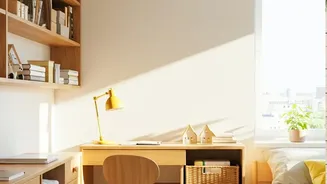
Living with a small bedroom doesn't mean sacrificing function or style. The secret is to think beyond furniture and create distinct 'zones' for every activity, making even the tiniest room feel organised, spacious, and purposeful.
Start With the Sleep Zone
The bed is the anchor
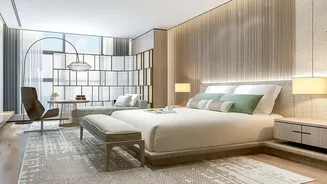
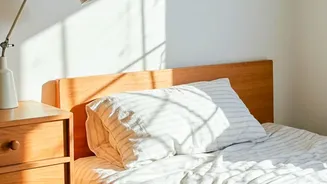
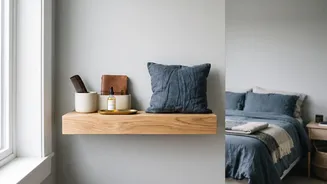
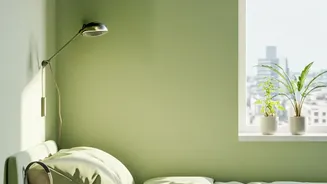
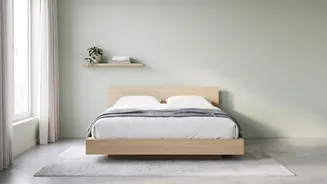
of your bedroom, so its zone should be treated as a sanctuary. This area is exclusively for rest and relaxation. To define it, consider placing your bed against the longest wall to create a clear focal point. If the room is very narrow, tucking the bed into a corner can free up valuable floor space. Use a rug that extends beyond the frame to visually ground the area. Soft textures and warm, calm colours for your bedding can help signal that this space is for unwinding. To keep the zone clutter-free and save floor space, opt for wall-mounted sconces instead of bulky bedside lamps and consider floating shelves as minimalist nightstands.
Carve Out a Dedicated Work Nook
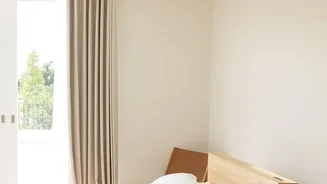
In today's world, a bedroom often doubles as a home office. It's crucial to separate this work zone from your sleep zone to maintain a healthy work-life balance. You don't need much space. A corner can be transformed with a compact or floating desk, which keeps the floor clear and makes the room feel lighter. Placing your desk near a window provides natural light, making the workspace more pleasant. If space is extremely tight, a narrow desk can also serve as a nightstand, merging two functions into one footprint. Use vertical space by adding shelves above the desk for books and supplies, which draws the eye upward and reduces surface clutter.
Establish a Dressing and Storage Zone
A dedicated dressing area helps contain the daily chaos of getting ready. Group your storage furniture, like a tall, narrow dresser and any open shelving, along one wall. Thinking vertically is key in small rooms; tall furniture takes up less floor space while maximizing storage. If you don't have a closet, an open wardrobe nook with a hanging rail and a set of drawers can look intentional and chic, especially with matching hangers. Mirrors are essential in this zone. A full-length mirror not only serves a practical purpose but also reflects light and creates an illusion of depth, making the entire room feel larger.
Create a Small Nook for Relaxation
If space permits, even a tiny corner can become a zone for unwinding, reading, or enjoying a cup of tea. This 'hobby zone' gives you a place to decompress that isn't your bed. All you need is a comfortable chair, perhaps a lightweight woven one that can be moved easily, and a small side table or a floor lamp. This helps separate leisure activities from sleep, reinforcing the bed's primary purpose. Using a small, distinct rug in this corner can also help define it as a separate, cosy escape within the larger room.
Use Dividers, Rugs, and Paint to Define Zones
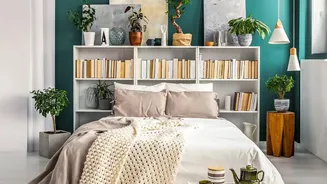
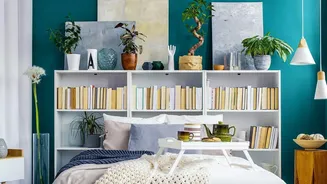
You don’t need walls to create separation. Area rugs are one of the most effective tools for zoning. A different rug under your bed, desk, or in your seating nook acts as a powerful visual cue, creating invisible boundaries. For a more physical division, consider an open bookshelf or a decorative screen. These act as partial dividers, separating spaces without blocking light completely. Paint can also be a clever tool. Painting the wall behind your bed a different, darker colour can create a feature wall that visually designates the sleep zone and adds depth to the room.
Embrace Multifunctional Furniture
In a small, zoned bedroom, every piece of furniture should work hard. Multifunctional furniture is your best friend. A bed with builtin drawers underneath eliminates the need for a separate bulky dresser. A storage ottoman at the foot of the bed can hide linens or shoes while also providing seating. A desk that doubles as a vanity or a console that expands into a larger surface are other smart solutions that save space and reduce clutter. By choosing pieces that serve multiple purposes, you reduce the overall number of items in the room, making each zone feel more open and intentional.