


Sailing on a River of Light
Imagine a sailboat on the open ocean, its sails catching the wind to move forward. Now, replace the ocean with the vacuum of space and the wind with sunlight. This is the core concept behind a solar sail. Sunlight is made up of particles called photons.
While they have no mass, they carry momentum. When these photons bounce off a large, reflective surface—the 'sail'—they transfer that momentum, giving the spacecraft a tiny, continuous push. Unlike a chemical rocket that provides a powerful burst of thrust for a short time, a solar sail provides a gentle but constant acceleration. In the frictionless environment of space, this small, unending push can build up over time, eventually propelling the spacecraft to incredible speeds without using a single drop of fuel.
The 'Cheap' in Space Propulsion
The biggest barrier to space exploration has always been cost, and the biggest driver of cost is weight. A conventional spacecraft must carry all its fuel, which is incredibly heavy. Launching this mass out of Earth's gravity requires enormous, expensive rockets. Solar sails completely sidestep this problem. Since the 'fuel'—sunlight—is everywhere and unlimited, the spacecraft doesn't need to carry any propellant. This drastically reduces the spacecraft's mass. A lighter spacecraft can be launched on a smaller, much cheaper rocket, fundamentally changing the economics of a mission. One estimate for a mission to Mars suggested that using a solar sail could cut the cost to just two percent of a conventional rocket mission. This cost reduction doesn't just make existing missions cheaper; it makes entirely new types of long-duration missions possible.
An Engineering Marvel Takes Flight
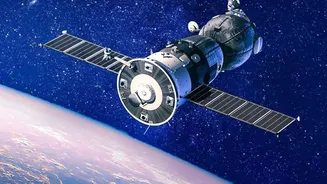
The 'sail' itself is a feat of advanced engineering. It needs to be enormous to catch enough sunlight, often spanning the size of a racquetball court or even larger, yet be astonishingly lightweight and thin—sometimes thinner than a human hair. These sails are typically made of highly reflective materials like an aluminum-coated polyimide. The technology is no longer science fiction. Japan's IKAROS mission successfully demonstrated solar sailing in 2010, and The Planetary Society's LightSail 2 mission, which ended in 2022, proved that even small satellites could use this technology to change their orbit. NASA continues to push the envelope, developing advanced composite materials for the booms that deploy the sails, making them lighter and more robust for deep space conditions.
The Perfect Tool for Asteroid Hopping
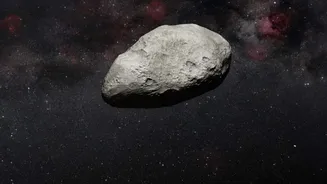
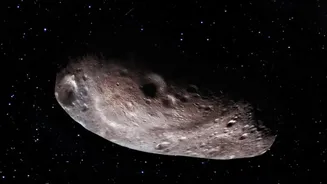
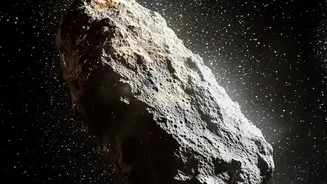
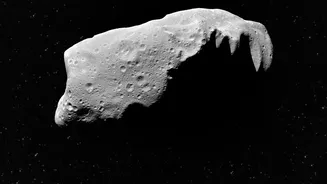
Near-Earth Asteroids (NEAs) are remnants from the birth of our solar system, holding valuable scientific clues. They are also important to track for planetary defense. However, there are thousands of them, often in tricky orbits that are difficult and costly to reach. This is where solar sails truly shine. A chemical rocket is good for a direct, high-energy trip to a single destination. But visiting multiple asteroids requires numerous complex orbital adjustments, which would consume an prohibitive amount of fuel. The continuous, low-thrust propulsion of a solar sail is perfect for this kind of 'asteroid hopping'. A sail-powered craft can gracefully and efficiently alter its trajectory over time, allowing it to rendezvous with multiple targets in a single mission. NASA’s NEA Scout mission was designed specifically to prove this low-cost reconnaissance concept.