




The Kayaking Experience
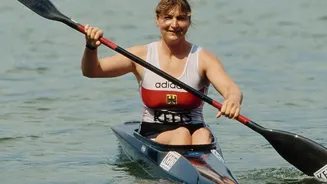
Kayaking places you in a seated position, low to the water, creating a stable centre of gravity that many beginners find comforting. The workout primarily comes from pulling a double-bladed paddle through the water. While it may look like an arm-centric
exercise, proper technique transforms it into a powerful core workout. Each paddle stroke should originate from the rotation of your torso, engaging your obliques, abdominal muscles, and lower back. Your legs and hips aren't just along for the ride; they press against footrests to provide stability and help transfer power from your core to your paddle. This makes kayaking an excellent choice for developing rotational core strength and upper-body endurance, targeting the back, shoulders, and arms. It's generally considered more efficient for covering long distances or paddling into wind due to its lower profile.
The Paddleboarding Challenge
Stand-up paddleboarding offers a completely different physical experience. By standing on the board, you raise your centre of gravity, turning the activity into a constant balancing act. From the moment you stand up, your body’s deep core muscles, along with stabilising muscles in your ankles, legs, and hips, are continuously engaged to keep you upright. Your abdominal muscles never truly get to relax, even on calm water. This makes SUP an exceptional workout for building functional core stability. While you still use your upper body to paddle, the engagement is more of a full-body effort, activating everything from your legs to your back with every stroke. The standing position also provides a unique, higher vantage point for enjoying the scenery and seeing into the water.
Core Stability: A Tale of Two Workouts
Both sports are fantastic for your core, but they strengthen it in different ways. Kayaking builds a strong core through dynamic, powerful rotational movements. Think of it as developing strength through twisting, which is great for power generation. The support of the seat means your core works hardest during the paddling motion itself.In contrast, paddleboarding builds core strength through constant stabilisation. Your core has to work continuously just to keep you balanced on an unstable surface, much like standing on a balance board at the gym. This targets deep, intrinsic muscles that are crucial for posture and preventing injury. If your primary goal is a comprehensive, full-body workout with a heavy emphasis on balance and stabilising strength, SUP has the edge. If you're focused on upper-body endurance and rotational power, kayaking is an ideal fit.
Beyond the Workout: Other Key Differences
Your choice might also come down to practical considerations. For beginners, kayaking can feel more stable initially because of the low, seated position. However, many find wide, inflatable SUPs surprisingly easy to learn on, and falling off into the water for a swim is often part of the fun. When it comes to gear, inflatable paddleboards often win on portability and storage, as they can be deflated and packed into a large backpack. A rigid kayak, on the other hand, requires a roof rack for transport and significant storage space. Consider your typical paddling environment as well. Kayaks generally handle windy and choppy conditions better than paddleboards, where a standing person can act like a sail. For long-distance touring or carrying gear for an overnight trip, the efficiency and storage options of a sea kayak are hard to beat. However, a paddleboard offers unmatched versatility for a casual day on the water—you can stand, kneel, sit, or even use it as a platform for yoga or fishing.