
The Ultimate Creative Challenge
Theoretical astrophysics is, by definition, a world of concepts we can’t see. It exists in mathematics, in thought experiments, and in the complex equations scribbled on chalkboards. Translating this to a visual medium like cinema presents a monumental
task. It’s not about creating a spaceship or an alien, but about visualizing the very fabric of spacetime, gravity, and dimensions beyond our own perception. For decades, science fiction films often sidestepped this, opting for fantasy-based rules. But a new breed of director has embraced the challenge, seeking to ground their most fantastic ideas in the laws of our universe, creating a genre of 'hard sci-fi' that both awes and educates.
The Nolan Method: Science as a Screenwriter
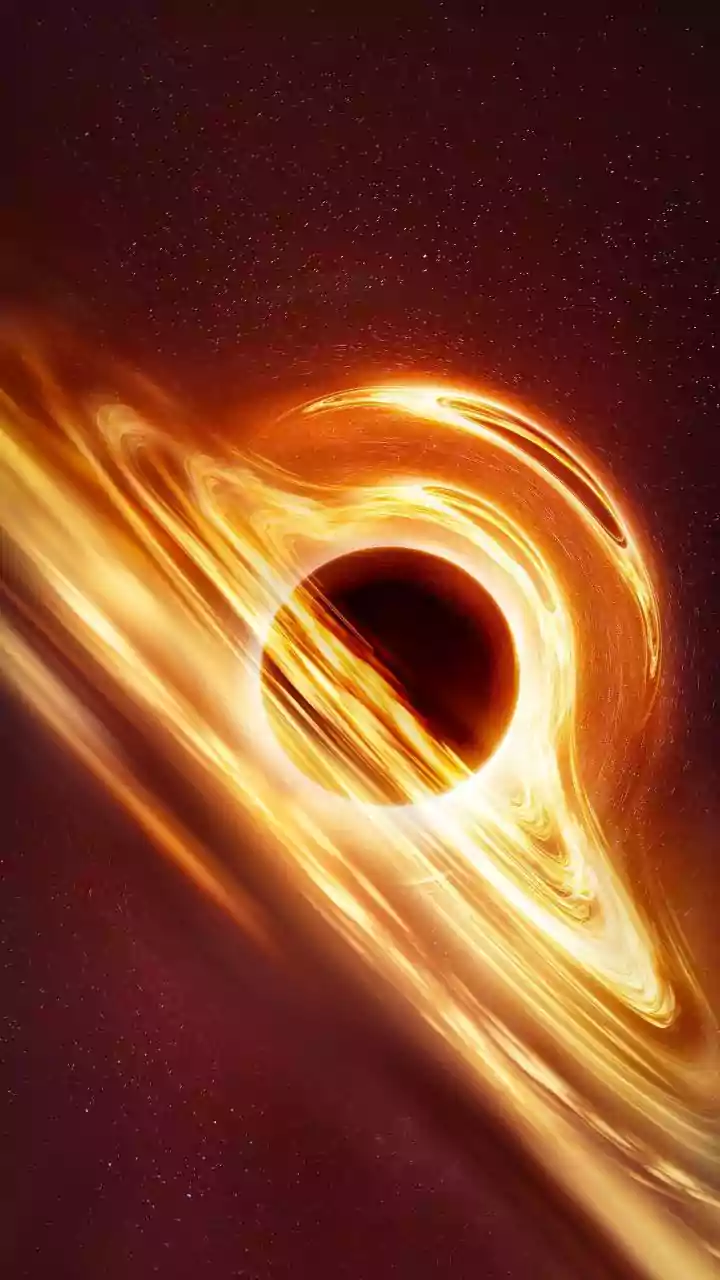
No director is more associated with this trend than Christopher Nolan. For his 2014 epic Interstellar, he didn’t just consult a scientist; he embedded one in the creative process. Nolan collaborated with Nobel laureate and theoretical physicist Kip Thorne from the project's inception. Thorne's mandate was to ensure the film's depictions of wormholes, relativity, and black holes were as accurate as possible. This partnership led to what is widely considered the most scientifically accurate visualization of a black hole in cinema history. The visual effects team didn't just guess what a black hole might look like; they developed new rendering software based on Thorne's equations to simulate how light would bend around such a massive object, a phenomenon called gravitational lensing. The resulting image of the black hole, Gargantua, was so precise that it led to new scientific insights and was used by Thorne in academic papers.
Grounding Concepts in Human Emotion
For these films to be entertainment and not just a lecture, the science must serve a human story. This is perhaps the most crucial step. Interstellar uses the theory of time dilation—where time passes slower for a person traveling near a massive object—to create its devastating emotional core. A few hours for the astronauts near a black hole translates to decades passing on Earth, separating a father from his children. In Robert Zemeckis’s Contact, based on a story by astronomer Carl Sagan, the search for extraterrestrial intelligence is framed through one scientist's lifelong quest for meaning and connection, inspired by Sagan's real-life friend and SETI scientist Jill Tarter. Similarly, Denis Villeneuve's Arrival uses a complex linguistic theory—the Sapir-Whorf Hypothesis—to explore themes of grief, memory, and choice. The main character’s ability to perceive time non-linearly becomes a profound and personal journey.
Visualizing the Unseeable
Long before CGI, directors found ingenious ways to show the unshowable. In 1968, Stanley Kubrick's 2001: A Space Odyssey took audiences on a journey 'beyond the infinite' without a single computer-generated image. The famous 'Stargate' sequence was created using a pioneering technique called slit-scan photography, which involved moving a camera past a series of illuminated artworks to create the illusion of traveling through a cosmic tunnel. Many other effects in the film were achieved with practical, in-camera tricks, like using front-projection to create the realistic African backdrops. These early innovations set the stage for modern visual effects. The challenge today is not just creating a spectacle, but creating a scientifically plausible one. In Interstellar, the VFX team had to abandon standard ray-tracing software, which assumes light travels in straight lines, and build a new renderer from scratch to accurately model Gargantua's warped spacetime.