
Seeing the Invisible Universe
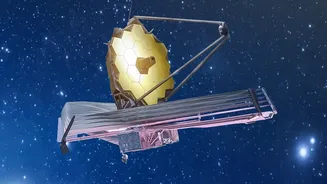
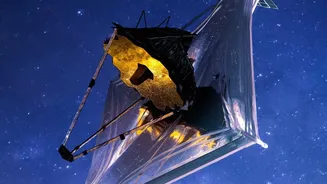
For centuries, astronomy was primarily a visual science, relying on telescopes that see the same kind of light our eyes do. The Hubble Space Telescope expanded this view, but it operated largely within the visible and ultraviolet spectrum. The James Webb
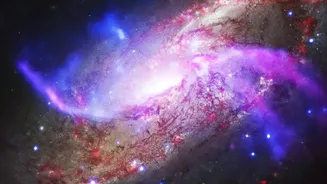
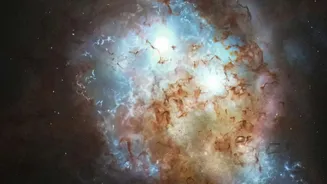
Space Telescope represents a fundamental shift because it is designed to see the universe in infrared light. This is crucial for two reasons. First, as the universe expands, the light from the very first stars and galaxies gets stretched into longer, redder wavelengths, eventually becoming infrared light—a phenomenon called 'redshift'. By seeing in infrared, Webb can look further back in time than any previous observatory. Second, stars and planets form inside dense clouds of cosmic dust that visible light cannot penetrate. Infrared light, however, passes right through, allowing Webb to witness the birth of stars and planetary systems in unprecedented detail.
A New Era for Research
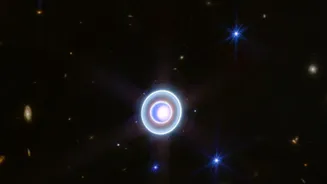
Beyond specific theories, Webb is transforming the day-to-day tradition of scientific research. The sheer volume and quality of data have accelerated the pace of discovery to a breakneck speed. Theories that once took years to debate can now be tested with startling efficiency. This has created a more dynamic and sometimes unsettled environment where new findings can challenge established ideas almost overnight. The telescope's capabilities have also opened up entirely new fields of inquiry. For example, by analyzing the light that passes through the atmospheres of exoplanets, Webb can identify molecules like water and methane, fundamentally changing the search for habitable worlds. It is transforming the study of our own solar system, too, providing new insights into everything from the atmospheres of giant planets to the composition of asteroids. This firehose of information is forcing a paradigm shift, requiring new models, new software, and a new level of global collaboration to make sense of it all.