





Light and Your Internal Clock
Your body runs on an internal 24-hour clock known as a circadian rhythm, which governs your sleep-wake cycle. This clock is profoundly influenced by light. Exposure to bright, cool-toned light—similar to natural daylight—suppresses the sleep hormone melatonin,
making you feel alert and focused. Conversely, as evening approaches, dimmer, warmer light signals your brain to produce melatonin, preparing your body for rest. Disrupting this natural cycle with the wrong kind of artificial light at night, especially blue light from screens and some harsh LEDs, can interfere with your ability to fall asleep and impact sleep quality. This connection between light, mood, and sleep is the key to creating a home that not only looks good but feels good, too.
The Minimalist Approach to Light
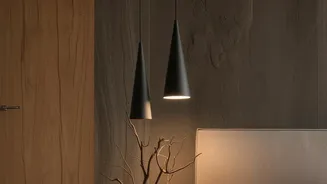
Minimalist design isn't about emptiness; it's about purpose. It prioritizes clean lines, simple forms, and a 'less is more' philosophy. When applied to lighting, this means moving away from a single, harsh overhead fixture that can make a room feel flat and confined. Instead, minimalism encourages using fewer, more strategic light sources that are both functional and beautiful. The goal is to choose fixtures that complement the architecture without adding visual clutter. In a small space, this is crucial. A minimalist approach might involve a sleek, low-profile ceiling light paired with a slender wall sconce, creating illumination without overwhelming the room. The focus is on the quality and effect of the light itself, not on ornate decoration.
Layering Light for Depth and Function
Professional designers use a technique called 'layered lighting' to make spaces more functional and visually appealing. This involves combining three types of light: ambient, task, and accent. Ambient light provides the room's overall illumination, often from a flush mount or semi-flush mount ceiling fixture that distributes light evenly. Task lighting is focused on a specific area for activities like reading or cooking, such as a desk lamp or under-cabinet strips. Accent lighting highlights specific features, like artwork or architectural details. Even in a tiny room, using at least two or three light sources instead of one creates depth, reduces harsh shadows, and makes the space feel larger and more thoughtfully designed.
Choosing the Right Color Temperature
The color of light, measured in Kelvin (K), dramatically affects a room's atmosphere. Lower Kelvin numbers (2700K-3000K) produce a warm, cozy, yellow-orange glow similar to candlelight or a traditional incandescent bulb. This is ideal for living rooms and bedrooms, as it promotes relaxation. Higher Kelvin numbers (4000K-5000K) create a cool, crisp, bluish-white light that mimics daylight and boosts energy and focus, making it suitable for kitchens and home offices. For small living spaces, a warm-to-neutral white light (around 3000K) is often recommended to keep the area feeling bright but also inviting. Consistency is key; mixing warm and cool bulbs in the same small room can feel jarring and disconnected.
Smart Strategies for Small Spaces
Making a small space feel open and airy requires clever lighting choices. Prioritize fixtures that save space, such as wall sconces, which free up floor and table surfaces. Low-profile flush or semi-flush ceiling lights are excellent for rooms with low ceilings because they provide broad light without dropping into your line of sight. Directing light upwards with vertical fixtures or adjustable spotlights can draw the eye upward, creating an illusion of height. Dimmers are also a powerful tool, allowing you to adjust the intensity of your ambient light from bright and functional during the day to soft and relaxing in the evening, perfectly supporting your circadian rhythm.