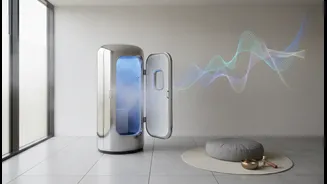










The Inner World: Your Mind as a Filter
First, let's acknowledge the power of a calm mind. The ability to stay centred amidst chaos is a valuable skill. Practices like mindfulness, meditation, and simple breathing exercises help regulate our internal response to external pressures. When we cultivate
a calm demeanour, we are less reactive. Our mind acts as a filter, softening the blows of a stressful day. Research on mindfulness shows it can disrupt habitual thought patterns, allowing for more purposeful consideration of our surroundings. This internal work is crucial because it gives us a sense of control and agency. It's the portable peace we carry with us, allowing us to find a moment of quiet even in a noisy, demanding world. This capacity for self-regulation helps us cope better with life's inevitable stressors, making us more resilient.
The Outer World: How Your Space Shapes You
Now, consider the other side of the coin: your environment. The field of environmental psychology is built on the idea that our surroundings significantly influence our thoughts, moods, and behaviours. Factors like light, noise, air quality, and organisation can have a profound impact on our mental health. Studies have shown that cluttered, disorganised spaces are linked to higher levels of the stress hormone cortisol. A messy room can create a sense of chaos and anxiety, making it harder to focus and relax. In contrast, a clean, organised, and aesthetically pleasing environment can foster feelings of calm, control, and happiness. The visual signals your brain receives from your environment matter more than you might think.
The Feedback Loop: Inner and Outer Worlds Collide
The real magic happens when you see these two forces not as separate, but as interconnected in a continuous feedback loop. Your state of mind affects how you perceive and interact with your environment, and your environment, in turn, influences your mental state. For instance, if you're feeling stressed and overwhelmed, you might lack the energy to tidy up, leading to a cluttered space that only increases your anxiety. Conversely, spending just a few minutes decluttering a small area can provide a sense of accomplishment and calm, making it easier to tackle mental stress. Similarly, a calm mind is more likely to appreciate the soothing aspects of a natural setting, and that exposure to nature further reduces stress and improves mood. One study found that while nature exposure improves mood, those who practiced mindfulness during a walk outdoors reported an even stronger connection to nature and less negative emotion.
Harnessing Nature's Therapeutic Power
One of the most powerful environmental tools at our disposal is nature. An extensive body of research confirms that exposure to green spaces—parks, forests, or even a room with a view of trees—can lower stress, boost mood, and improve concentration. Spending time in nature triggers a physiological response that lowers cortisol levels, heart rate, and blood pressure. Even short bursts of nature exposure, like a 20-minute walk in a park, can have significant benefits. The good news is that you don't need a trip to the wilderness. Urban parks, indoor plants, and even listening to nature sounds can provide a calming effect. Integrating these natural elements into our daily lives is a simple yet profound way to support our mental well-being, especially in dense urban environments.
Small Steps to Master Both Realms
So, how can you apply this knowledge? It’s about taking small, intentional actions on both fronts. For your inner world, try a five-minute daily meditation or a simple deep-breathing exercise when you feel stressed. For your outer world, start small. Don't try to overhaul your entire home in one day. Choose one small space—a single drawer, your work desk, or a corner of your room—and declutter it. Notice the feeling of clarity it brings. Open your windows to let in natural light, which helps regulate sleep cycles and mood. Buy a small plant for your desk. By making conscious, minor adjustments to both your mindset and your space, you create a powerful, positive cycle that supports your overall well-being.