


The Problem with 'Too Big'
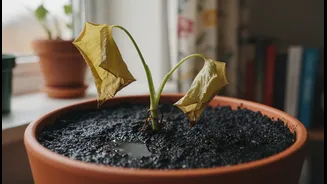
It might seem logical to give a plant plenty of room to grow, but a pot that's too large can be a death sentence. An oversized container holds a large volume of soil that the plant's current root system can't reach. This excess soil retains too much moisture
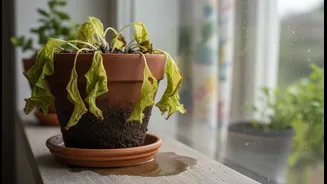
for too long after watering, creating a waterlogged environment. Without enough oxygen, roots can't breathe and begin to decay, leading to a condition called root rot, which can quickly kill a plant. A plant in a pot that is too big may also focus its energy on developing roots to fill the space, rather than producing new leaves and flowers, causing its growth to stall.
The Dangers of 'Too Small'
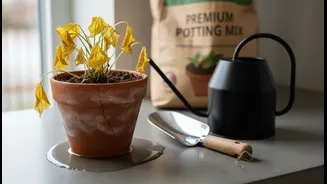
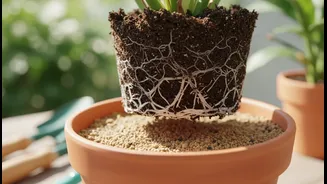
On the other hand, a pot that is too small can effectively strangle your plant. As the plant grows, its roots will run out of space and begin to circle the bottom of the pot, a condition known as being 'root-bound'. These tangled roots have a hard time absorbing water and essential nutrients. You might notice that water runs straight through the pot without being absorbed or that the plant's growth has become stunted and its leaves are turning yellow. A small pot also contains less soil, meaning it dries out very quickly and requires more frequent watering to prevent the plant from suffering from water stress.
Finding the 'Just Right' Fit
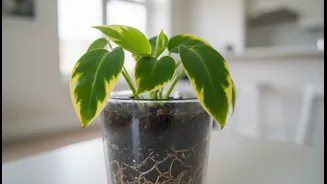
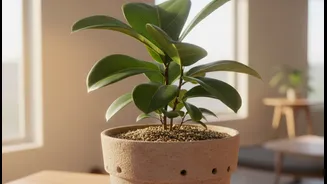
The key is to find a pot that follows the 'Goldilocks' principle—not too big, not too small. A good rule of thumb when repotting is to choose a new container that is only about 1 to 2 inches larger in diameter than the current pot for smaller plants. For larger, faster-growing plants, you can go up by 2 to 4 inches. Before you repot, it's a good idea to gently remove the plant from its current container and examine the roots. If you see a dense network of roots filling the pot, it's time to size up. If you see more soil than roots, it can likely stay in its current home a while longer.
The Non-Negotiable: Drainage
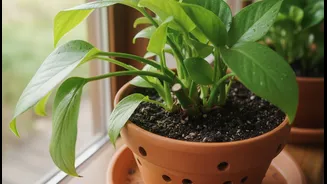
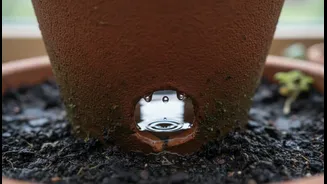
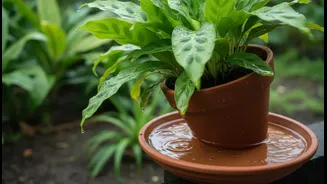
Regardless of size or style, one feature is absolutely essential for a healthy plant: drainage holes. Most houseplants cannot tolerate sitting in standing water. A hole in the bottom of the pot allows excess water to escape, which is crucial for preventing root rot and allowing air to circulate around the roots. Many stylish decorative pots don't have drainage holes, which brings us to the perfect compromise between function and fashion.
The Cachepot: Get the Best of Both Worlds
You don't have to sacrifice style for the sake of your plant's health. The solution is to use a 'cachepot' (pronounced "cash-po"), which is French for "to hide a pot." This technique involves keeping your plant in its simple plastic nursery pot (which has excellent drainage) and placing that pot inside your beautiful decorative container. This two-pot system gives you aesthetic freedom without compromising on drainage. When you water, you can either remove the inner pot and let it drain completely in a sink before returning it to the cachepot, or water it in place and simply pour out any excess water that collects at the bottom of the decorative pot after an hour.