


Why Functional Strength Matters
When we talk about 'core training', many people picture exercises that target the 'six-pack' muscles, like sit-ups. But your core is much more than that. It's a complex system of muscles including your abs, obliques, lower back, and even your glutes and pelvic
floor. Functional core training focuses on teaching these muscles to work together as a single unit, just as they do in real life. The benefits go far beyond aesthetics. A strong, functional core provides stability for your spine, improves your posture, enhances balance, and reduces the risk of lower back pain and injury. It's the foundation for almost every move you make, from lifting groceries to playing sports.
The Plank
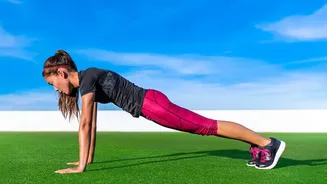
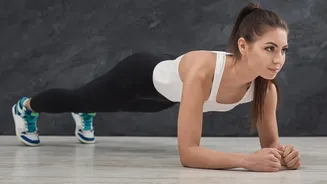
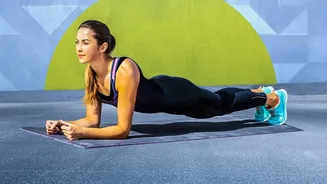
The plank is a foundational exercise for a reason: it engages your entire core. To perform a forearm plank, support your body on your forearms and toes, ensuring your elbows are directly under your shoulders. Your body should form a straight line from your head to your heels. Avoid letting your hips sag or rise too high. Engage your abdominal muscles by pulling your navel toward your spine and clench your glutes. Hold this position, breathing steadily. If you're a beginner, aim for 20-30 seconds and gradually increase the time as you get stronger. A 12-week study showed that regular plank training can significantly improve abdominal muscle endurance.
The Dead Bug
Deceptively simple, the dead bug is a fantastic exercise for improving core stability and coordination without straining your back. Start by lying on your back with your arms extended toward the ceiling and your knees bent at a 90-degree angle over your hips. Press your lower back gently into the floor. Slowly lower your right arm and left leg toward the floor simultaneously, stopping just before they touch the ground. The key is to keep your core engaged and prevent your lower back from arching. Return to the starting position with control and repeat on the other side, alternating your left arm and right leg. This completes one rep.
The Bird-Dog
The bird-dog is another excellent exercise for promoting spine stability and strengthening the muscles in your core, back, and glutes. Begin on all fours with your hands directly under your shoulders and your knees under your hips. Keep your back flat and your head in a neutral position. Engage your core, then slowly extend your right arm straight forward and your left leg straight back, keeping your hips and shoulders square to the floor. Imagine you're balancing a glass of water on your lower back. Hold for a moment, then return to the starting position with control. Repeat with the opposite arm and leg.
Glute Bridge
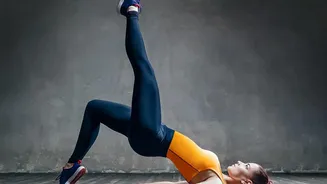
While often seen as a glute exercise, the glute bridge is also a powerful move for your posterior core muscles, which are crucial for lower back health and pelvic stability. Lie on your back with your knees bent, feet flat on the floor hip-width apart, and your arms by your sides. Engage your core and glutes, and lift your hips off the floor until your body forms a straight line from your shoulders to your knees. Squeeze your glutes at the top and avoid over-arching your back. Hold for a couple of seconds before slowly lowering your hips back down. This exercise strengthens the back side of your core, creating a balanced and resilient midsection.
Leg Raises
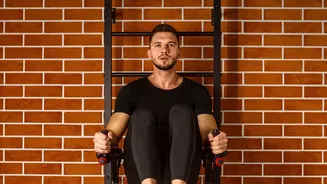
Lying leg raises are effective for targeting the lower part of the rectus abdominis. Lie on your back with your legs straight. You can place your hands under your lower back for extra support if needed. Keeping your legs as straight as possible, slowly lift them up toward the ceiling until your body forms a 90-degree angle. Then, slowly lower them back down without letting your heels touch the floor. The slower and more controlled the movement, the more you'll challenge your core muscles. Focus on using your abs to lift your legs, not momentum.