



The Dancer's Adaptive Foundation
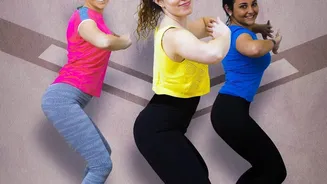
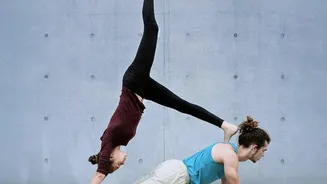
In dance, lower-body coordination is about adaptation and control across multiple planes of movement. A dancer's legs are not just for support; they are instruments of expression that must react to music, choreography, and space. This requires exceptional
neuromuscular control. Think of a simple jump: it involves a plié to generate force, an explosive push-off, a specific shape in the air, and a controlled landing that absorbs impact and seamlessly transitions to the next step. Dancers must constantly shift their weight, balance on one leg, and execute movements that require both fine motor skill and explosive power. Their training develops superior balance and stability, often through repetitive exercises that strengthen key stabilising muscles around the ankle, knee, and hip. This allows for precise, isolated movements and the ability to maintain alignment even during dynamic, off-balance sequences. The coordination is reactive, constantly adjusting to changing demands.
The Rower's Synchronized Engine
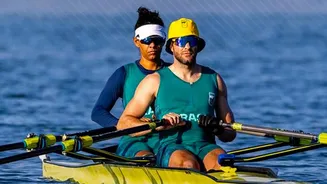
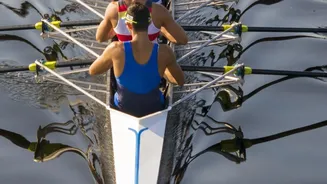
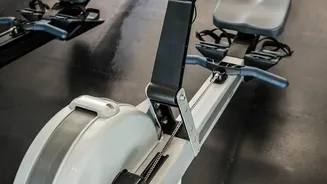
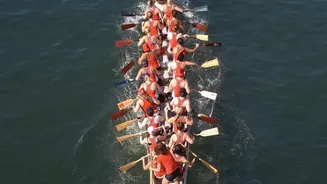
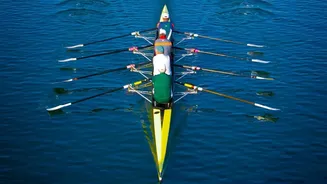
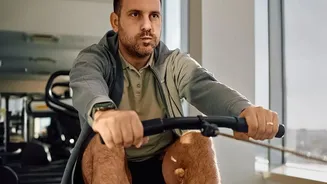
Rowing coordination is the polar opposite in many ways. It is about producing maximum power through a single, repeated, and highly structured sequence. The rowing stroke is a cyclical movement with four phases: catch, drive, finish, and recovery. The vast majority of power—around 60%—is generated by the legs during the drive phase. Coordination here means perfectly sequencing the push from the legs with the swing of the body and the pull of the arms. The legs, core, and arms must fire in a precise chain: legs, body, arms. Any deviation from this sequence results in a loss of power and efficiency. Unlike a dancer's reactive movements, a rower's coordination becomes almost automatic, allowing them to focus on generating force and maintaining a consistent rhythm over thousands of strokes. It is about creating a powerful, unbreakable connection from the feet on the footplate, through the core, to the handle.
Power vs. Poise: The Key Differences
The fundamental difference lies in the objective. A rower’s lower body is a power-generating engine, focused on gross motor patterns that are repeated for endurance. The movement is almost entirely in the sagittal plane (forwards and backwards). The goal is to create explosive, synchronized force from major muscle groups like the quadriceps, glutes, and hamstrings to propel the boat. A dancer’s lower body, by contrast, is a tool for articulation and balance. The demands are multi-planar, involving rotation, lateral movement, and vertical jumps. Dance requires immense eccentric and isometric strength for controlling landings and holding positions, whereas the rower's primary force is concentric during the drive. A dancer’s brain is constantly engaged in neuromuscular repatterning, making subtle adjustments for balance and artistic expression. A rower’s brain locks into a highly efficient, repeatable pattern to maximize output.
Training for Different Demands
These differences are reflected in how each athlete trains. Dancers supplement their technical classes with exercises that enhance stability, balance, and fine motor control, such as Pilates or specific neuromuscular conditioning. They focus on proprioception—the body's awareness of itself in space—to execute complex movements safely and precisely. Their strength work often targets the smaller stabilizing muscles that prevent injury during unpredictable movements. For rowers, conditioning focuses on building strength and endurance in the primary power-producing muscles. While core stability is crucial for transferring power, the main goal is to strengthen the 'legs-body-arms' sequence and improve the cardiovascular system's ability to sustain high-intensity effort over long durations. Cross-training for a rower might involve heavy lifting to increase raw power, whereas for a dancer it may be impact-free cardio like rowing to build stamina without stressing joints.