



A Discovery from the Hills
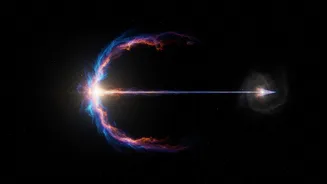
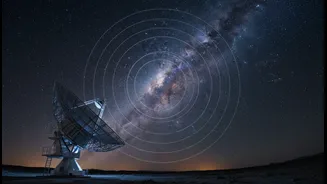
In a remote village in Sikkim, a citizen scientist named Pranim Limbo recently made a remarkable discovery. While analysing publicly available data from radio telescopes through a project called RAD@home Collaboratory, he spotted a unique 'bow-and-arrow'
shaped radio galaxy. This massive cosmic structure, a supersonic radio galaxy with a shock wave nearly 20 times larger than our Milky Way, was a significant find. The discovery, published in a prestigious international journal, was hailed as a major success for citizen science in India. Limbo's work, done from his home, highlights a powerful shift: science is no longer confined to formal laboratories; it is becoming a collaborative pursuit open to anyone with curiosity and a computer.
The Rise of the Citizen Scientist
Citizen science is the participation of the general public in scientific research. It breaks down the barriers between academic experts and society, allowing everyday people to contribute to data collection, analysis, and even discovery. This participatory approach democratises science, taking it out of academic silos. With advancements in technology, particularly the internet and smartphones, it's easier than ever for volunteers to get involved. Platforms like iNaturalist, eBird, and Zooniverse connect thousands of volunteers with projects ranging from tracking biodiversity to classifying galaxies. The model is simple but effective: by crowdsourcing data collection, scientists can monitor ecosystems and cosmic events on a scale that would otherwise be impossible or prohibitively expensive.
An Ecosystem of Engagement Across India
The Sikkim astronomy project is just one star in a growing constellation of citizen science initiatives across India. In the environmental sector, projects like SeasonWatch engage students and adults in tracking the seasonal cycles of trees—like flowering and fruiting—to monitor the impacts of climate change. Since 2010, thousands of participants have contributed hundreds of thousands of observations, creating a vital database on how India's trees are responding to environmental shifts. Similarly, Hornbill Watch uses citizen-generated data to conserve endangered hornbill species in the eastern Himalayas. In coastal cities like Visakhapatnam, local organisations run projects where residents document marine life during beach walks, filling critical knowledge gaps about vulnerable shark and ray populations. From documenting ants and butterflies to monitoring water quality, Indians are increasingly becoming the eyes and ears for scientific research.
More Than Just Data
The benefits of this movement extend far beyond the data itself. For scientists, it provides access to vast amounts of information across wide geographical areas and long time spans. For the participants, it's a powerful educational tool. It enhances scientific literacy, fosters a deeper connection with nature, and can inspire young people to pursue careers in science. Schools involved in projects like SeasonWatch have reported increased student engagement, as learning moves from the textbook to the world around them. By involving local communities in monitoring their own environments, citizen science also empowers them to become advocates for conservation and better governance, bridging the gap between scientific research and community action.
The Path Forward
Despite its immense potential, the citizen science ecosystem in India faces challenges. Ensuring data quality, providing adequate training, and maintaining long-term volunteer engagement are ongoing hurdles. There are also significant data gaps, with many tropical regions remaining underrepresented in global databases. Experts note that strengthening the networks for validating citizen-submitted data is a crucial next step to ensure the information can be used effectively in scientific analysis. However, the momentum is undeniable. With institutional support from universities, NGOs, and government bodies, these initiatives are poised to grow stronger.