



The Foundation: Rice and Parippu
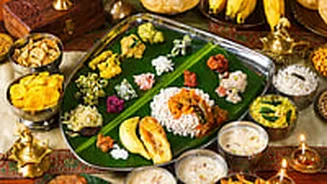
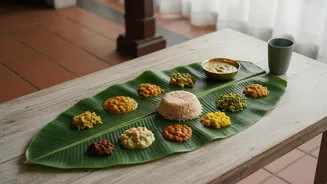
The heart of the Sadhya is the mound of steaming hot Kerala Matta rice, a unique, nutty-flavoured red rice. This is served on the bottom half of the banana leaf. The meal traditionally begins once the guests are seated, with a serving of Parippu curry,
a simple but comforting dish of cooked moong lentils. A spoonful of fragrant ghee is poured over the parippu and rice, and this first morsel, often mixed with a crushed pappadam, is a cherished taste that signals the start of the feast.
The Main Curries: Sambar and Rasam
After the initial taste of parippu, the more complex curries arrive. Sambar, a robust lentil and vegetable stew popular across South India, is a mainstay. The Kerala version is often fragrant with tamarind, asafoetida, and vegetables like drumstick and pumpkin. Following the Sambar, a serving of Rasam is poured over a smaller portion of rice. This thin, peppery, and tangy soup is known to cleanse the palate and aid digestion before the next course.
The Essential Sides: Avial and Thoran
No Sadhya is complete without Avial, often considered the queen of the feast. It is a thick, colourful medley of various seasonal vegetables cooked in a creamy paste of coconut and yoghurt, finished with a drizzle of fresh coconut oil. Another key component is Thoran, a dry stir-fried dish. It typically features finely chopped vegetables like cabbage or beans tossed with grated coconut, mustard seeds, and curry leaves, providing a lovely textural contrast to the wet curries.
The Yogurt-Based Delights: Kalan, Pachadi, and Kichadi
A trio of distinct yoghurt-based dishes adds sour, sweet, and tangy notes. Kalan is a thick, sour curry usually made with yam or raw plantain cooked in a yoghurt and coconut base. Pachadi is a sweeter counterpart, often featuring pineapple or beetroot in a lightly spiced yoghurt sauce. Kichadi is similar but leans towards tangy and savoury, commonly prepared with cucumber or bitter gourd in a ground mustard and yoghurt gravy.
More Savoury Accompaniments
The culinary journey continues with more unique preparations. Olan is a very mild and subtle stew made from ash gourd and cowpeas simmered in thin coconut milk. Kootu Curry offers a richer flavour, made with black chickpeas, yam, and raw banana in a roasted coconut gravy. Erissery is another favourite, a mildly sweet dish combining pumpkin and black-eyed peas, often garnished with toasted coconut.
The Accents: Pickles and Crisps
Arranged along the top edge of the leaf are the flavour-packed accents that you take in small quantities. These include Inji Curry (also called Puli Inji), a potent sweet, sour, and spicy chutney made from ginger, tamarind, and jaggery. You'll also find sharp and zesty lime pickle (Naranga Achar) and mango pickle (Manga Achar). For crunch, there is the essential Pappadam, a light, crispy wafer, alongside Upperi (salty banana chips) and the sweet, jaggery-coated Sharkara Varatti.
The Grand Finale: Payasam
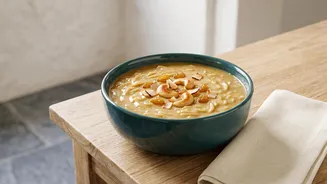
The feast culminates with the dessert course, featuring one or more types of Payasam. This traditional pudding is served directly on the banana leaf. Ada Pradhaman is a classic, made with rice flakes (ada), jaggery, and coconut milk, giving it a rich, caramel-like flavour. Palada Payasam is a creamier version made with rice ada, milk, and sugar. Another popular variety is Parippu Payasam, a nutty and earthy dessert made from lentils, jaggery, and coconut milk. It's common to mash a small, ripe banana into the payasam for the ultimate sweet experience.