






The New Urban Compact: More Life, Less Space
Across Mumbai, Bengaluru, Delhi, and other Indian urban hubs, a new reality has set in. Real estate costs are soaring, apartment sizes are shrinking, and the post-pandemic shift to hybrid work is permanent. For young professionals, this creates a significant
challenge: how do you create a functional home office inside a studio or 1-BHK apartment that is already serving as your living room, bedroom, and dining area? The traditional approach of dedicating an entire room to an office is a luxury few can afford. The result is often a messy compromise where the dining table becomes a permanent desk, and the sofa doubles as a conference chair, blurring the essential boundaries between work and personal life.
Co-Living's Answer: Designing for the 'Live-Work' Era
Co-living providers have been at the forefront of tackling this issue. Initially popular for offering affordable, community-driven housing, these spaces are now pivoting to cater to the work-from-home generation. They recognize that tenants no longer just need a bed and Wi-Fi; they need an environment that supports a full day's activity, from focused work to relaxation. The key to their solution is the strategic use of multi-functional furniture. By integrating pieces that can transform and serve multiple purposes, co-living spaces are effectively creating separate zones for living and working within the same four walls, offering a blueprint for modern urban living.
More Than Just a Folding Table
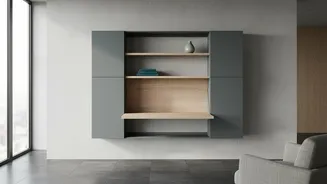
This isn't about the clunky, inconvenient convertible furniture of the past. Today's multi-functional pieces are sleek, innovative, and designed for seamless transitions. In many modern co-living spaces, you will find wall beds that fold away to reveal a full-sized work desk, complete with shelving and charging ports. Coffee tables have lift-up tops that convert them into ergonomic laptop stands. Modular sofas can be reconfigured for meetings or movie nights, while ottomans and benches hide ample storage for work supplies, helping to declutter the space instantly. Expandable dining tables, vertical shelving, and foldable chairs ensure that every square foot is used to its maximum potential without sacrificing style.
The Productivity and Wellness Payoff
The benefits of this approach go far beyond simply saving space. Creating physically distinct zones for work and leisure has a profound psychological impact. When you can physically put your work away at the end of the day—by folding your desk into the wall or stowing your laptop in a storage ottoman—it signals to your brain that it's time to switch off. This separation reduces stress, prevents burnout, and improves focus during work hours. A dedicated, organized workspace, even if it's one that disappears after 6 PM, leads to better productivity and a healthier work-life balance, which is crucial for mental well-being in a high-pressure urban environment.
Bringing the Co-Living Blueprint Home
You don't need to live in a co-living facility to benefit from these principles. Anyone dealing with a compact home can adopt this mindset. Start by identifying the different 'zones' you need: a place to work, a place to eat, a place to relax. Then, look for furniture that can serve multiple functions within those zones. A wall-mounted, foldable desk can create an instant office in a living room or bedroom. A stylish sofa bed is essential for homes that need to accommodate guests without a spare room. Investing in pieces with hidden storage is non-negotiable for keeping visual clutter at bay. Use rugs or lighting to visually demarcate different areas, further reinforcing the sense of separation. Even in the smallest of spaces, smart design choices can create a home that feels organized, spacious, and supportive of all aspects of your life.