

Witness the Grand Athachamayam Procession
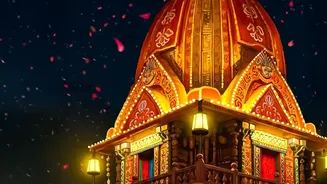
Onam officially kicks off with the Athachamayam, a spectacular cultural procession held in the historic town of Thripunithura, near Kochi. This event marks the start of the 10-day festival and commemorates the victory march of the erstwhile King of Kochi. For
visitors, it's a golden opportunity to see a multitude of Keralan art forms in one place. The streets come alive with caparisoned elephants, colourful floats depicting mythological and historical scenes, and energetic performances of folk dances like Theyyam and Kathakali. The air hums with the rhythm of traditional percussion ensembles such as the Pandimelam and Panchavadyam. Occurring on the Atham day of the Malayalam calendar, this parade is a visual feast that sets a majestic tone for the celebrations to follow.
Feel the Thrill of Vallamkali, the Snake Boat Race
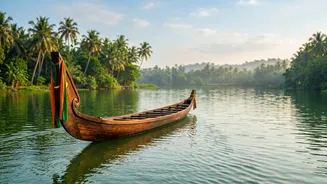
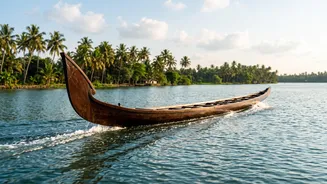
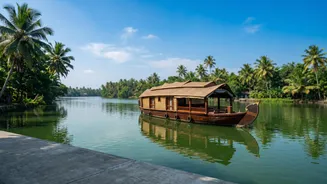
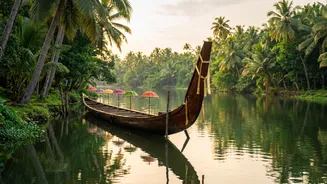
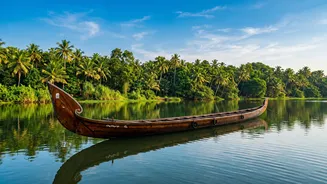
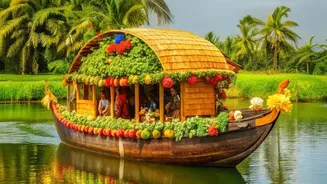
Few events capture the raw energy of Onam like Vallamkali, the iconic snake boat race. Held across Kerala's backwaters, these races are a testament to teamwork and community spirit. Each 'Chundan Vallam', or snake boat, can be over 100 feet long, carrying around 100 oarsmen who paddle in perfect synchronisation to the chants of the Vanchipattu (boat songs). While many races take place during this season, the Nehru Trophy Boat Race on Punnamada Lake in Alappuzha is one of the most famous, drawing massive crowds. Another significant event is the Aranmula Uthrittathi Vallamkali, which is more of a ritual than a race, deeply connected to the Sree Parthasarathy Temple. Watching these magnificent boats slice through the water is a breathtaking spectacle of power and grace.
Encounter the Playful Pulikali Tiger Dance
On the fourth day of Onam, the streets of Thrissur erupt with a unique and playful tradition known as Pulikali, or the 'Tiger Dance'. Performers, with their bodies meticulously painted as tigers and leopards in bright shades of yellow, red, and black, dance through the streets to the beat of traditional drums. The theme of the performance revolves around a tiger hunt, with performers mimicking the movements of the big cats. This folk art form, believed to be over 200 years old, transforms the Swaraj Round in Thrissur into a riot of colour and energy, attracting thousands of spectators. The preparation itself is an art, with artists spending hours painting intricate designs on the performers. It is a wild, joyful, and unforgettable part of the Onam festivities.
Savour the Grandeur of the Onam Sadya
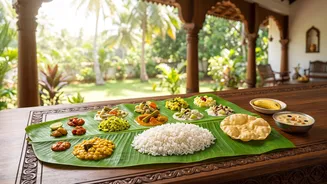
No Onam experience is complete without indulging in the Onam Sadya, a grand vegetarian feast that is the culinary heart of the festival. Served on a fresh plantain leaf, the Sadya features a dazzling array of anywhere from 24 to over 40 dishes. This multi-course meal is a balanced and scientific arrangement of flavours—sweet, sour, salty, and spicy. Key dishes include parippu (dal with ghee), sambar, avial (mixed vegetables in coconut), thoran (stir-fried vegetables), and a variety of pickles and chips. The meal traditionally concludes with delicious payasams (sweet puddings). Many restaurants and hotels across Kerala offer authentic Sadya experiences, giving travellers a chance to partake in this elaborate and deeply satisfying culinary ritual.
Immerse Yourself in Pookalam and Kaikottikali
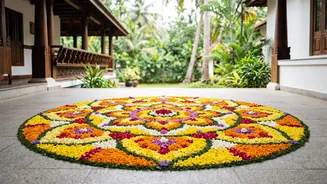
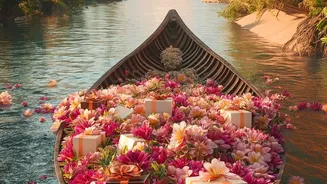
Two of the most graceful traditions of Onam are the Pookalam and Kaikottikali. The Pookalam is an intricate floral carpet created on the floor at the entrance of homes and public spaces. Starting simply on the first day of Onam, new rings of flowers are added each day, growing into stunning, colourful designs by the main day, Thiruvonam. Complementing this visual art is Kaikottikali (also known as Thiruvathirakali), an elegant dance performed by women. Dressed in traditional Kerala attire, they dance in a circle around a ceremonial lamp (Nilavilakku), clapping their hands rhythmically. The songs often tell stories of love and mythology. These community-driven cultural expressions beautifully capture the spirit of unity and celebration that defines Onam.