



The Sun's Volatile Outbursts
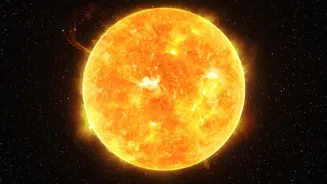
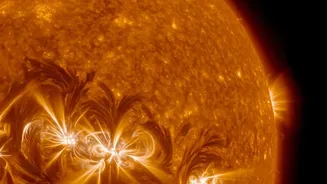
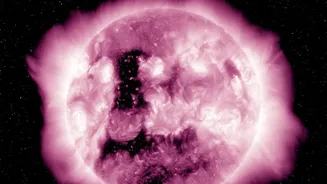
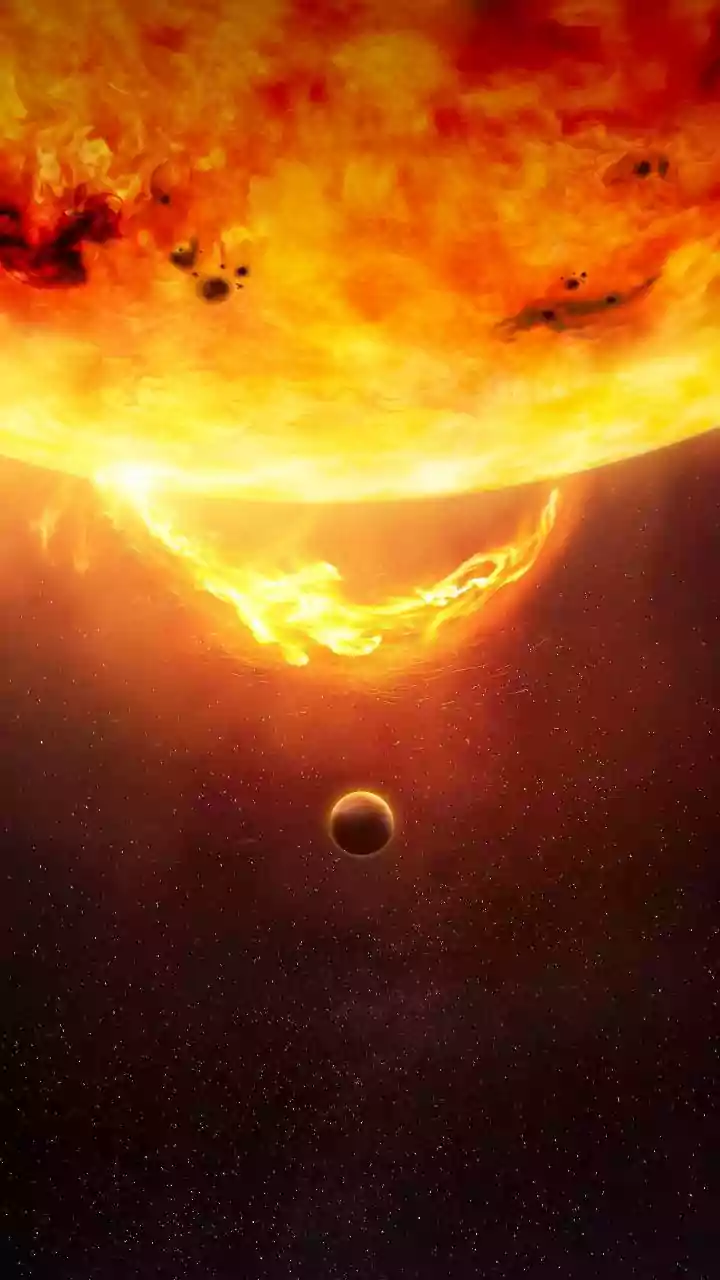
The sun is not the uniformly calm sphere it appears to be. It has a dynamic and violent atmosphere, and it constantly releases a stream of charged particles known as the solar wind. Occasionally, massive explosions on the sun's surface, called solar flares
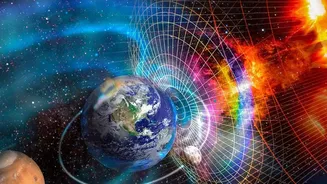
or coronal mass ejections (CMEs), hurl vast clouds of plasma and magnetic fields into space at incredible speeds. These events are collectively known as space weather. While many CMEs miss our planet, those directed at Earth can have significant consequences, interacting with our planet's magnetic field and upper atmosphere.
Satellites in the Firing Line
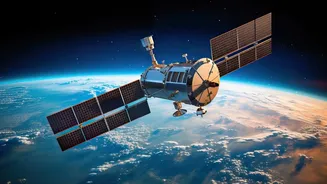
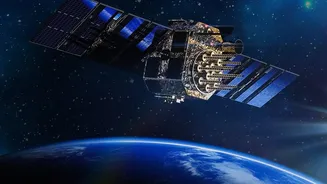
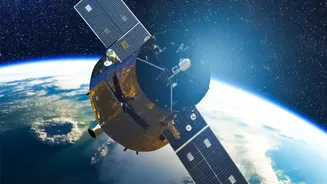
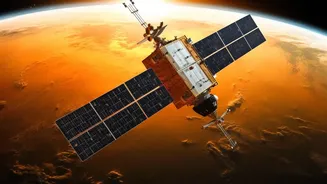
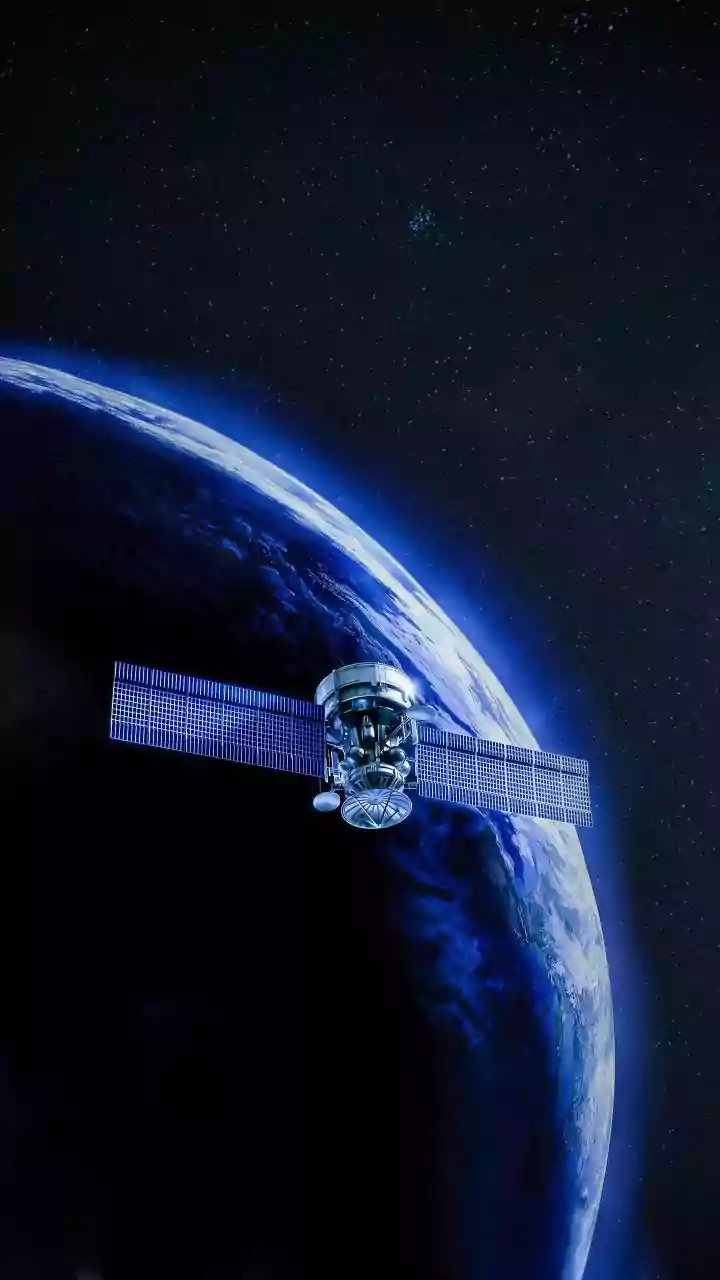
When a CME collides with Earth's magnetosphere, it can trigger a geomagnetic storm. For satellites in orbit, this is a moment of high risk. The influx of energetic particles can damage sensitive electronics, degrade solar panels, and cause 'phantom' commands in a satellite's software, leading to malfunctions. For satellites in low-Earth orbit, the storm heats and expands the upper atmosphere, increasing atmospheric drag that can shorten a satellite's operational life. The ultimate result can be a temporary or permanent blackout of services we rely on, including GPS navigation, telecommunications, and broadcasting.
The Art of Blocking the Sun
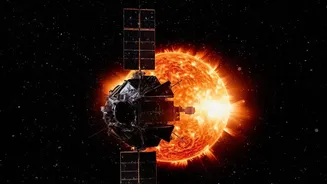
To get an early warning, scientists need to see a CME as it leaves the sun. The problem is that the sun's surface, or photosphere, is a million times brighter than its outer atmosphere, the corona, from which these eruptions emerge. This is where a coronagraph comes in. Invented in the 1930s by Bernard Lyot, a coronagraph is a special telescope attachment that uses an occulting disk to block the blinding light from the sun's main body. This artificial eclipse allows the much fainter corona to be seen and monitored continuously, something that is otherwise only possible during a natural total solar eclipse. Space-based coronagraphs on satellites like SOHO and GOES-19 provide an uninterrupted view, free from the distortion of Earth's atmosphere.
From Detection to Advanced Warning
By observing the corona, these specialised satellites can spot a CME as it blasts off from the sun. They can measure its size, speed, and direction. This information is critical for forecasting its potential impact on Earth. Since a CME can take anywhere from one to four days to travel from the sun to our planet, this gives us a vital window of warning. Satellite operators can put their spacecraft into a protective 'safe mode', power companies can prepare their grids for potential surges, and airlines can reroute flights to avoid communication blackouts and radiation exposure at polar latitudes.
India's Eye on the Sun: Aditya-L1
India has become a key player in this global effort with its own solar observatory, Aditya-L1. Launched by ISRO in 2023, the spacecraft is positioned at Lagrange Point 1 (L1), a gravitationally stable spot about 1.5 million kilometres from Earth that provides a continuous view of the sun. Its primary instrument is the Visible Emission Line Coronagraph (VELC), designed to study the solar corona and the dynamics of CMEs closer to the sun's surface than ever before. By providing crucial data on the initiation of these solar storms, Aditya-L1 enhances India's and the world's ability to understand and predict space weather, safeguarding our vital technological infrastructure.