


The Predictable Weakness
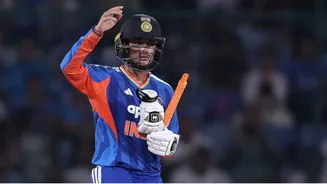
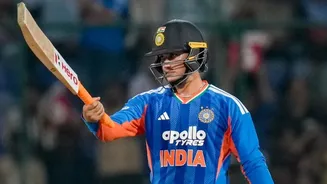
It’s a story cricket fans know well: Shreyas Iyer and the short ball. For years, opposition captains have employed a simple, yet brutally effective, strategy against him. As soon as Iyer walks to the crease, the field changes, and fast bowlers are instructed
to aim for his helmet. His recent dismissal was another example of this persistent issue. This weakness is well-documented, with analysts noting that it has spread 'like wildfire' among opposition teams. While he has shown periods of improvement and has worked on his technique, under pressure, the vulnerability resurfaces. This flaw is not just about getting out; it forces him into a defensive mindset against pace, preventing him from rotating the strike and building momentum, a critical sin in the fast-paced world of T20 cricket.
A Diminishing Superpower
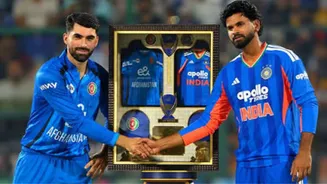
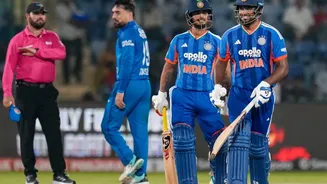
For a long time, Iyer’s dominance against spin bowling was his superpower. He was widely regarded as one of India's best players of spin, using his quick footwork and elegant wrists to dismantle even the world's best spinners. However, recent trends suggest this dominance might be waning, especially in the T20 format. While he is still capable, there have been instances where he has been bogged down or dismissed by spinners, particularly when trying to accelerate the scoring rate. His dismissal against Afghanistan, while not against a spinner, came at a time when he was expected to build an innings, a role he traditionally excels at by attacking the slower bowlers in the middle overs. If his primary strength is being neutralized, it puts immense pressure on the other parts of his game.
The Weight of a Crowded Dressing Room
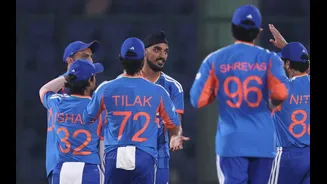
The Indian T20 setup is arguably the most competitive in world cricket. For every spot in the middle order, there are at least three other highly skilled players waiting for their chance. Players like Suryakumar Yadav, Tilak Varma, and Rinku Singh have all made strong cases for their inclusion with explosive performances in the IPL and for India. This immense pressure means that every failure is magnified. A score of 11 is not just a low score; it's a missed opportunity to cement his place in the side. With the T20 World Cup on the horizon, the selectors are looking for consistency and impact, and players who can deliver under pressure. Iyer’s recent form puts him in a precarious position where he is not just fighting the opposition but also the immense talent within his own team.
The Mental Game
Beyond the technical issues and the external competition lies the mental battle. Iyer himself has admitted that the constant chatter about his weakness against the short ball can be 'irritating'. This external noise, combined with the pressure to perform for a cricket-crazy nation, can take a toll on any player. Cricket is as much a mental game as it is a physical one. When a known weakness is constantly being targeted, it can create doubt in a batsman's mind, affecting their decision-making and shot selection. Overcoming this requires not just technical adjustments in the nets but also significant mental fortitude to block out the noise, trust his ability, and play with the freedom that once made him such an exciting prospect in all formats of the game.