








The Power of Pre-Filled Data
One of the most significant changes in recent years is the evolution of the Annual Information Statement (AIS) and the Taxpayer Information Summary (TIS). Think of the AIS as a comprehensive report card of your financial year, automatically compiling
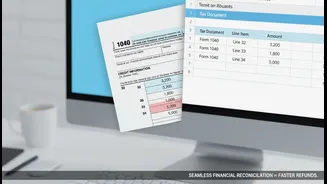
information from various sources like your employer, banks, and mutual fund houses. It captures details like salary, interest income, dividends, and even securities transactions. This means that when you log in to file your return, much of the data is already pre-filled. This drastically reduces manual entry, minimises errors, and gives you a clear picture of the information the Income Tax Department already has, helping to avoid mismatches and future notices.
Smarter Filing with AI Assistants
Artificial intelligence is no longer just a buzzword; it's actively simplifying tax compliance. The government's e-filing portal has introduced AI-powered assistants, sometimes referred to as chatbots like 'Kar Saathi', to provide real-time support. These tools can answer your queries about deductions, forms, and tax rules instantly. Beyond the official portal, private tax filing platforms are also leveraging AI to automate calculations, suggest optimal tax-saving options, and cross-verify information to ensure accuracy before you submit. This layer of intelligent automation acts as a helpful guide, reducing guesswork and building confidence, especially for first-time filers.
A Friendlier and Faster Portal
The official income tax e-filing portal has undergone significant upgrades to improve the user experience. The goal has been to create a cleaner, more intuitive dashboard that is easier to navigate. Key improvements include clearly defined sections, faster access to common features like viewing Form 26AS and AIS, and a simplified layout that reduces clutter. The portal is now designed to be more user-friendly, even for those who aren't tech-savvy. These enhancements, part of a broader push for a better digital infrastructure, are aimed at reducing the time and stress associated with the filing process.
Simplified Forms for Common Scenarios
The tax department has also made efforts to simplify the ITR forms themselves. For the Assessment Year 2026-27, the eligibility for filing simpler forms like ITR-1 (Sahaj) has been expanded. For instance, individuals with income from up to two house properties can now use these simpler forms, which was not previously the case. Additionally, some taxpayers with modest long-term capital gains from equities can also report it in ITR-1, avoiding the need to use a more complex form. These changes mean more salaried taxpayers can stick with the easiest forms, making their filing journey much smoother.
The Result: Faster Processing and Refunds
The culmination of these digital enhancements is a more efficient backend system. Leveraging advanced technology means the Income Tax Department can process returns much faster than before. Accurate, pre-filled data and AI-driven validation reduce the number of returns flagged for errors. For the taxpayer, this translates into a tangible benefit: quicker processing times and, consequently, faster disbursal of tax refunds where applicable. This swift turnaround provides a satisfying conclusion to the filing process and reinforces the value of the digital upgrades being implemented.