
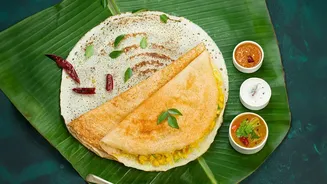
The Foundation: The Banana Leaf
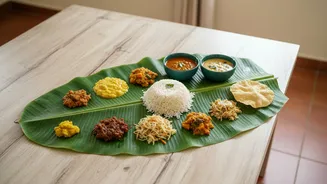
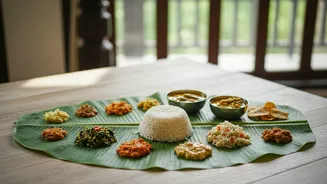
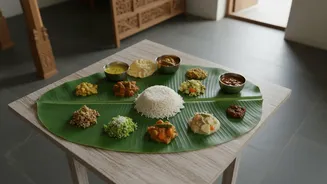
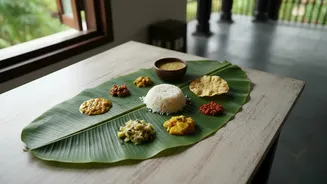
Before the first dish is even served, the stage is set by the banana leaf (ela). Laid with its narrow end pointing to the left, the leaf itself is part of the tradition. Not only is it a natural, biodegradable plate, but when warm food is placed on it,
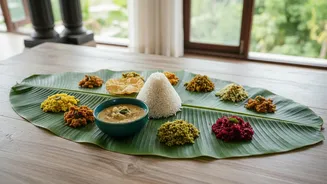
the leaf is believed to release polyphenols, antioxidants that are absorbed by the food. The leaf is divided into two main sections: the upper half is for all the side dishes and accompaniments, while the lower, wider half is reserved for the star of the show, the rice, and the main curries that will be poured over it. This precise arrangement ensures every item has its own place, a system passed down through generations.
The Starters: Pickles and Chips
The feast begins on the top left corner with small but potent accompaniments. This is where you'll find a pinch of salt, followed by crunchy snacks like Upperi (banana chips) and Sharkara Varatti (banana chips coated in jaggery and spiced with ginger). Next come the pickles, or 'achars'. Inji Curry, often called Puli Inji, is a sweet, sour, and spicy blend of ginger, tamarind, and jaggery that is said to be equivalent to 101 curries and aids digestion. You'll also typically find sharp and tangy mango and lime pickles. These items are meant to be eaten in small quantities throughout the meal to cleanse the palate and provide sharp, contrasting flavours.
The Side Dishes: A Vegetable Medley
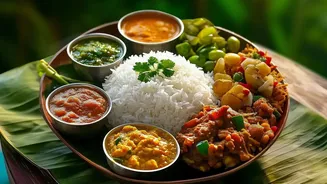
The top half of the leaf is crowded with an array of vegetable preparations, each with a unique taste and texture. Avial is a standout, a thick mix of various vegetables cooked in a coconut and yogurt gravy, symbolizing unity and abundance. Thoran is a dry dish of finely chopped vegetables like cabbage or beans, stir-fried with grated coconut. Olan offers a milder counterpoint, a gentle curry of ash gourd and cowpeas simmered in coconut milk. Kalan is a thicker, sour dish made from yam or raw plantain in a yogurt and coconut base. You'll also find Pachadi and Kichadi, which are yogurt-based side dishes—Pachadi being slightly sweeter (often with pineapple or beetroot) and Kichadi tangier (usually with cucumber).
The Main Event: Rice and Curries
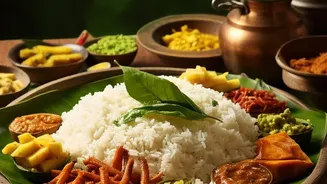
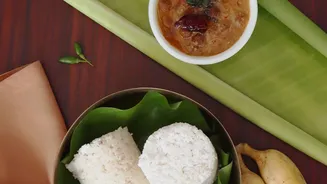
Once the accompaniments are served, a mound of Kerala Matta rice (a distinct, nutty red rice) is placed on the bottom center of the leaf. The meal then proceeds in courses. The first course is Parippu, a simple, comforting dal made from moong dal and coconut, served with a generous spoonful of ghee. This is followed by Sambar, a robust and tangy lentil stew packed with vegetables like drumsticks and pumpkin. After Sambar, a thin, peppery, and tamarind-based soup called Rasam is served, which acts as another digestive aid. Towards the end of the savoury courses, spiced buttermilk (Moru) is served to cool the palate and balance the rich flavours.
The Sweet Finale: Payasam
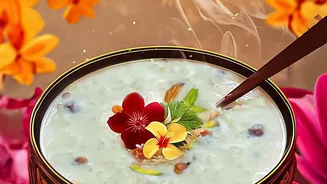
No Sadhya is complete without the dessert course, featuring Payasam. This sweet, pudding-like dish comes in many varieties. There are typically two or three types served. A 'vella' (white) payasam is made with milk and sugar, like Palada Pradhaman, which contains flakes of steamed rice batter. A 'karutha' (dark) payasam is made with jaggery and coconut milk, such as Parippu Pradhaman (made with lentils) or Pazham Pradhaman (made with banana). A small, ripe banana is often served alongside the payasam, which can be mashed and mixed in for an even richer experience. Finally, after the feast, folding the top half of the banana leaf over the bottom half towards you is a gesture of satisfaction and appreciation for the meal.