




Destruction by Design
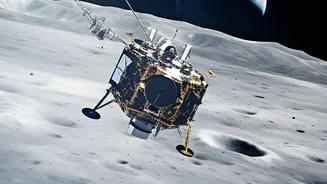
A controlled lunar impact is exactly what it sounds like: the planned, high-velocity collision of a spacecraft or a component, like a spent rocket stage, with the Moon. Unlike accidental crashes, these events are precision-guided experiments. Scientists
choose the impactor, the target location, and the timing to maximize data collection from orbiting satellites or Earth-based telescopes. This practice dates back to the Apollo era, when parts of the massive Saturn V rockets were intentionally sent crashing into the Moon. The goal isn't destruction, but discovery. By striking the surface at high speed, these missions excavate material and generate seismic waves, creating a brief, invaluable window into the Moon's makeup.
The Hunt for Hidden Water
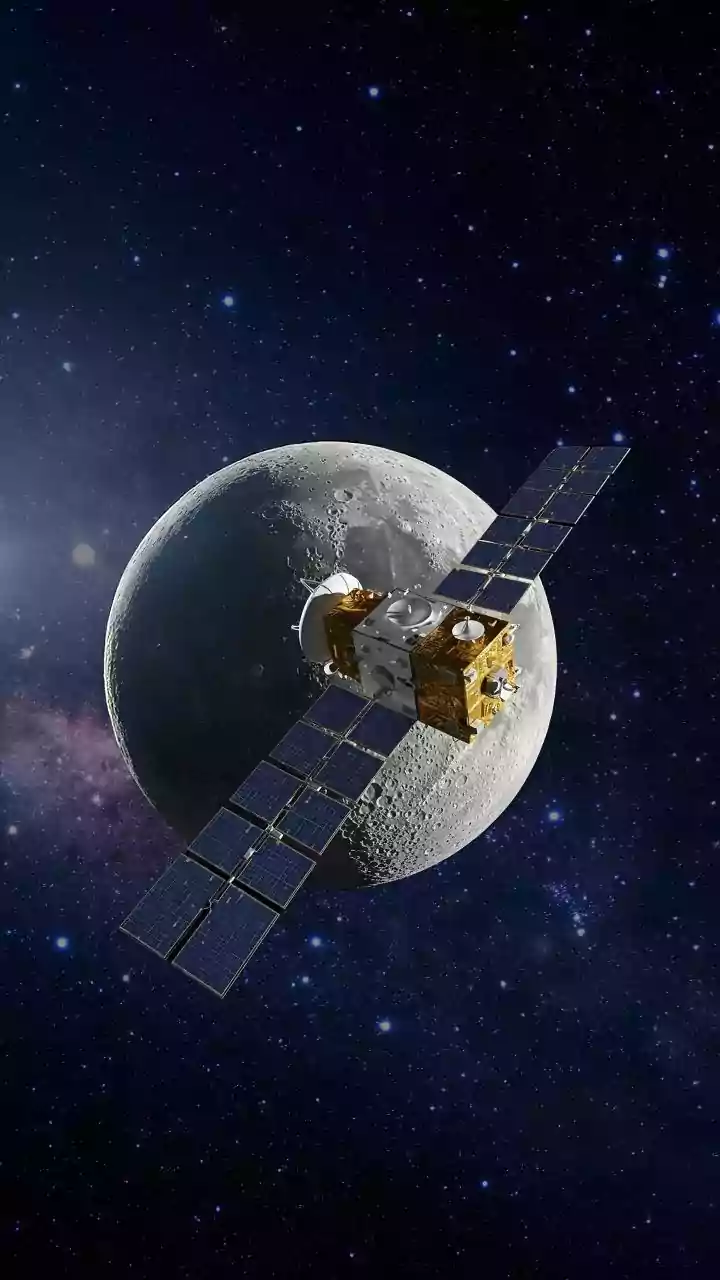
One of the most compelling reasons to crash into the Moon is the search for water ice. For decades, scientists theorized that permanently shadowed craters near the lunar poles, which haven't seen sunlight in billions of years, could be cold traps for frozen volatiles like water. The breakthrough came in 2009 with NASA's Lunar Crater Observation and Sensing Satellite (LCROSS) mission. The mission sent a Centaur rocket stage hurtling into Cabeus crater near the south pole. A second spacecraft flew through the resulting plume of debris, analyzing its composition before making its own impact. The data was unambiguous: it confirmed the presence of a significant amount of water ice, a game-changing discovery that continues to shape plans for future lunar exploration. India's Chandrayaan-1 mission also played a crucial role, as its Moon Impact Probe (MIP) detected evidence of water during its descent just before impact in 2008.
Reading the Moon's Pulse
When a multi-tonne object strikes the Moon, it creates artificial moonquakes. The seismic waves from these impacts travel through the lunar body, and how they travel reveals secrets about the Moon's internal structure. During the Apollo program, seismometers left on the surface by astronauts detected the vibrations from both natural moonquakes and intentional impacts. The resulting data provided the first real evidence of the Moon's layered structure, including its crust, mantle, and a potentially partially molten core. Because the Moon is less seismically active than Earth, these artificial impacts are a crucial way for scientists to actively probe its interior, much like a doctor using an ultrasound. The long, reverberating signals recorded were very different from Earth's, suggesting a fractured and dry upper crust.
A Window into the Surface
Beyond finding water, impact plumes offer a unique opportunity to study the composition of the lunar soil, or regolith, without needing to land and collect a sample. As the impactor vaporizes and blasts tonnes of material high above the surface, instruments on orbiting spacecraft can analyze the plume's chemical signature using spectrometers. This technique reveals the presence of various minerals and elements. The LCROSS impact, for example, not only found water but also other useful materials like hydrogen gas, ammonia, and methane, along with light metals such as sodium and silver. Understanding the precise makeup of the regolith is vital for a process called In-Situ Resource Utilization (ISRU), where future astronauts could theoretically extract oxygen, water, and building materials directly from the lunar soil.
Paving the Way for Lunar Living
Ultimately, every piece of data from these controlled impacts helps build a blueprint for humanity's return to the Moon. Knowing where to find water is essential for establishing a sustainable human presence, as it can be used for drinking, growing plants, and being broken down into hydrogen and oxygen for rocket fuel. Understanding the seismic environment and the stability of the lunar soil informs the design and location of future habitats. Even unplanned impacts, like that of a SpaceX Falcon 9 upper stage on August 5, 2026, are treated as valuable scientific opportunities to study crater formation and plume dynamics. As agencies like NASA and ISRO plan for future lunar bases and gateways, the knowledge gained by deliberately crashing things into our nearest celestial neighbor proves to be an indispensable—and surprisingly cost-effective—tool for exploration.