





What Is Functional Abdominal Power?
Functional strength means training your muscles to work together, preparing your body for the real-world tasks you perform daily. When it comes to your core, this involves more than just the surface-level 'six-pack' muscles (the rectus abdominis). A functional
approach trains the entire support system of your trunk, including deep abdominal muscles, obliques, lower back, and glutes. The goal is to create a stable base that improves your posture, enhances balance, and allows you to lift, twist, and bend safely and efficiently, ultimately reducing the risk of injury.
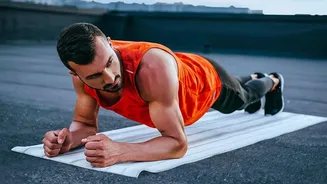
The Plank: Your Foundation for Stability
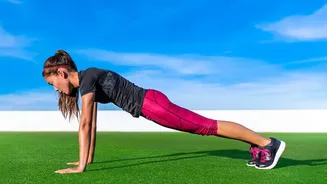
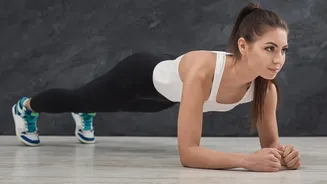
The plank is a fundamental exercise for building core endurance and stability. Unlike crunches, which can strain the spine, planks strengthen the abs, back, and shoulders simultaneously. To perform a plank, start on your hands and knees. Extend your legs back one at a time to lift your body, creating a straight line from your head to your heels. Place your forearms on the floor with elbows directly under your shoulders. Engage your core by drawing your belly button towards your spine and squeeze your glutes. Avoid letting your hips sag or rise too high. Hold for 20-30 seconds, focusing on steady breathing.
The Bird-Dog: For Balance and Coordination
The Bird-Dog exercise is excellent for improving stability across your core, hips, and back while enhancing coordination. Start on all fours in a tabletop position, with your hands under your shoulders and knees under your hips. Engage your abs to keep your spine neutral. Slowly extend your right arm straight forward and your left leg straight back, keeping your hips and shoulders parallel to the floor. The key is controlled movement; avoid rushing or rotating your torso. Hold briefly before returning to the start and alternating sides. This movement teaches the core to resist rotational forces, which is crucial for dynamic activities.
The Dead Bug: Activate Your Deep Core
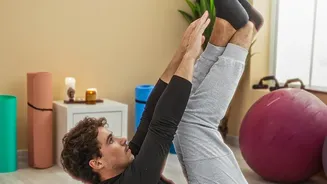
The Dead Bug is a surprisingly effective exercise for targeting the deep stabilizing muscles of your core, like the transverse abdominis, without straining your back. Lie on your back with your arms extended toward the ceiling and your legs in a tabletop position (knees bent at 90 degrees). Press your lower back into the floor. Slowly lower your right arm and left leg toward the floor simultaneously, moving only as far as you can without your lower back arching. Return to the starting position with control and repeat on the other side. The slow, deliberate motion builds exceptional control and functional strength.
The Glute Bridge: Power From Your Posterior
A strong core relies on support from the muscles around it, especially the glutes and hamstrings. The Glute Bridge strengthens this entire posterior chain, which helps stabilize your pelvis and support your lower back. Lie on your back with your knees bent, feet flat on the floor hip-width apart, and arms by your sides. Squeeze your glutes and lift your hips off the floor until your body forms a straight line from your shoulders to your knees. Hold for a moment at the top, focusing on the glute contraction, before slowly lowering back down. This exercise not only supports core function but also helps counteract the effects of prolonged sitting.
Lying Leg Raises: Target the Lower Abs
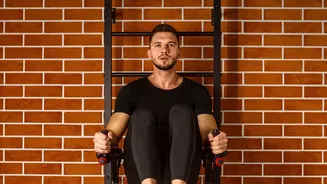
While spot-reduction is a myth, you can target specific muscle fibers with certain exercises. Leg raises are fantastic for focusing on the lower part of the rectus abdominis. Lie on your back with your legs straight. You can place your hands under your lower back for support. Slowly raise your legs toward the ceiling, keeping them as straight as possible, until they are perpendicular to the floor. Then, slowly lower them back down, stopping just before they touch the ground to maintain tension in your abs. The key is to prevent your lower back from arching; if it does, reduce the range of motion.