



What Are These Mask Dances?
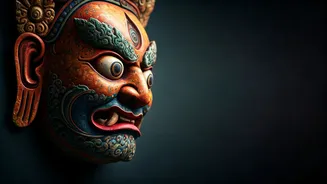
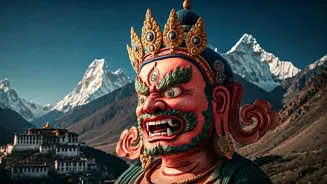
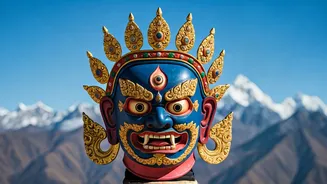
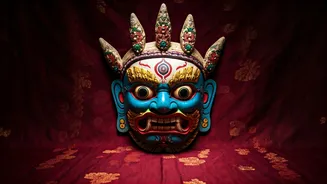
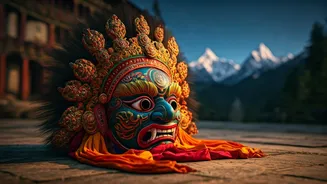
Known as 'Cham', these sacred masked dances are a cornerstone of Tibetan Buddhism, performed by monks in the courtyards of Ladakh's ancient monasteries. More than just a performance, Cham is a form of active meditation and a powerful religious ceremony.
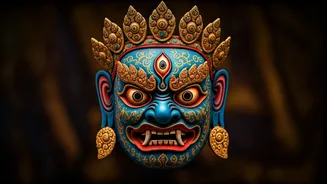
Each movement is codified, each mask represents a specific deity or demon, and the entire dance enacts a moral story—most often, the triumph of good over evil and the subjugation of the ego. The dancers, who train for years, are believed to enter a trance-like state, embodying the spirit of the figure they represent. For the audience, witnessing a Cham dance is believed to cleanse spiritual obstacles and bestow merit.
The Deeper Spiritual Meaning
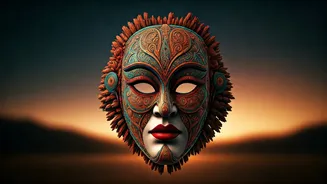
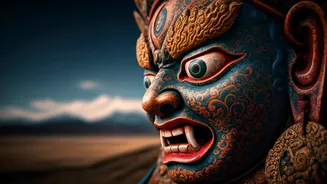
The fearsome, wrathful-looking masks are not meant to frighten, but to symbolise the protective deities (Dharmapalas) who vanquish the demons of ignorance, hatred, and greed. You'll see figures like Mahakala, the great black protector, and Palden Lhamo, the sole female protector deity of Tibet. The dances often depict the story of Padmasambhava (Guru Rinpoche), the 8th-century master who is credited with establishing Buddhism in Tibet. By externalising these internal struggles through dance, the ceremony serves as a profound teaching for the lay public, illustrating core Buddhist principles in a vivid, unforgettable way. It’s a visual scripture, unfolding before your eyes.
Where to Witness the Spectacle
Ladakh's monastic festival calendar is packed, especially during the summer and early autumn months. While the headline says 'this week', festival dates are determined by the Tibetan lunar calendar and shift annually, so it's crucial to check the latest schedules. However, the season is in full swing. Some of the most renowned festivals include: - **Hemis Tsechu:** Perhaps the most famous, held at Hemis Monastery to celebrate Guru Rinpoche's birth anniversary. It's a grand, two-day affair attracting locals and travellers from around the world. - **Phyang Tsedup:** Held at Phyang Monastery, this festival is known for its impressive collection of sacred masks and vibrant thangka (silk painting) display. - **Thiksey Gustor:** Taking place at the stunning Thiksey Monastery, this festival marks the end of the year on the Tibetan calendar and involves the ritual burning of an effigy representing evil. - **Spituk Gustor:** An earlier winter festival at Spituk Monastery, it’s a powerful experience set against a stark, snowy landscape.
The Atmosphere in the Courtyard
Attending a monastery festival is an immersive cultural experience. The courtyard buzzes with energy. Ladakhi families arrive in their finest traditional dress—women in elaborate 'peraks' adorned with turquoise and men in warm 'gonchas'. The air is thick with the smell of butter lamps and incense. The music is otherworldly, a hypnotic blend of crashing cymbals, deep-throated horns (dungchen), and resonating drums. It’s a community gathering, a spiritual event, and a vibrant market all in one. Amid the solemnity of the ritual, there's a palpable sense of joy and devotion. You are not just a spectator; you are a guest participating in a living tradition that has remained unchanged for centuries.
Tips for Your Visit
To make the most of this incredible experience, a little preparation goes a long way. First, acclimatise to the high altitude in Leh for at least two days before venturing out to higher monasteries to avoid acute mountain sickness. Dress in layers, as the sun can be intense but temperatures can drop quickly in the shade. When at the monastery, remember it is a place of worship. Be respectful, ask for permission before taking close-up photos of people or monks, and never use a flash. Follow the crowd's lead—sit where others are sitting and maintain a quiet demeanour during the rituals. Finally, hire a local guide who can explain the symbolism of the dances in real-time, transforming your viewing from a spectacle into a deeply meaningful story.