









The Great Concrete Sponge
The core of the issue lies in how urban materials handle heat. Concrete, asphalt, and brick are fundamentally different from natural surfaces like soil and grass. During the day, they act like massive sponges for solar radiation, absorbing vast amounts
of the sun's energy. Materials like asphalt can absorb up to 95% of the sun's energy. Because of their high heat capacity, these materials can store this energy for long periods, acting like a giant thermal battery. While a grassy field reflects sunlight and uses its moisture for evaporative cooling, a parking lot or a concrete building just soaks up the heat, with surface temperatures reaching well over 65°C on a hot day.
The Urban Canyon Trap
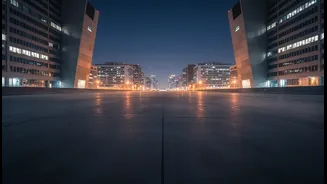
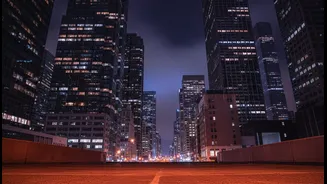
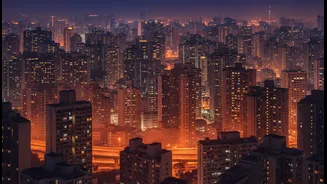
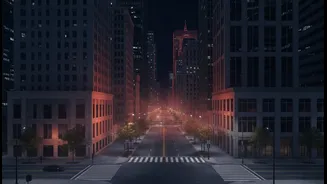
It's not just about the materials; it's also about the shape of our cities. The layout of tall buildings close together creates what scientists call an "urban canyon." This geometry has two major effects. First, it reduces the ability of buildings and streets to cool off by radiating heat towards the cold night sky. Instead, they radiate heat at each other. Second, the tall buildings block wind that would otherwise help to dissipate the heat and bring in cooler air. This trapped, stagnant air continues to be warmed by the surrounding superheated surfaces long after the sun has set.
Why Midnight Brings No Relief
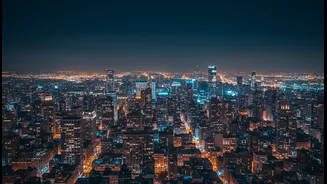
This leads to the crucial point: why the cooling process fails after midnight. The phenomenon is known as the nocturnal urban heat island effect, which is often more pronounced than the daytime one. After sunset, natural landscapes cool down relatively quickly. But in a city, the vast reservoir of heat stored in concrete and asphalt begins its slow release. This process, governed by thermal properties, takes hours. So, while the ambient air temperature might start to drop, the constant, radiating heat from buildings and pavements keeps the air near the ground uncomfortably warm, peaking several hours after sunset and ensuring that temperatures remain elevated well into the early morning.
The Human Factor
On top of these physical factors, we add more heat ourselves. This is known as anthropogenic heat. Air conditioners, while cooling our interiors, pump hot exhaust air into the streets, directly contributing to the heat outside. The same goes for vehicles, industrial processes, and even the collective body heat of millions of people. This extra heat release adds another layer to the problem, creating a feedback loop where our attempts to cool down individually can make the city collectively warmer, especially at night when AC usage peaks during heatwaves.
The Cost for India's Cities
For rapidly urbanizing Indian cities like Delhi, Mumbai, and Chennai, this is more than a curiosity; it's a critical health and economic issue. The lack of nighttime cooling relief during heatwaves places immense stress on the human body, increasing rates of heat exhaustion, heatstroke, and cardiovascular problems, particularly among vulnerable populations. The nighttime heat also leads to a surge in energy demand for air conditioning, straining power grids and increasing costs. Studies show that the urban heat island effect is already acutely felt across India, with temperature differences between urban and rural areas reaching up to 5°C.