





The Power and Limits of Autopilot
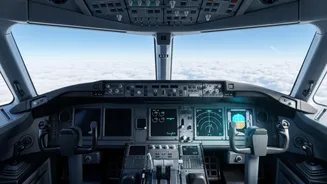
Most passengers know planes have an autopilot, but its capabilities are often misunderstood. Think of it less as a self-flying brain and more as a highly sophisticated cruise control. During the cruise portion of a flight, the autopilot is exceptional
at maintaining a set altitude, speed, and heading. Pilots program a flight plan, and the system executes it precisely, reducing pilot workload on long journeys and even improving fuel efficiency. However, the autopilot isn't making independent decisions; it's following commands. It cannot react to unforeseen events like a sudden system failure or a complex weather emergency. Pilots must manually handle most takeoffs, and while many modern aircraft are capable of performing an 'autoland', this procedure requires specific ground-based infrastructure at the airport and is typically reserved for low-visibility conditions.
The Myth of Remote Control
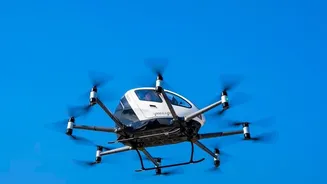
A common belief, reinforced by movies, is that if the pilots are incapacitated, someone on the ground can simply take over and fly the plane like a large drone. This is currently false for commercial airliners. While the technology for remote piloting exists and has been tested, it is not installed in the passenger planes we fly in today. The primary reasons are security and reliability. The risk of a remote-control system being hacked is considered a significant threat, potentially creating a danger far greater than the one it's meant to solve. Furthermore, the infrastructure required to ensure a foolproof, lag-free connection between a ground station and a fast-moving aircraft presents immense challenges.
What Really Happens: The Human Backup
The safety net in aviation is built on redundancy, starting with having two pilots. The chances of both pilots becoming incapacitated simultaneously are incredibly low. If one pilot is incapacitated, the other is fully trained to fly the aircraft alone and land it safely. Their first action is to take control of the aircraft and engage the autopilot to manage the workload. They will then declare an emergency with Air Traffic Control (ATC), which clears other air traffic and provides support. Flight attendants are also trained to assist, which can involve securing the incapacitated pilot and even assisting the remaining pilot with checklists.
Ground Support and Emergency Systems
In a pilot incapacitation scenario, ATC plays a critical role. They become the pilot's primary resource on the ground, helping to manage the flight path, providing weather updates, and preparing for an emergency landing at the most suitable airport. While they cannot fly the plane, they are an essential part of the emergency response team. For some smaller, newer general aviation aircraft, a true emergency autoland system now exists. Systems like Garmin's Emergency Autoland can be activated by a passenger, and the plane will then communicate with ATC, find the nearest suitable airport, and land itself without human intervention. This technology has not yet been implemented in large commercial airliners but shows the direction aviation safety is heading.
The Future: Towards More Autonomy
The aviation industry is steadily moving towards greater autonomy. Companies like Airbus and Boeing are developing systems to reduce crew workload and potentially enable single-pilot operations in the future, particularly for cargo flights first. These future systems aim to use AI and advanced sensors to make more complex decisions, essentially acting as a digital co-pilot that can handle a wider range of tasks. However, industry experts agree that replacing pilots entirely on passenger flights is still a long way off. The goal for now is to enhance safety by adding more layers of assistance, not to remove the highly trained humans who remain the ultimate backup when the unexpected occurs.