


Why Your Breath is a Superpower
When we feel stressed or mentally sluggish, our breathing often becomes shallow and rapid, without us even noticing. This pattern is part of the body’s 'fight-or-flight' response. By deliberately slowing down and deepening your breath, you can activate
the parasympathetic nervous system, also known as the 'rest-and-digest' system. This simple shift can lower your heart rate, reduce stress hormones like cortisol, and signal to your brain that it’s safe to relax. Conscious breathing doesn't require any special equipment or years of practice. It's an immediate, accessible way to anchor yourself in the present moment and steer your mind away from overwhelming thoughts. In just a few minutes, you can shift your entire physiological and mental state.
1. Diaphragmatic or 'Belly' Breathing
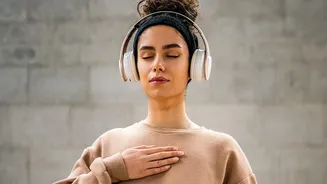
This is the foundational breathing exercise for true relaxation. Most of us tend to breathe from our chest, but deep breathing engages the diaphragm, a large muscle at the base of the lungs. Engaging this muscle properly allows for a fuller exchange of oxygen.How to do it:Find a comfortable position, either sitting up straight or lying down.Place one hand on your chest and the other on your belly, just below your rib cage.Breathe in slowly through your nose for a count of four, focusing on letting your belly expand and rise. The hand on your chest should remain relatively still.Exhale slowly through your mouth (you can purse your lips as if blowing out a candle) for a count of about six, feeling your belly fall as you gently contract your abdominal muscles.Continue this for five minutes, focusing on the sensation of your belly rising and falling. This technique is excellent for calming your nervous system and improving core muscle stability.
2. Box Breathing for Focus and Calm
Also known as 'square breathing', this technique is famously used by military personnel and athletes to maintain calm and focus under pressure. The name comes from its four equal sides, representing four parts of the breath. It's incredibly easy to remember and effective for re-centering a scattered mind.How to do it:Sit upright in a chair with your feet flat on the floor.Slowly exhale all the air from your lungs.Inhale slowly through your nose for a count of four.Hold your breath for a count of four.Exhale slowly through your mouth for a count of four.Hold your breath again at the end of the exhale for a count of four.Repeat this cycle for five minutes. You can even trace a square with your finger in the air to help you stay focused on the four-part rhythm.
3. The 4-7-8 'Relaxing Breath'
Popularized by integrative medicine experts, the 4-7-8 breathing technique is a powerful tool for reducing anxiety and is especially helpful before sleep or after a stressful event. The key to this practice is the extended exhale, which strongly activates the body’s relaxation response.How to do it:Sit or lie down in a comfortable position. Place the tip of your tongue on the tissue just behind your top front teeth and keep it there for the entire exercise.Exhale completely through your mouth, making a gentle 'whoosh' sound.Close your mouth and inhale quietly through your nose for a count of four.Hold your breath for a count of seven.Exhale completely through your mouth, making that 'whoosh' sound again, for a count of eight.This completes one breath cycle. Inhale again and repeat the cycle three more times, for a total of four breaths. As you get more comfortable, you can extend the practice for longer periods.