





The Endless Cycle of Potholes
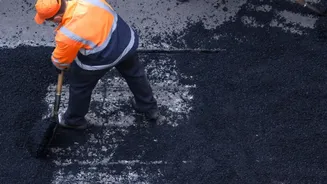
Every year, as the rains lash down, city streets across India begin to crumble. The combination of heavy traffic and water ingress creates a perfect storm for potholes, turning daily commutes into obstacle courses. Municipal corporations spend crores
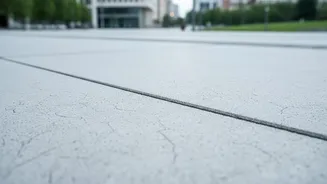
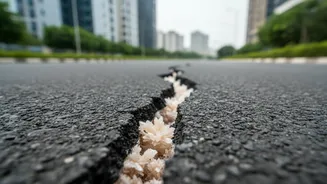
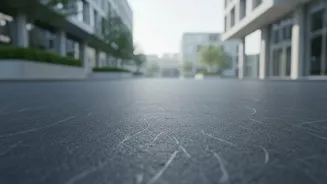
on patchwork repairs, a temporary fix that often washes away in the next downpour. This cycle of damage and repair is not only costly but also a significant public safety hazard. Traditional concrete and asphalt are vulnerable to water seeping into small cracks, which then expand under the pressure of vehicles, leading to the larger craters that plague our road networks.
Introducing Self-Healing Concrete
Imagine a road that can fix its own cracks. This isn't science fiction; it's the reality of bio-concrete, also known as self-healing concrete. This innovative material has dormant, harmless bacteria and their food source—calcium lactate—mixed into it during production. These bacterial spores, often from strains like Bacillus, can remain viable within the concrete for decades, waiting for the right moment to act. When a crack forms, the system springs to life, offering a biological solution to a mechanical problem.
How the 'Living' Concrete Works
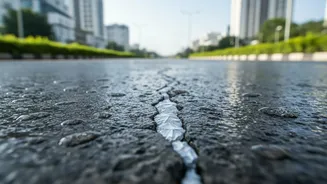
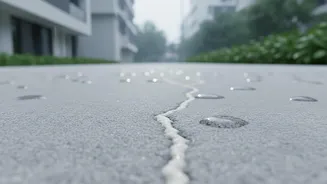
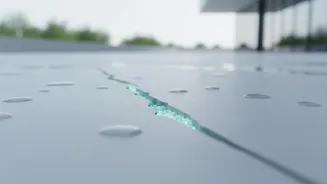
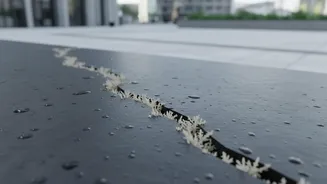
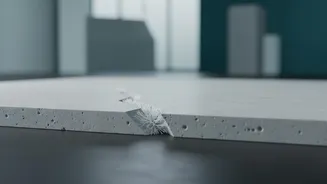
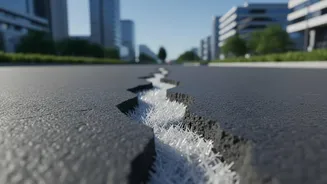
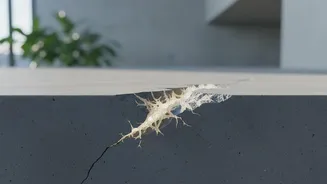
The process is remarkably elegant. When a crack appears in the concrete, it allows rainwater to seep in. This water acts as a trigger, awakening the dormant bacteria from their slumber. Once active, the bacteria begin to feed on the embedded calcium lactate. As they metabolise their food, they secrete a specific by-product: limestone, or calcium carbonate. This limestone steadily fills the crack, hardening to seal the gap and effectively ‘healing’ the damage from the inside out. This autonomous repair mechanism prevents small fissures from becoming large potholes, blocking the pathway for water that causes corrosion and further degradation.
Is It a Practical Solution for India?
The potential is enormous, but there are practical considerations. The initial cost of bio-concrete is estimated to be 15-30% higher than conventional concrete. However, the long-term savings are significant. By drastically reducing the need for frequent repairs and maintenance, self-healing concrete can lower the lifetime cost of infrastructure by as much as 50-80%. Its increased durability means structures can last decades longer. Several Indian institutions, including IIT Madras, are researching and developing cost-effective versions of this technology tailored for Indian climatic conditions. Pilot projects under the Smart Cities Mission are already testing these materials in critical infrastructure, signalling a move from lab to real-world application.
The Road Ahead for Smart Streets
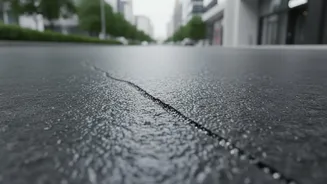
While the technology is currently most effective on hairline cracks up to about 0.8mm wide, preventing them from growing is key to stopping potholes before they start. As research continues, the ability to heal larger cracks will improve. The primary challenge remains scaling up production and overcoming the higher initial investment. However, with Indian research bodies actively working to make the technology more economical, the prospect of resilient, self-repairing roads is becoming increasingly viable. It represents a paradigm shift from a reactive repair culture to a proactive, sustainable approach to building our city networks.