



Your Personal Planetarium
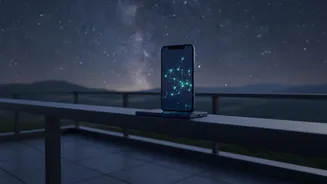
A new generation of astronomy applications is transforming smartphones into powerful stargazing tools. Using your phone's built-in sensors like the GPS and compass, these apps can pinpoint your exact location and orientation. When you point your device
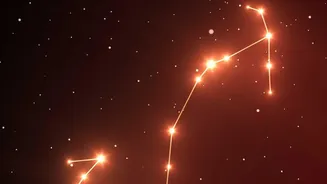
at the sky, they overlay a map of celestial objects, identifying stars, planets, and constellations in real-time. This technology, known as augmented reality (AR), effectively turns your screen into a magic window to the cosmos, making astronomy more accessible than ever before. For beginners, this removes the daunting first step of trying to match a paper star chart to the vast, unlabeled sky.
For the All-Around Beginner: Star Walk 2
If you're just starting, Star Walk 2 is a fantastic entry point. It is praised for its user-friendly interface and beautiful graphics that make learning the constellations a joy. The free version is robust, offering AR overlays and a satellite tracker. Simply point your phone at a bright dot in the sky, and the app will tell you if you're looking at Jupiter, Sirius, or the International Space Station. It also includes a calendar of upcoming astronomical events, so you'll never miss a meteor shower or a planetary alignment.
For Realistic Sky Mapping: Stellarium Mobile
Stellarium is a household name among amateur astronomers, and its mobile app brings the power of its beloved desktop software to your phone. Known for its realistic depiction of the night sky, Stellarium provides a clean and accurate map. The free version boasts a massive catalogue of stars and deep-sky objects, far more than you can see with the naked eye. It's the gold standard for anyone who wants a serious, no-fuss planetarium app that works perfectly for identifying objects from any location, including cities across India.
For a Simple AR Experience: SkyView Lite
SkyView Lite is designed for one primary purpose: to make identifying celestial objects as simple as possible. It’s a great choice for beginners or for a quick, casual look at the sky. The app uses your camera to overlay information directly onto your view, drawing the lines of constellations and providing facts about the objects you find. It works without a data connection, making it perfect for stargazing trips to remote areas with darker skies.
For the Serious Enthusiast: SkySafari
For those who want to go deeper, SkySafari is widely considered the most powerful and feature-rich astronomy app available. While it comes at a cost, its database is immense, featuring millions of stars and deep-sky objects. The higher-tier versions of the app even allow you to control Wi-Fi-enabled telescopes, transforming your phone into a command centre for your observatory. It's an investment, but for a seasoned hobbyist, its detailed information and advanced features are unmatched.
Getting Started with Astrophotography
Beyond just identifying stars, some apps can help you capture them. Apps like NightCap Camera give your phone's camera manual controls similar to a DSLR, enabling long-exposure shots that can capture faint stars, meteor showers, and even star trails. For more advanced planning, photographers use PhotoPills, which can predict the exact position of the Milky Way, sun, and moon at any future date and time for a specific location, allowing you to plan the perfect shot.