


The Unseen Enemy in the Vineyard
Downy mildew is a devastating disease for grapevines, caused by a fungus-like pathogen that thrives in warm, humid conditions. It appears as yellow, oily spots on leaves and can quickly spread to fruit clusters, turning them into shrivelled, unsellable
bunches. For the farmers of Nashik, which produces around 70% of India's grapes, an outbreak can be catastrophic, with severe epidemics historically wiping out 40-80% of yields. Traditional management involves constant manual vigilance and preventative, widespread spraying of fungicides, a labour-intensive and costly process that often comes too late to stop the aggressive pathogen.
A New Eye in the Sky
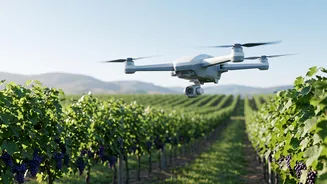
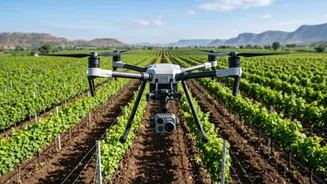
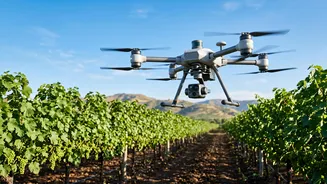
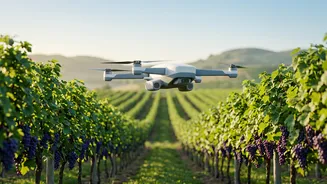
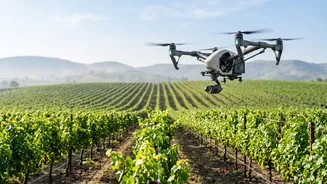
Enter the agricultural drone, equipped not just with spray tanks, but with high-resolution cameras and a powerful brain. This is where "computer vision" comes in. The technology uses artificial intelligence (AI) trained on thousands of images to automatically detect the earliest visual signs of downy mildew on grapevine leaves. These AI models can spot the subtle discolouration and patterns characteristic of an infection, often days before the human eye would notice a problem, providing a critical head start in fighting the disease. Several agri-tech companies and startups are now offering these advanced services in the Nashik region.
From Early Detection to Precision Attack
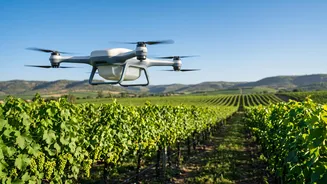
The process is a model of efficiency. A drone flies a pre-programmed route over the vineyard, systematically capturing images of the canopy. On-board or cloud-based AI software then analyses these images in real-time. When the algorithm identifies a plant infected with downy mildew, it geotags the precise location. This data allows for a highly targeted response. Instead of blanket-spraying the entire vineyard, a spraying drone can be dispatched to treat only the specific, infected patches and their immediate surroundings. This precision attack stops the disease from spreading while using a fraction of the resources.
Smarter, Faster, and More Sustainable
The benefits for farmers are transformative. By targeting sprays, chemical usage can be reduced by up to 40%, a significant cost saving and a win for the environment. Drones can cover an acre in about 5-7 minutes, a task that would take a manual labourer hours, dramatically improving response time. This also means huge savings on water, with drone spraying using up to 90% less water than conventional methods. Furthermore, it improves worker safety by removing them from direct contact with pesticides. For a small farmer, hiring a drone service typically costs between ₹400-₹700 per acre, a fee that is often quickly offset by savings on labour, water, and chemicals, not to mention the value of the protected crop.
The Future of Farming Is Here
The adoption of drone technology represents a monumental shift from reactive to proactive farming. While still not universal, an increasing number of Nashik farmers are embracing these services, supported by government initiatives like the Namo Drone Didi scheme, which helps fund drone acquisition for women's self-help groups. Local startups are developing specialized software to make the process even more user-friendly. This isn't just about saving one crop; it’s about building a more resilient and profitable future for Indian agriculture. The same technology used to spot downy mildew can be adapted to identify other diseases, pest infestations, and nutrient deficiencies, making farming smarter and more secure for generations to come.