




The Legacy of Halley's Comet
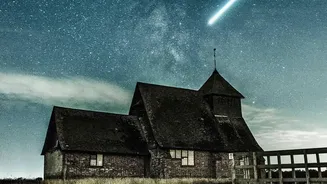
The Orionid meteor shower is one of the most beautiful displays of the year. These shooting stars are actually tiny fragments of dust and ice shed by the famous Halley's Comet. Each time this historic comet swings through the inner solar system, it leaves
a trail of debris. When Earth’s orbit intersects this trail, these particles burn up in our atmosphere, creating the fleeting, brilliant streaks we call meteors. The Orionids are known for being particularly fast, entering the atmosphere at around 66 kilometres per second, and can sometimes leave behind glowing trails that linger for a few moments. This shower shares its parentage with the Eta Aquarids, which occur in May, making it a twice-yearly opportunity to see pieces of Halley's Comet light up our sky.
Mark Your Calendar for October 2026
The key to any successful skywatching session is timing. The Orionid meteor shower is active from early October to early November. For 2026, the peak activity is expected on the night of October 21-22. Some forecasts suggest the peak could extend into the pre-dawn hours of October 23, so it's best to treat it as a two-night event. The main challenge this year will be the Moon, which will be a bright, waxing gibbous at about 80% illumination. This will wash out fainter meteors during the evening. The best viewing window will be in the pre-dawn hours, after the Moon sets (around 3 a.m. local time) but before the sky begins to brighten with the sunrise. This dark window offers the prime opportunity to spot the most meteors.
Scout the Perfect Urban Viewing Spot
While a trip far from the city provides the best views, it isn't always feasible. For urban astronomers, the goal is to minimise direct light pollution. Look for wide-open spaces like large parks, sports fields, or even the top floor of a tall building with an accessible roof that has a clear view of the sky. The key is to get away from the immediate glare of streetlights and building lights. Even getting to the edge of the city can make a significant difference. Use existing structures like buildings or trees to block direct light sources. The darkest part of the sky will be straight overhead, so a spot with an unobstructed zenith view is ideal.
How to Watch: No Telescope Needed
Meteor showers are best enjoyed with the naked eye. Telescopes and binoculars have a narrow field of view, which means you’d miss most of the action. The most important tool you have is patience. Find your dark spot and lie back on a blanket or reclining chair. Give your eyes at least 20-30 minutes to fully adapt to the darkness. During this time, avoid looking at your phone, as its bright screen will ruin your night vision. The meteors will appear to radiate from the constellation Orion, but they can streak across any part of the sky. In fact, looking about 45 to 90 degrees away from the radiant can often yield longer and more spectacular meteor trails.
What to Bring and What to Expect
Even on a clear night, October can be chilly, so dress in warm layers and bring a blanket. A flask of a warm beverage and some snacks will make the wait more comfortable. A red-light torch is helpful for finding your way without disrupting your night vision. With the Moon's interference, the number of visible meteors will be reduced from the theoretical peak of 15-20 per hour. In a city, you can expect to see fewer, but the ones you do catch are often the brightest. The fast, bright Orionids can produce fireballs—exceptionally bright meteors—that are dramatic enough to be seen even with some background light. Don't be discouraged if you don't see a meteor every minute. The experience is about patience and enjoying a quiet moment under the vast night sky.