


A First-of-its-Kind Discovery
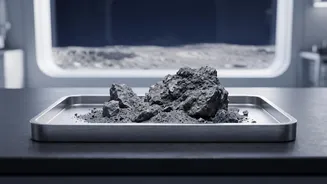
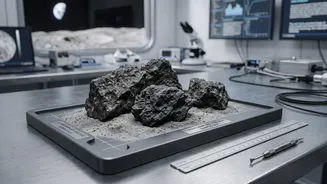
For the first time in history, scientists have physical evidence confirming that the Moon's far side was once a hotbed of volcanic activity. Analysis of soil and rock fragments brought to Earth by China’s Chang'e-6 mission confirms that volcanoes were
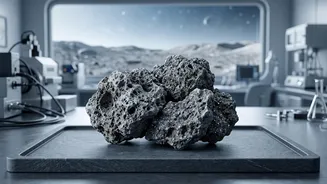
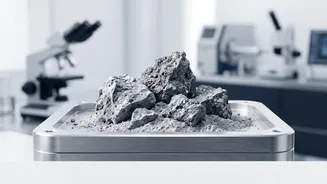
erupting there billions of years ago. These samples, collected from the vast South Pole-Aitken Basin, contained basalt fragments—a clear sign of volcanic rock—dating back as far as 4.2 billion years. Another significant portion of the volcanic rock was dated to around 2.8 billion years old. This provides a direct confirmation for something scientists had only been able to theorize based on remote orbiter data: the far side has a volcanic history just as the near side does. The ability to physically study these rocks marks a new chapter in lunar science, offering tangible clues to the Moon’s tumultuous youth.
The Tale of Two Hemispheres
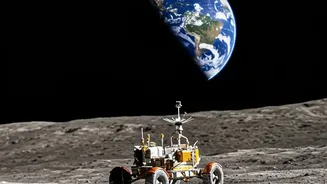
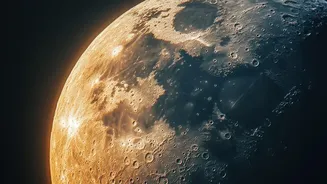
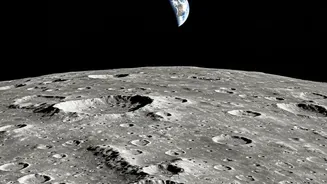
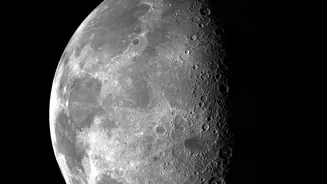
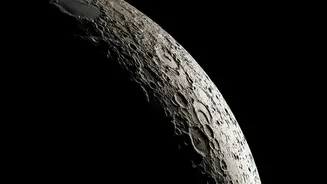
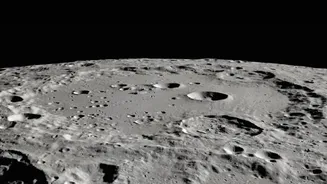
The Moon has always presented a stark duality. The near side, permanently facing Earth, is characterized by large, dark plains of volcanic basalt known as 'maria' or seas. In contrast, the far side is dominated by a thick, pale crust, pockmarked with countless craters. This striking difference, known as the lunar dichotomy, has been one of the greatest puzzles for planetary scientists. Previous samples, all from the near side, suggested it was unique. The far side's composition remained a mystery, leaving a huge gap in our understanding of how the Moon formed and cooled. These new samples from the far side are like finding a missing volume of an ancient history book, allowing for the first direct comparison between the two hemispheres and offering clues to why they evolved so differently.
Rewriting the Magma Ocean Model
One of the leading theories of lunar formation is the 'magma ocean' model, which proposes that the early Moon was a molten ball of rock. As it cooled, different minerals either sank or floated, forming the mantle and crust. The final, lingering melt was rich in elements like potassium, rare-earth elements, and phosphorus (KREEP). Scientists believed this KREEP material was concentrated on the near side, explaining its prolonged volcanic activity. However, the Chang'e-6 findings complicate this picture. While some far-side rocks had low levels of KREEP as expected, the underlying mantle material from which the basalts originated appears chemically similar to the near side's mantle. This suggests that the fundamental building blocks of both sides were not so different. Instead, new theories propose that Earth's gravitational pull, stronger on the near side after the Moon became tidally locked, caused uneven heating. This could have driven massive subterranean magma flows, pushing crustal material to the far side and concentrating heat and volcanism on the near side.
A Cooler Mantle, A Colder History
Further analysis added another twist. By studying the composition of minerals in the far-side basalt, researchers calculated the temperature at which they crystallized. The results showed the magma that formed these rocks was about 1,100℃, which is roughly 100℃ cooler than the magmas that created the vast plains on the near side. This implies that the lunar mantle on the far side was significantly colder than the mantle on the near side. This temperature difference provides a strong explanation for why the far side has a thicker crust and less widespread volcanism. The cooler conditions would have allowed the crust to solidify faster and thicker, making it harder for magma to break through to the surface. It’s a crucial piece of data that helps explain not just the surface differences we see, but the deep thermal engine that drove the Moon's evolution.