




Why Protein at Breakfast Matters
When you eat a meal high in carbohydrates alone, your body quickly breaks them down into sugar, causing a rapid spike and subsequent crash in your blood glucose levels. This is what leads to that familiar feeling of fatigue and hunger long before lunchtime.
Protein acts as a brake on this process. Because it digests more slowly, it slows down the absorption of carbohydrates, leading to a more gradual release of sugar into the bloodstream. This not only prevents energy crashes but also primes your body for better blood sugar control throughout the rest of the day. Aiming for 20-30 grams of protein at breakfast is a great target for reaping these benefits.
Greek Yogurt with Berries and Nuts
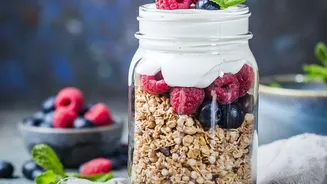
A bowl of plain, unsweetened Greek yogurt is a protein powerhouse, with a typical serving offering 18-20 grams. It has a very low glycemic index, meaning it has a minimal impact on blood sugar. Topping it with low-glycemic berries like blueberries or raspberries adds fiber and antioxidants, while a tablespoon of walnuts or almonds contributes healthy fats and an extra protein boost. For a quick option, this requires no cooking and can be assembled in minutes.
Savory Tofu Scramble
If you prefer a savory start, a tofu scramble is an excellent egg-free alternative that is packed with plant-based protein. A serving made from half a block of firm tofu can provide around 20 grams of protein. Tofu is a complete protein, containing all nine essential amino acids, and is also low in fat and free of cholesterol. To prepare, simply crumble firm tofu into a pan with your favorite vegetables like spinach, mushrooms, and bell peppers. A pinch of turmeric will give it a familiar yellow hue, while nutritional yeast can add a cheesy, umami flavor. Serve on whole-grain toast for a complete and satisfying meal.
Overnight Chia Seed Pudding
For a breakfast you can prepare the night before, chia seed pudding is a fantastic choice. Chia seeds are rich in fiber, protein, and omega-3 fatty acids. The high soluble fiber content in chia seeds forms a gel when mixed with liquid, which slows digestion and helps prevent blood sugar spikes. To make it, simply mix three tablespoons of chia seeds with a cup of unsweetened almond milk or soy milk in a jar. You can add a splash of vanilla extract for flavor. Let it sit overnight in the fridge, and in the morning, top with berries or nuts for a ready-to-go meal that offers around 10 grams of protein before toppings.
Cottage Cheese with Fruit and Seeds
Cottage cheese is another dairy hero when it comes to protein. A three-quarter cup serving can pack 25-30 grams of protein, making it one of the most efficient ways to meet your morning protein goal. Like Greek yogurt, it has a low glycemic index. If the texture isn't your favorite, you can blend it until smooth. Top it with sliced tomatoes and black pepper for a savory bowl, or go sweet with fresh fruit. A sprinkle of pumpkin or hemp seeds adds extra protein, healthy fats, and important minerals like magnesium and zinc.
Protein-Boosted Oatmeal
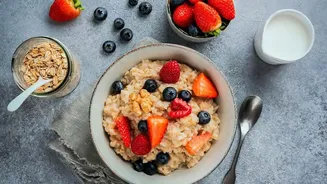
Oatmeal is a breakfast staple, but on its own, it can be heavy on carbs. However, it makes an excellent base for a high-protein meal. Opt for steel-cut or rolled oats, which have a lower glycemic index than instant varieties. To boost the protein, cook the oats with milk or soy milk instead of water. Then, stir in a scoop of your favorite vegetarian protein powder, a tablespoon of nut butter, or a serving of Greek yogurt once it has cooled slightly. These additions can easily bring the protein content of your bowl to over 20 grams, making it a powerful meal for blood sugar stability.