

Know Your Gold’s Purity and Weight
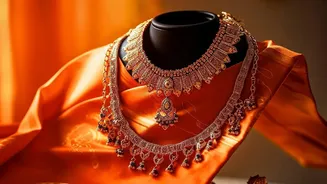
Before you even approach a jeweller, have a clear idea of what you own. The value of your gold is primarily determined by its purity (measured in karats) and weight (in grams). Pure gold is 24 karats, but most Indian jewellery is made from 22-karat gold,
which contains 91.6% gold and is often marked with a '916' stamp. Having your original purchase receipt can be very helpful, as it usually details the weight and purity of the item. This information is your starting point for any valuation.
Verify With a Purity Test
A trustworthy jeweller will test the purity of your gold in front of you. Modern showrooms use computerised Karat Meters, which provide a precise reading without damaging the jewellery. Insist on this transparent process over older, less accurate acid tests. Since June 2021, the Bureau of Indian Standards (BIS) has made hallmarking mandatory for most gold jewellery, which provides a reliable certification of purity. A hallmark includes the BIS logo, the karat and fineness (e.g., 22K916), and a unique six-digit HUID number which can be verified.
Understand the Valuation Formula
The calculation for your old gold’s value is straightforward but crucial to understand. The jeweller will multiply the net weight of your gold by its purity and the day's prevailing gold rate. For instance, if you have 10 grams of 22-karat (91.6% pure) gold and the 24-karat gold rate is ₹7,000 per gram, the value of your pure gold content is calculated accordingly. Always confirm that the jeweller is using the current market rate for the exchange, not a lower 'buyback' or 'scrap' rate.
Ask About All Deductions
This is where many people lose money. Jewellers often apply deductions from the gold’s value, which can include 'melting' or 'wastage' charges, typically ranging from 3% to 25%. These charges account for the small amount of gold lost during the melting and refining process. Don’t accept a vague lump-sum deduction; ask for an itemised breakdown that clearly states each charge. Remember that these fees are not always fixed and can sometimes be negotiated.
Separate Gemstones and Other Materials
If your old jewellery contains gemstones, enamel, or other non-gold elements, these will be removed and weighed separately. Their value is not included in the gold exchange calculation. Be present when stones are removed to ensure transparency. The buyback value for small stones is often negligible, so it's wise to ask for them back. This ensures you are credited only for the net weight of the gold.
Scrutinise the New Jewellery’s Price
When you select a new piece, its price is not just the cost of gold. You will also pay 'making charges,' which cover the craftsmanship and design. These can be a fixed rate per gram or a percentage of the gold's value, sometimes as high as 35%. Intricate, handcrafted designs have higher making charges than machine-made ones. Don’t hesitate to ask how these charges are calculated and if they are negotiable, as many jewellers are flexible. A 3% GST is then applied to the final bill after the value of your old gold has been deducted.
Get Everything in Writing
Before you agree to the final exchange, insist on a detailed receipt. This document should clearly list the gross weight of your old jewellery, its purity, the net gold weight after removing stones, the gold rate applied, all deductions, and the final exchange value. For the new item, the bill should show the gold value, making charges, and GST separately. A transparent and detailed bill protects both you and the jeweller.